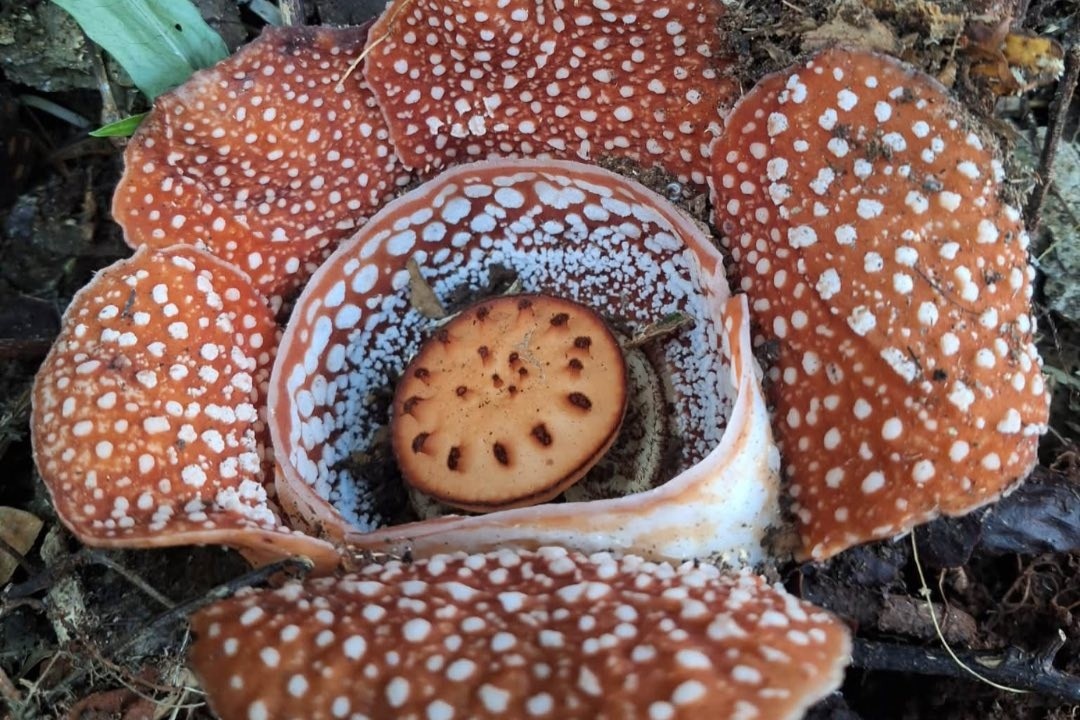
Discovered at an elevation of 600 meters, this Rafflesia lagascae is a master of disguise and a biological marvel. Photo by MENRO-Calanasan, Apayao / Facebook
A rare flower has resurfaced in the ‘last forest frontier.’
While conducting a routine check on March 3 (World Wildlife Day) on kaingin activities in Barangay Eva, Calanasan, local Green Guards stumbled upon a rare sight of flower known for its stinky odor, they found a thriving cluster of Rafflesia lagascae.
The discovery was quickly validated by the Municipal Environment and Natural Resources and Tourism Office (MENRO), marking significant achievement for Apayao’s biodiversity at an elevation of over 600 meters.
Biodiversity amidst the flames
Don’t let this “corpse flower” fool you, this isn’t your typical plant. Rafflesia is known to be endemic to the mountains of Luzon, and the lagascae variety is a master of disguise, known for its smaller sized flowers compared to its other giants varieties. As a parasitic plant with no true roots or leaves, its sudden appearance is a testament to the health of the Calanasan wilderness.
However, this discover serves as a double-edged sword. While the bloom is a cause for celebration, the fact that it was found during a forest fire prevention survey highlights the constant threat of habitat loss. The MENRO emphasizes that the survival of such rare species depends entirely on our ability to curb traditional land-clearing practices and respect boundaries of our protected zones.
In the highlands of Apayao, this Rafflesia flower reminds us that forest still holds secrets worth saving. Let’s ensure that the only thing we leave behind in our mountains is a future where these rare plants can continue to thrive.
Rafflesia is known to be endemic to the mountains of Luzon, and the lagascae variety is a master of disguise, known for its smaller sized flowers compared to its other giants varieties.
Janica Aseo is a writer who thrives when exploring topics she is personally passionate about. Beyond her writing, she is an avid reader and viewer, constantly drawing inspiration from the media she consumes to fuel her own storytelling.