The rich evolution of a beloved Filipino panaderia classic.
You know you’re in the Philippines when bread becomes emotional.
It sits beside a mug of instant coffee during rainy mornings. It appears in cardboard pastry boxes brought home from the province. It waits on dining tables during Christmas visits, wrapped in wax paper and smelling faintly of butter and sugar. And somewhere between breakfast and merienda, someone always tears off a piece of ensaymada and says the same thing: “Ang sarap.”
Few pastries capture the Filipino talent for adaptation quite like the humble ensaymada.
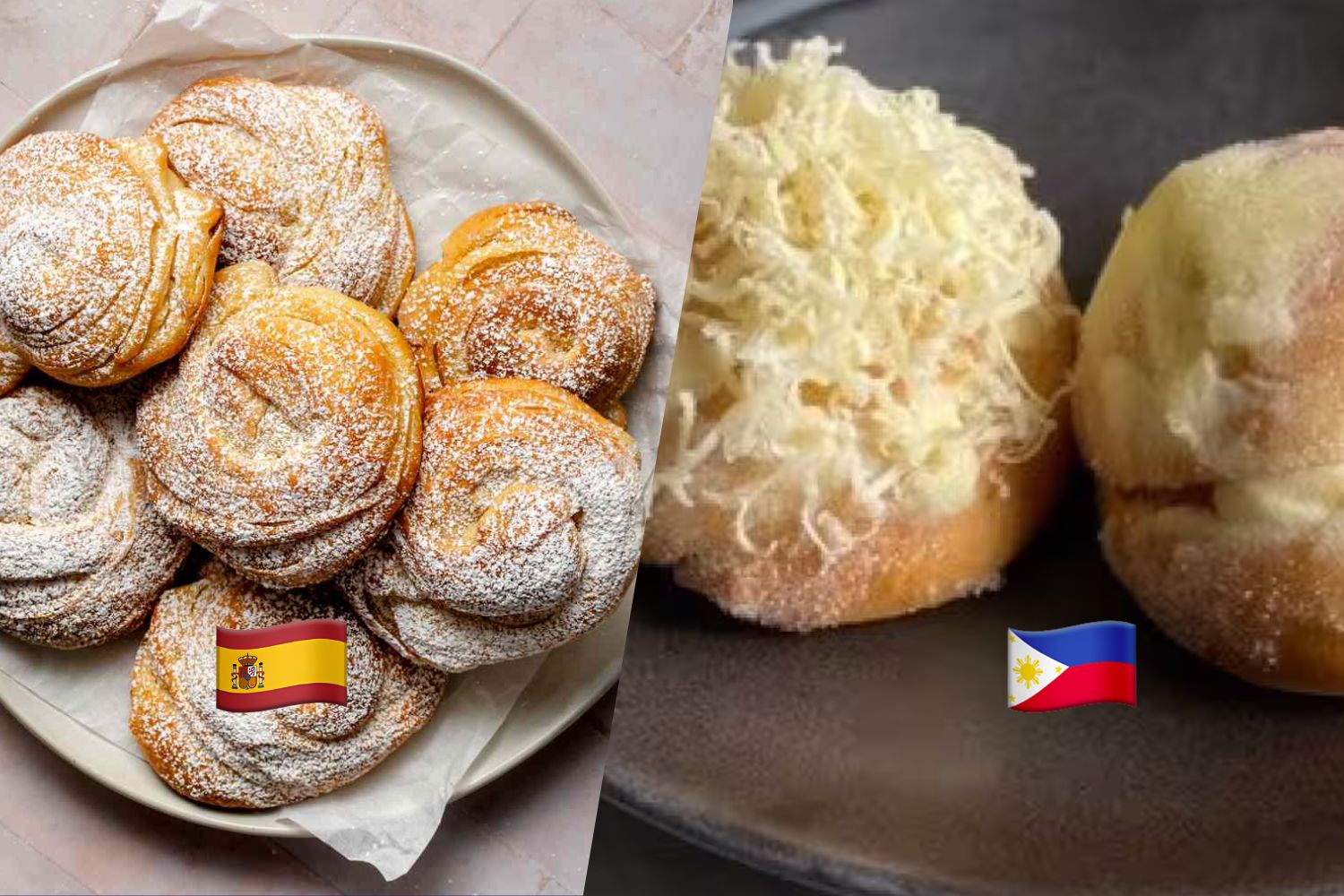
Originally descended from the Spanish ensaïmada de Mallorca, a coiled pastry from the Balearic Islands, the bread arrived in the Philippines during centuries of Spanish colonization. The original European version was relatively simple: flour, water, sugar, eggs, and pork lard known as saïm, which gave the pastry its name.
But like many inherited dishes in Filipino cuisine, the ensaymada did not remain untouched for long.
Filipinos transformed it.
The local version became softer and more indulgent, enriched with butter, milk, and generous amounts of egg yolks until the dough turned almost brioche-like in texture. Then came the distinctly Filipino flourish: thick buttercream, showers of sugar, and grated cheese piled on top in unapologetic abundance.
That final salty-sweet combination changed everything.
While the Spanish version leaned delicate and restrained, the Filipino ensaymada became louder, fluffier, richer, and more comforting — much like the country’s approach to food itself. In true Filipino fashion, more became better.
And perhaps nowhere is that evolution more obvious than in the topping.
Only Filipinos could look at a sweet pastry and decide it needed cheese.
The contrast works brilliantly. The soft bread, the creamy butter, the grainy sugar, and the salty bite of cheddar or queso de bola create a flavor profile that feels strangely complete. It is both bakery snack and emotional support food.
Over time, the ensaymada evolved beyond its colonial origins and became deeply embedded in Filipino daily life.
Neighborhood panaderias began selling affordable versions brushed with margarine and rolled in sugar for students and workers needing a cheap merienda. Meanwhile, upscale bakeries turned it into a luxury item topped with imported cheese, salted egg, ube halaya, macapuno, or even gold leaf during the holidays.
Today, nearly every Filipino bakery has its own interpretation. Some make it airy and light. Others prefer dense and buttery versions that practically melt in your hands. Pampanga became famous for decadent heirloom-style ensaymadas, while commercial chains helped standardize the ultra-soft version many Filipinos grew up bringing to school or office potlucks.
And yet despite all the modern twists — ube, dulce de leche, matcha, Nutella, truffle cheese — the heart of the ensaymada remains the same: comfort made edible.
Its story also mirrors the broader story of Filipino cuisine itself.
Many beloved Filipino dishes began as foreign influences introduced through trade, migration, or colonization. But Filipinos rarely leave borrowed food unchanged. Recipes are adjusted to local tastes, local ingredients, and local emotions. The result is something familiar yet unmistakably Filipino.
The ensaymada is proof that Filipinos do not merely inherit food traditions. They improve them, personalize them, and turn them into something warmer and more generous.
After all, the Spanish gave the Philippines the idea of ensaïmada.
But Filipinos gave it butter, cheese, softness, and soul.
The soft bread, the creamy butter, the grainy sugar, and the salty bite of cheddar or queso de bola create a flavor profile that feels strangely complete. It is both bakery snack and emotional support food.
READ: