As Booksale and other secondhand sellers expand online, readers wonder if digital convenience can match the joy of discovering unexpected titles.
Part of the appeal of buying secondhand books is the thrill of walking into a bookstore with no particular title in mind and leaving with an unexpected find. As more Filipinos shop online, however, even that experience is beginning to change.
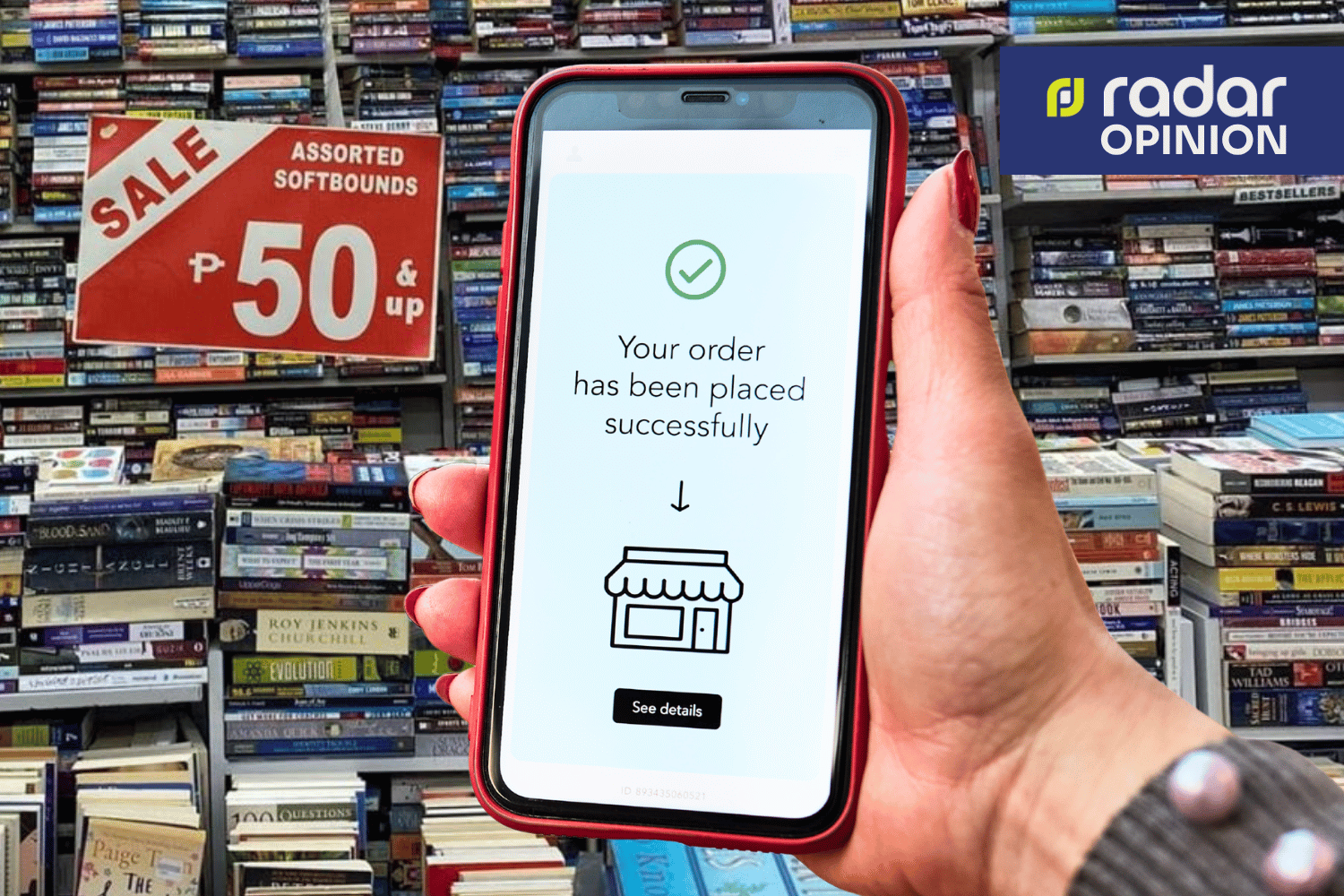
Booksale, a bookstore chain known for its imported pre-loved books and bargain-priced titles, recently drew renewed attention to its Shopee store, giving readers another way to browse discounted and pre-loved books online. While its marketplace is not entirely new, the move shows how secondhand bookstores are expanding their digital presence as more consumers discover products through e-commerce rather than physical stores.
That transition is already visible across Metro Manila’s secondhand book scene. Books For Less has expanded beyond its mall branches through its own website as well as Shopee and Lazada. Independent sellers such as Roel’s Bookshop, Chapter IX, and Porch Reader also regularly use social media to showcase new arrivals, accept reservations, and reach readers outside their neighborhoods.
DataReportal estimates that the Philippines had 97.5 million internet users at the start of 2025, while e-commerce continues to grow as one of the country’s fastest-expanding retail channels. As more consumers search, compare, and purchase products online, maintaining a digital storefront is becoming less of an expansion strategy and more of a necessity.
Meanwhile, books are also becoming more expensive. Imported paperbacks in major bookstores now commonly sell for around ₱500 to more than ₱1,000, making secondhand bookstores with titles as affordable as ₱20 an attractive alternative for students, young professionals, and collectors.
Booksale has previously said it continues to absorb higher import and shipping costs while exploring new suppliers in Asia to keep prices affordable for readers.
Selling secondhand books online, however, presents a challenge that goes beyond logistics. Unlike traditional retailers with fixed inventories, every shipment brings a different mix of titles, and many books, originally part of a set, exist as single copies.
The experience has always relied on the chance of finding an out-of-print novel, a forgotten classic, or a rare edition simply because it happened to be sitting on the shelf that day.
Some say that unpredictability is difficult to replicate online. Search algorithms are designed to help customers quickly find what they already want, while secondhand bookstores have built loyal communities by encouraging readers to discover books they never planned to buy.
Convenience may bring more shoppers to digital platforms, but the experience that keeps many bookworms coming back still happens among crowded shelves.
Online storefronts can bring affordable books to more readers, but preserving the joy of browsing, discovering, and collecting may prove just as important as expanding the catalog itself.
READ: