Jules Bayani wants ternos to go beyond special occasions.
Why should Filipiniana be reserved for special occasions?
That’s the question fashion designer Jules Bayani poses as she reimagines traditional dress for the contemporary age—and takes it outside the settings where Filipiniana is usually expected.
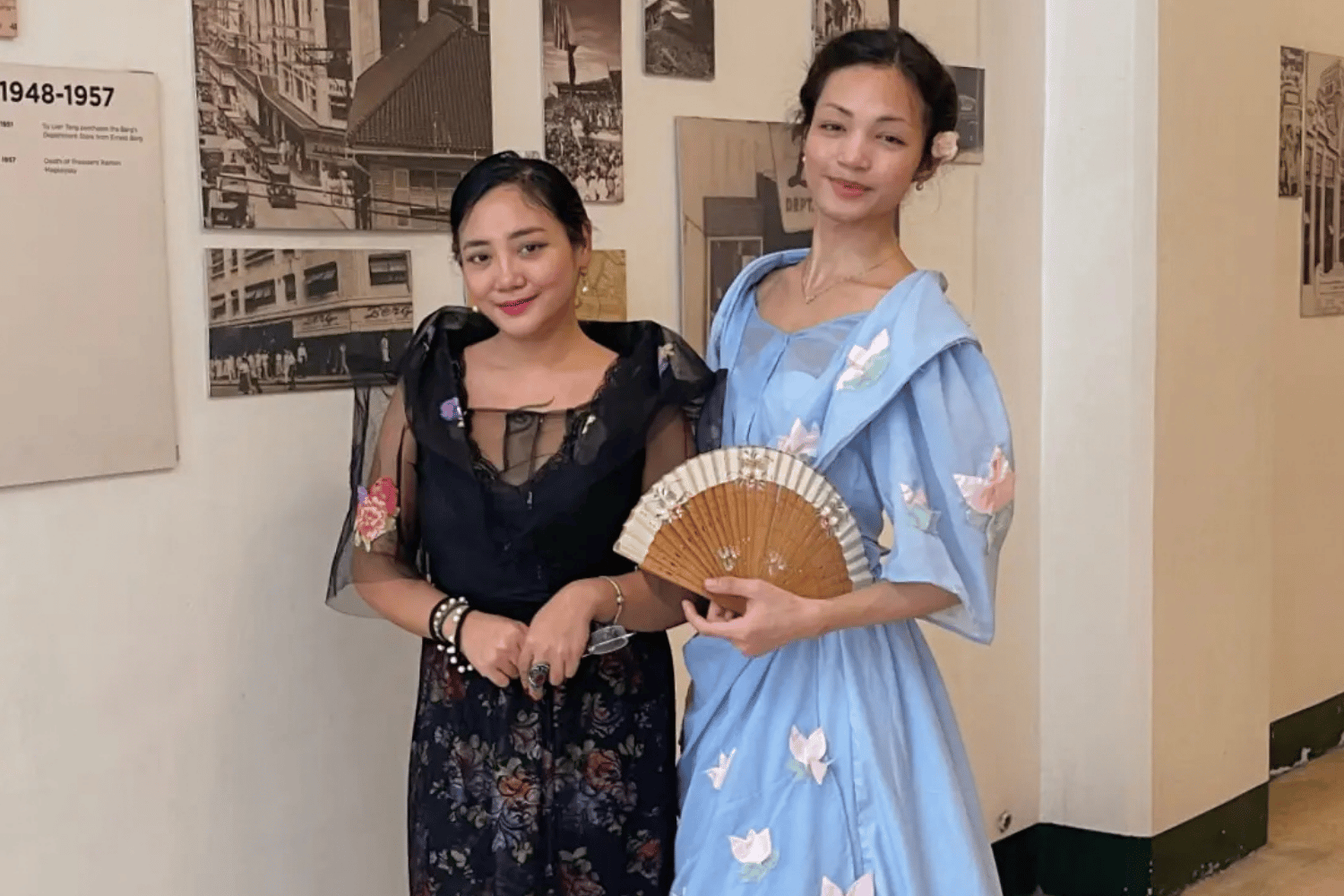
In a Sept. 28 Reel, Bayani shared two ternos she made for herself and her mother, saying they were “met with a lot of appreciation” while wearing them in the streets of Manila.
The terno evolved from earlier forms of the baro’t saya, shaped by local traditions and foreign influences. By the early 20th century, it had developed into the structured, butterfly-sleeved silhouette now closely associated with Filipiniana.
Bayani’s versions look back to that earlier period.
In a previous post, she noted that her own terno was inspired by a 1910 design: an organza-lined chiffon camisa and pañuelo, cotton saya de cola, and chiffon sobrefalda, finished with hand-sewn cotton and lace lotus-flower appliqué.
For her mother, Bayani created a 1920-inspired terno featuring a black cañamazo camisa and pañuelo, hand-applied printed-silk floral appliqué, a black lace sobrefalda, and printed silk saya.
Wearing the pieces outside a formal setting, however, drew some “interesting” questions like “Saan kayo pupunta” and “Galing ba kayo sa Senado.”
“These comments weren’t malicious at all, but they made me think about how unusual it is to see Filipiniana outside of a formal setting today,” Bayani said.
She pointed out that while “these highly ornate ternos would’ve been reserved for special events,” the broader traditions they came from were part of everyday Filipino dress, “constantly adapting to our environment, culture, and the many influences that shaped Filipino society.”
“It’s a reflection of how we’ve always taken different influences and made them our own,” Bayani said. “So maybe it’s time for us to think of Filipiniana outside of a dress code, but as a means of dressing.”
READ: