In the Philippines, the sweetest mangoes aren’t always the ones on display. Sometimes, the best ones have already been kept aside for a familiar customer.
That is one of the privileges of being a suki.
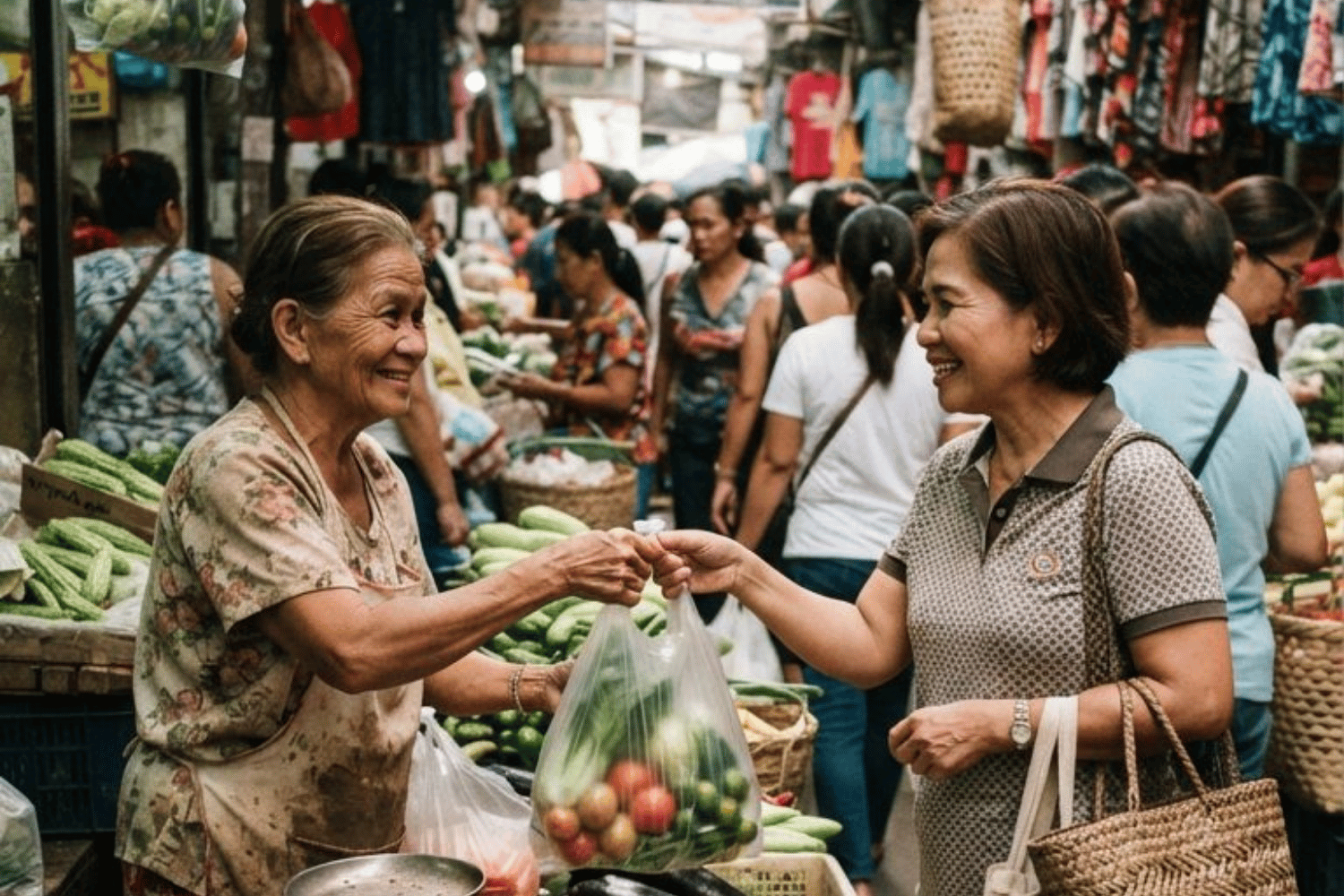
A suki is a regular customer who has built a relationship with a particular seller through repeated business, familiarity, and trust. Over time, that relationship can come with its own little privileges. A fish vendor may save the freshest catch for a suki, while a butcher may set aside a preferred cut of meat for a customer who always comes back.
The word itself is familiar in the marketplace. “Suki, bili na!” or “Pasok na, mga suki!” are common calls from sellers trying to draw customers in. But when someone is truly a suki, the relationship goes beyond simply being a regular buyer.
That familiarity can show up in small ways during an ordinary transaction. A suki buying fruit may get an extra piece or two, while someone buying kakanin might find a bigger slice of biko in the bag.
The suki may also get a special price, one offered because of the relationship built over countless transactions. In some cases, a seller might even allow a suki to take the item first and come back to pay later, knowing that the customer will return and settle the transaction.
There is usually nothing formal about any of this. No contract spells out what a suki is entitled to, and there is no membership card proving that a customer has earned the privilege. The relationship is built over time, through the steady rhythm of buying and selling, until familiarity turns into trust. A seller gets to know the customer’s preferences and habits, while the customer learns what to expect from the seller. Eventually, those repeated transactions create an understanding that both sides can rely on.
That trust has value for both sides. For a small seller, a suki means one less customer to win over every day. There is already a history of transactions and a familiarity with what the customer wants. For the customer, there is comfort in dealing with someone who knows their preferences and, in some cases, is willing to extend a little consideration in return for that continued business.
The arrangement is also a two-way street. A seller who regularly gives preferential treatment to a suki can expect that the customer will keep coming back, while the customer’s loyalty can grow because of the way the seller treats them. Each side has a reason to keep the relationship going.
The same relationship can be found in businesses as varied as a carinderia and a talyer, where diners and motorists can return to the same place for years because they know the people, the service and what to expect.
But being a suki can also create expectations. A customer may come to expect a discount because of years of patronage, while a seller may expect that same customer to keep buying from them even when another business offers a lower price. Informal credit, meanwhile, depends on the trust that an unpaid balance will eventually be settled.
That is what makes the suki relationship interesting as a business practice. It has no points system, no membership tier, and no algorithm deciding what a customer might want next. It works because someone remembers the customer, the customer remembers the seller, and both have a reason to keep the relationship going.
Long before businesses began putting names to customer retention and loyalty, Filipinos were already practicing it at the palengke, the neighborhood fruit vendors, and countless other small businesses. The transaction may be commercial, but the relationship built around it can become personal. And sometimes, that personal connection is what keeps a customer coming back.
It is a simple kind of commerce built on familiarity and trust, creating value for both the seller who keeps a customer and the customer who knows where to return. It is a practice worth keeping alive, especially in a business world that can sometimes make every transaction feel increasingly impersonal.
That’s the point.
READ:
Puregold Hakot Relay tops list of races with the most freebies
radar Lifestyle
September 1, 2026

WARNING: 16.3 million Filipinos still smoke despite deadly health risks
Nikko Miguel Garcia
August 18, 2026
This Binondo mami house has been feeding Manila since 1930
Top Dagohoy
August 8, 2026