The post did not identify the barangay, and the claims have not been verified.
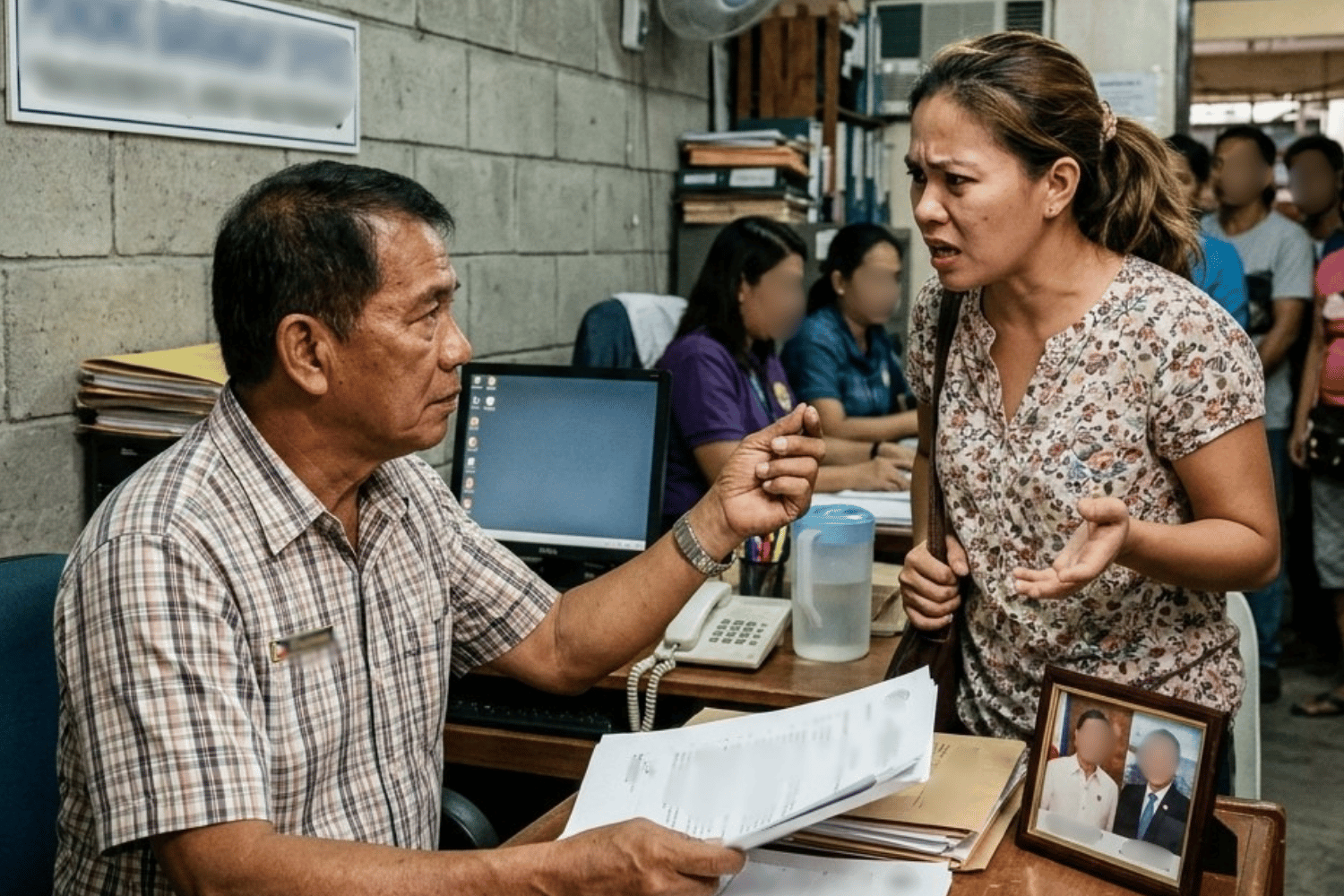
A woman seeking a barangay clearance to start a small online business has gone viral after accusing a barangay chairman of refusing to issue the document and telling her that she should only visit the barangay hall when she needed him personally.
In a Threads post that attracted more than 83,000 views, user @_sollestrejasmine recounted how she and her companion visited a barangay hall in Manila to inquire about the requirements for their business.
Instead of receiving assistance, she claimed they were confronted with an unexpected remark from the chairman.
“Pupunta na lang kayo dito kapag kailangan niyo ko,” the official allegedly told them.
When they asked whether they could obtain the clearance, the chairman supposedly answered, “Hindi.”
The woman also alleged that during an earlier inquiry, barangay personnel told them they needed to provide “donations” in exchange for the clearance.
“Akala ko ba public servant sila?” she wrote, questioning why residents seeking government services were allegedly treated dismissively.
The complainant explained that they were renting an apartment in Manila and were unfamiliar with local procedures, having previously experienced faster and more accommodating government transactions in their province.
What the law says
Under Republic Act No. 11032, or the Ease of Doing Business and Efficient Government Service Delivery Act, government offices, including barangays, must follow published requirements, processing periods and authorized fees.
Simple government transactions generally must be completed within three working days after receipt of complete requirements, subject to applicable exceptions.
Meanwhile, Section 152(c) of the Local Government Code allows barangays to collect reasonable fees for issuing clearances and provides a seven-working-day period for acting on applications.
However, an unofficial “donation” cannot legally be imposed as a condition for releasing a government document.
If proven, soliciting money or benefits in connection with official transactions may also raise issues under Republic Act No. 3019, or the Anti-Graft and Corrupt Practices Act, depending on the circumstances.
Republic Act No. 6713, or the Code of Conduct and Ethical Standards for Public Officials and Employees, also requires government personnel to act professionally, respond promptly to public requests and place public service above personal interests.
Netizens urge complaint
The post prompted calls for the woman to report the incident to the Anti-Red Tape Authority (ARTA), Department of the Interior and Local Government (DILG), and Office of the Ombudsman.
Several commenters also recommended the government’s 8888 Citizens’ Complaint Center.
Others clarified that barangay clearances are not necessarily free, but any required payment must be officially authorized and properly receipted.
Under RA 11032, applicants may report unauthorized fees, unreasonable delays and additional requirements not included in the Citizen’s Charter.
Complaints may be submitted to ARTA through complaints@arta.gov.ph, preferably with supporting documents and details of the transaction.
The barangay involved was not identified in the screenshots, and the allegations have not been independently verified. No response from the chairman or barangay office was available.
The controversy raises a fundamental question about public service: Why should citizens seeking basic government documents have to cultivate personal relationships with elected officials simply to receive services they are legally entitled to request?
READ:
OPINION: Why barangay tanods still earn as little as ₱1,590 a month
Top Dagohoy
August 13, 2026
Is charging ₱2,000 for a barangay ambulance even legal?
Top Dagohoy
October 23, 2026

OPINION: When a barangay outsmarts the flood, what does it say about everyone above it?
Mianne Cudal
August 13, 2026
Tags: 8888 Citizens' Complaint CenteraccountabilityAnti-Graft and Corrupt Practices ActAnti-Red Tape Authoritybarangay clearanceCode of Conduct and Ethical Standards for Public Officials and EmployeesDepartment of the Interior and Local GovernmentEase of Doing Business and Efficient Government Service Delivery Act of 2018Jasmine SollestreLocal Government Code of 1991Manila CityOffice of the Ombudsmanpublic serviceRepublic Act No. 11032Republic Act No. 3019Republic Act No. 6713