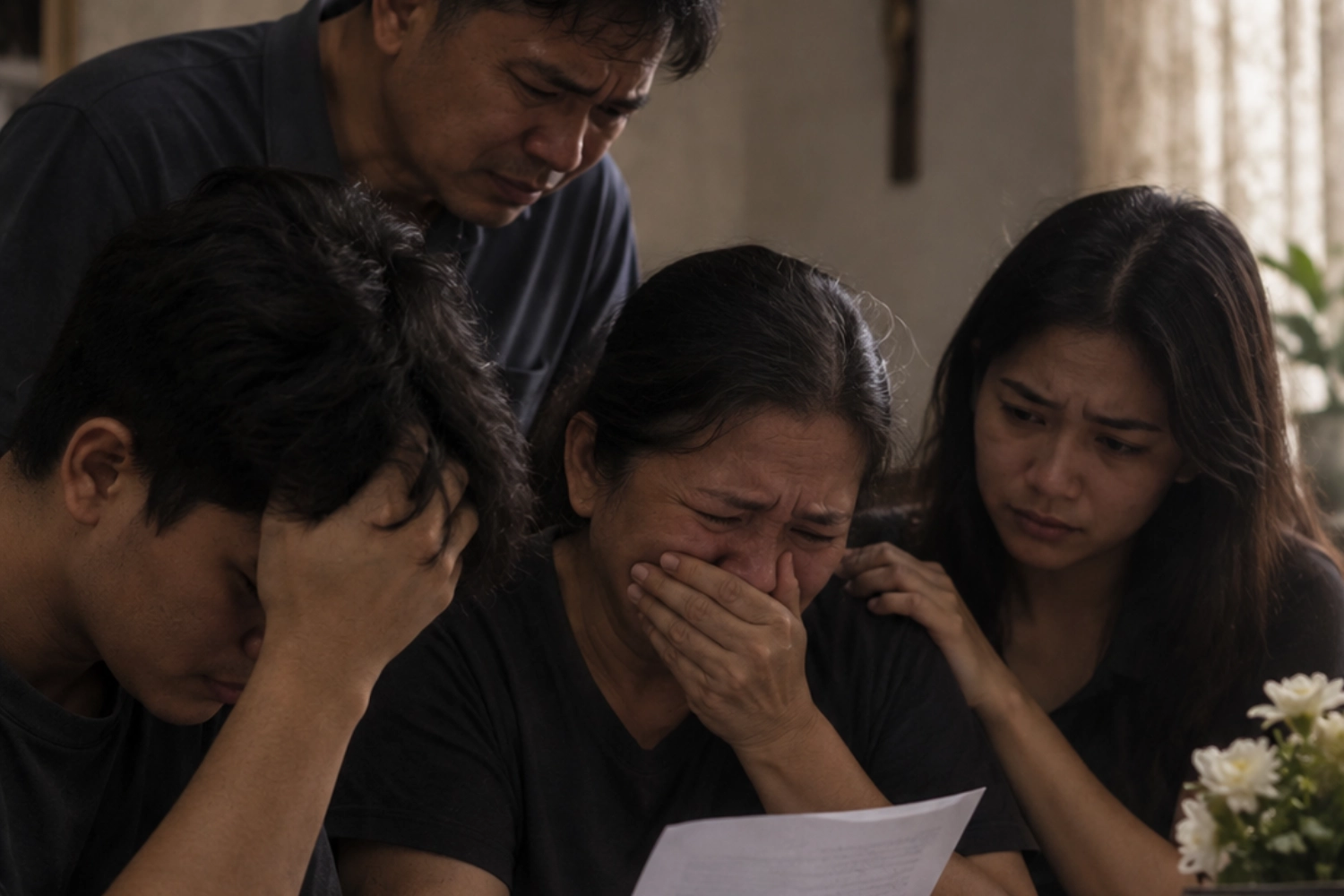
When a loved one dies, the family left behind may have to deal with more than grief. Inheriting a house, savings, or other properties also means settling the deceased person’s estate, a process that can come with a tax bill before those assets can be transferred to the heirs.
In the Philippines, estate tax is set at 6% of the net estate. But this does not mean the government automatically collects 6% of everything a person leaves behind.
The law allows certain deductions before the tax is computed, reducing the amount of the estate that is subject to taxation. For Filipino citizens and resident aliens, one of these is a ₱5-million standard deduction.
This means an estate worth ₱4 million, for example, would have no estate tax due under this simplified illustration. The standard deduction is already higher than the value of the assets, leaving no taxable amount.
The computation would be different for someone who leaves behind ₱10 million in assets. After subtracting the ₱5-million standard deduction, the remaining ₱5 million would be subject to the 6% estate tax, resulting in a ₱300,000 bill before other applicable deductions are considered.
The standard deduction, however, is not the only amount families may be allowed to subtract from the estate. A qualified family home may also be deducted, up to ₱10 million, subject to the conditions set by law. Other deductions may apply depending on the nature and composition of the estate.
These provisions can reduce the amount of tax due, but families with substantial taxable estates may still need to set aside money to settle the obligation.
Importantly, the estate tax is generally paid from the assets left behind by the deceased, rather than automatically being deducted from each heir’s individual share. The person responsible for administering the estate, such as its executor or administrator, generally handles the filing of the return and payment of the tax.
There is also a deadline to consider. Families generally have one year from the date of death to file the estate tax return, although extensions may be available under certain circumstances.
Paying the tax, however, is only one part of settling an estate. Even when no estate tax is due, heirs may still have to complete the required paperwork and secure tax clearance before properties can be transferred to their names.
In other words, inheriting property is not as simple as receiving the keys or having a bank account passed on. Families must first settle the deceased person’s estate and comply with the requirements for transferring ownership, which can take time and require careful preparation.