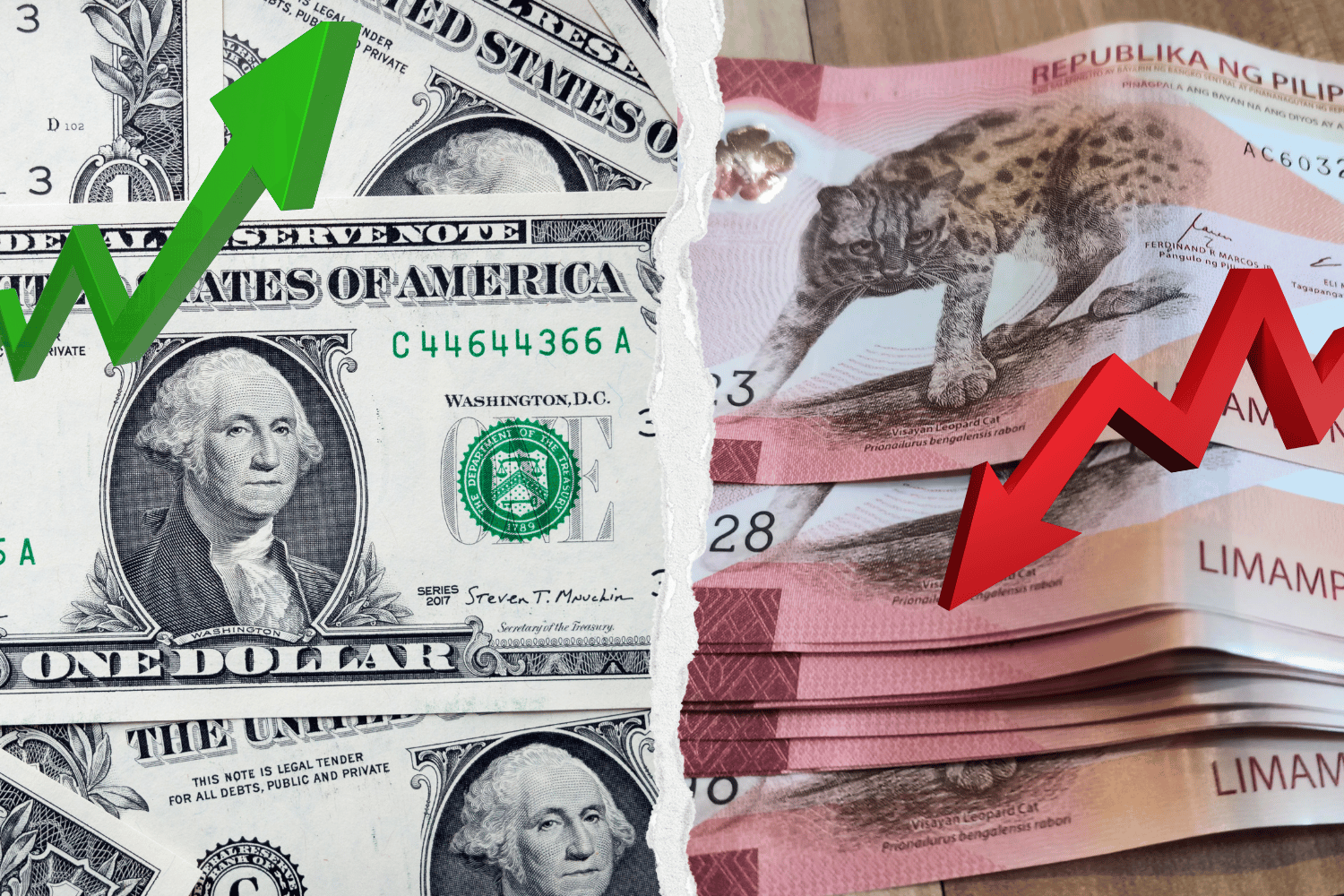
The ₱64 mark is getting closer.
The Philippine peso has hit consecutive historic lows against the US dollar, with the latest quoted rate reaching ₱63.615 on October 23. This month alone, it has hit fresh historic lows five times, bringing it closer to the ₱64 mark.
The slide has continued despite the Bangko Sentral ng Pilipinas (BSP) raising its key interest rate by a larger-than-expected 50 basis points to 5.5% on Thursday. The move is intended to help contain inflation and can also support the peso by making investments in the country more attractive, but it has yet to stop the currency’s decline.
So why does the peso keep falling?
Part of the answer lies beyond the Philippines. Rising oil prices amid Middle East tensions are making the country’s import bill more expensive, while uncertainty over US interest rates is supporting demand for the dollar. The Philippines needs dollars to pay for imported fuel and other goods, leaving the peso exposed when global prices rise.
The country’s external position adds to the pressure. The balance of payments recorded a $9.1-billion deficit from January to September, wider than the $5.3-billion shortfall in the same period last year. Economists have warned that ₱64 could be tested within days or weeks if oil remains expensive and the dollar strengthens.
Higher borrowing costs can help support the peso, but they cannot bring down global oil prices or quickly reduce the country’s reliance on imports. The latest rate hike also reflects concern over inflation, not simply an effort to defend the currency.
A weaker peso does not hurt every business equally. Exporters and companies earning dollars may benefit, while importers, manufacturers relying on foreign materials and consumers face higher costs.
The approaching Christmas season could provide some relief. Remittances from overseas Filipinos typically rise toward year-end, bringing more dollars into the country. But analysts have cautioned that this seasonal boost may be less powerful against current external pressures.
The concern is how long the peso stays weak. If depreciation feeds into fuel, food and transport costs, households lose purchasing power and businesses have less room to absorb rising expenses.
Christmas may bring more dollars home, but whether that can slow the peso’s slide will depend on forces well beyond the holiday season.
READ: