The new BIR requirement focuses on clearer tax reporting rather than adding new taxes.
The Bureau of Internal Revenue (BIR) has introduced new invoicing requirements directing businesses to separately indicate creditable withholding tax on invoices whenever applicable.
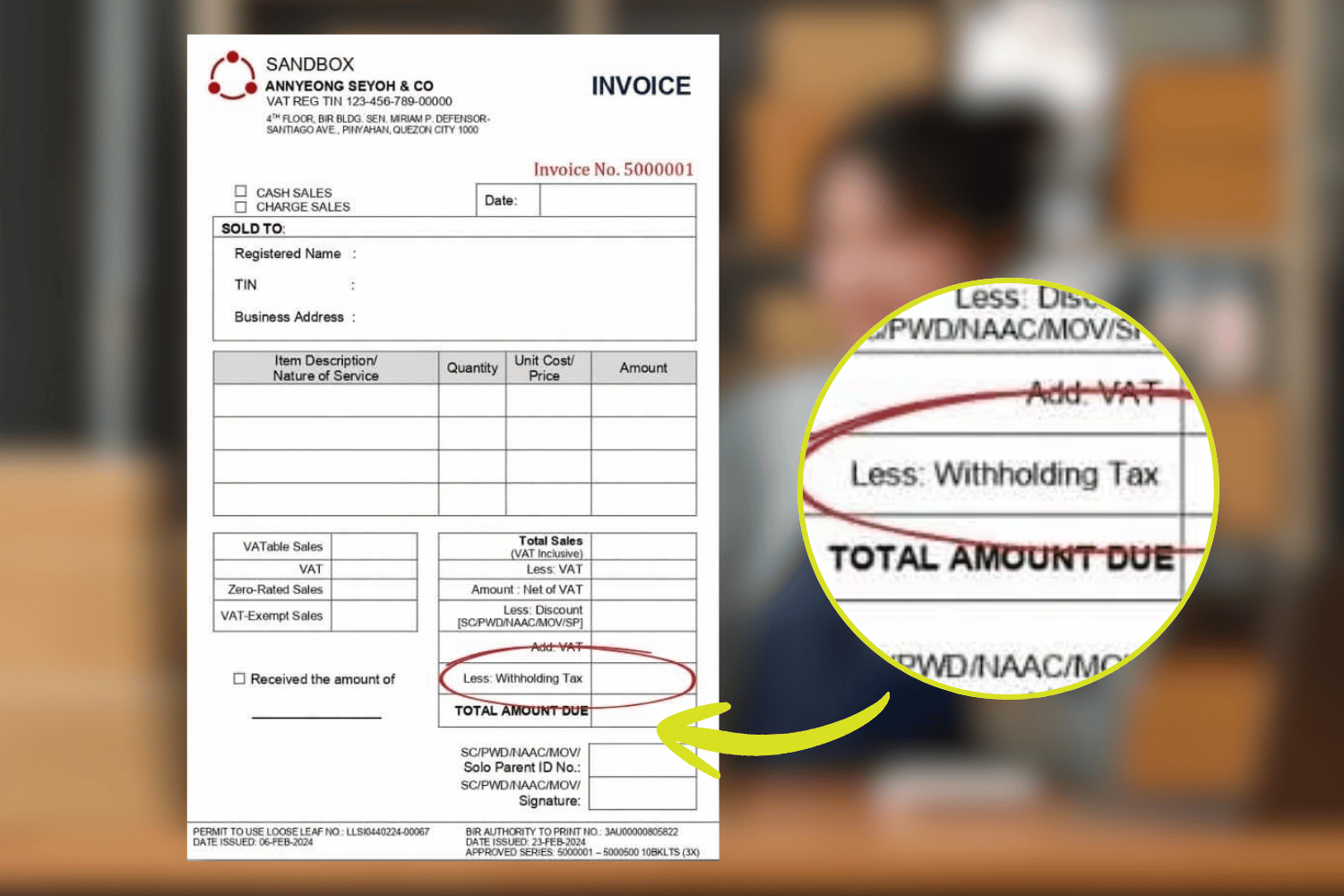
Under Revenue Regulations (RR) No. 6-2026, published on October 1, 2026, the amount of creditable withholding tax (CWT) must appear as a separate item on invoices to make tax deductions more transparent and easier to verify.
The regulation was signed by Finance Secretary Frederick Go and amends the mandatory invoice information prescribed under RR No. 7-2024, pursuant to the Ease of Paying Taxes Act.
BIR Commissioner Charlito Martin Mendoza said the measure aims to provide both sellers and buyers with clearer documentation of taxes withheld during transactions.
“Taxpayers should be able to see what is being withheld from a transaction and how that amount is reflected in the invoice. Proper documentation reduces confusion, makes withholding easier to verify, and helps both parties comply correctly,” Mendoza said.
What businesses need to know
The BIR clarified that businesses do not need to immediately discard their existing unused or unissued invoices.
They may continue using their current invoice stocks until fully consumed, provided the phrase “Less: Withholding Tax” is conspicuously stamped on the face of each invoice.
However, once existing stocks have been exhausted, newly printed invoices must already contain the phrase as part of their standard format.
For transactions subject to creditable withholding tax, businesses must also indicate the corresponding amount separately rather than simply reflecting the total amount payable.
The requirement is intended to help both parties reconcile invoice amounts with the taxes withheld and subsequently reported to the BIR.
Who will be affected?
The regulation is particularly relevant to businesses and professionals engaged in transactions subject to creditable withholding tax, including certain payments for services, rentals, and supplies.
Under the withholding tax system, the buyer or payor deducts the applicable tax from the payment and remits it to the government on behalf of the income recipient.
The amount withheld generally serves as a tax credit against the recipient’s income tax liability, subject to applicable rules.
The BIR emphasized that the change is primarily a documentation requirement designed to improve transparency and compliance.
Businesses using printed invoices are advised to review their existing stocks and ensure that future invoice formats comply with RR No. 6-2026.
The regulation does not impose a new withholding tax rate. Instead, it changes how applicable withholding taxes must be disclosed on invoices.
READ: