The Spanish-era pronunciation survived long after the Philippines adopted American English.
For generations, Filipinos have heard politicians, historians and old Manila families call it “Kloob Filipino.” To younger ears accustomed to English, it can sound peculiar. After all, shouldn’t “club” simply be pronounced “klab”?
Not in this case.
The answer is buried in the institution’s colonial-era name, its Spanish linguistic roots and more than a century of Philippine history.
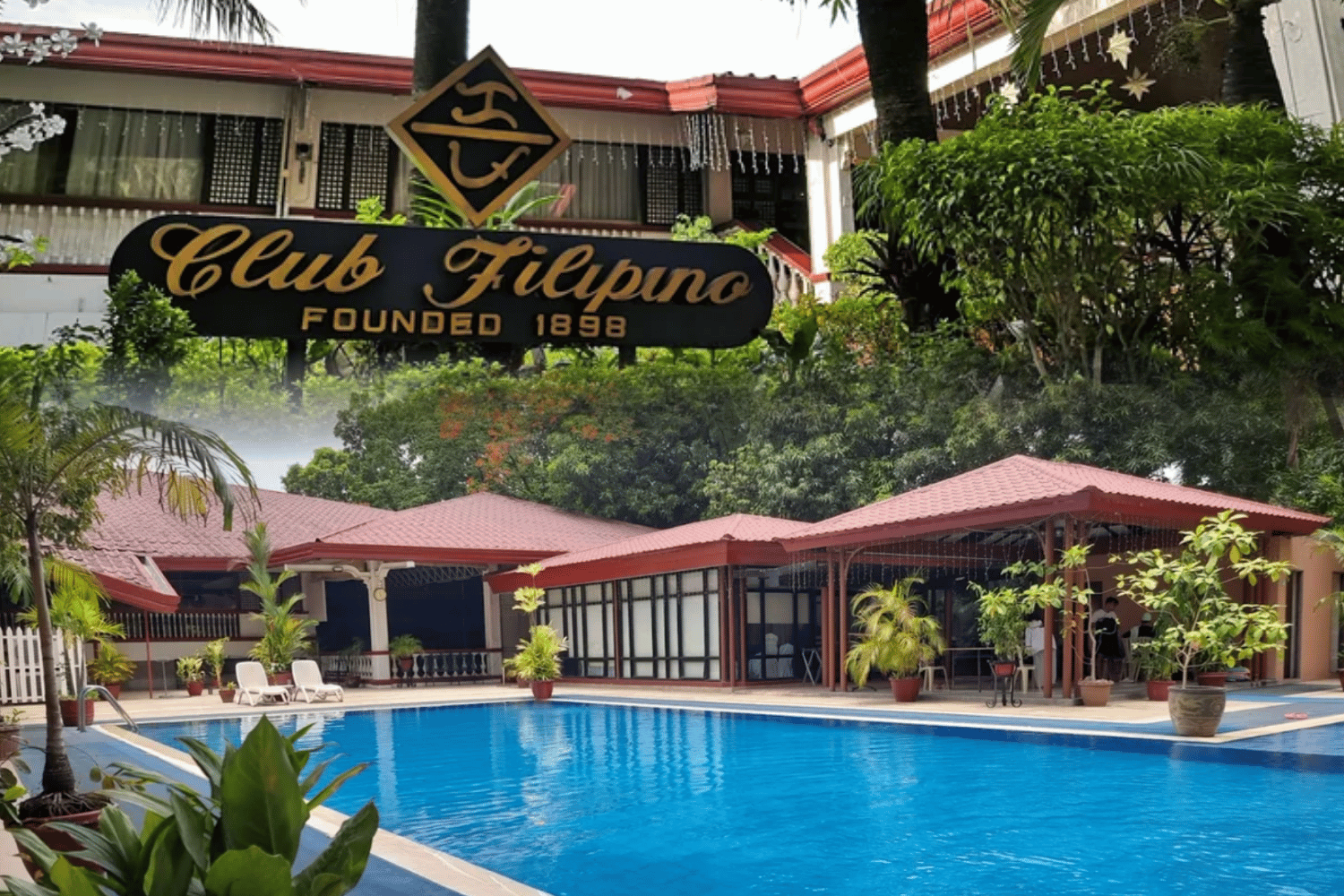
A viral explanation recently pointed out that Club Filipino is traditionally pronounced with the Spanish-style “kloob,” rather than the Anglicized “klab.” The clue is right there in the name itself: Club Filipino, not Filipino Club.
The name came from Spanish
Club Filipino traces its beginnings to 1898, when it was founded as Club Filipino Independiente, during a period when Spanish remained deeply embedded in the language of government, society and the Filipino elite.
In Spanish, club is conventionally pronounced roughly “kloob.” More importantly, “Club Filipino” follows the Spanish pattern of placing many descriptive adjectives after the noun—club first, filipino second.
An English construction would more naturally be “Filipino Club.”
That makes pronouncing the first word as English “klab” while retaining the Spanish construction somewhat historically incongruous. The traditional pronunciation survived even as English became dominant in the Philippines.
From Club Filipino Independiente to Club Filipino
The institution reportedly began as Club Filipino Independiente in 1898. Its name was changed to Club Internacional in the early American colonial period before eventually becoming Club Filipino.
Its history, however, goes far beyond pronunciation.
Established by members of the Filipino elite in the aftermath of the declaration of independence from Spain, the club became a gathering place for prominent figures in politics and society. Emilio Aguinaldo served as honorary president, while Antonio Luna was among personalities associated with its early years.
The club originally operated in Manila before moving several times as the center of metropolitan social life shifted. It eventually settled in Greenhills, San Juan, where its clubhouse became one of the country’s most recognizable political venues.
Where history happened
Club Filipino’s greatest claim to history came on February 25, 1986.
As the Marcos dictatorship collapsed during the People Power Revolution, Corazon Aquino took her oath as President at Club Filipino, becoming the Philippines’ first female president.
More than two decades later, her son Benigno Aquino III used the same historic institution to announce his presidential candidacy in September 2009.
Club Filipino therefore became more than an exclusive social club. Its halls became intertwined with some of the country’s defining political moments.
And its unusual pronunciation is itself a tiny linguistic artifact of that history.
So when someone says “Kloob Filipino,” it isn’t necessarily an affectation or a mistaken attempt to sound sophisticated.
It is a pronunciation inherited from the Spanish-speaking Philippines—and one that survived long after the country itself learned to say “club” the American way.
READ: