A Filipino structural engineer has won an international award for developing a low-cost sensor that can detect hidden damage in concrete buildings after earthquakes.
Aldrei Ong, a De La Salle University graduate, received the 2026 Global Sustainability Award of the James Dyson Award, an annual international design and engineering competition that recognizes innovative solutions to real-world problems. The recognition comes with a prize of ₱2,390,230 to further develop Sentinel, a technology designed to help engineers monitor structural damage that may not be visible during initial inspections.
The invention addresses a major challenge in earthquake-prone countries such as the Philippines, where buildings may sustain internal damage even after the shaking stops.
Concrete structures can develop cracks and other damage that are difficult to detect through visual inspections alone, often requiring engineers to conduct specialist tests before determining whether buildings are safe to use.
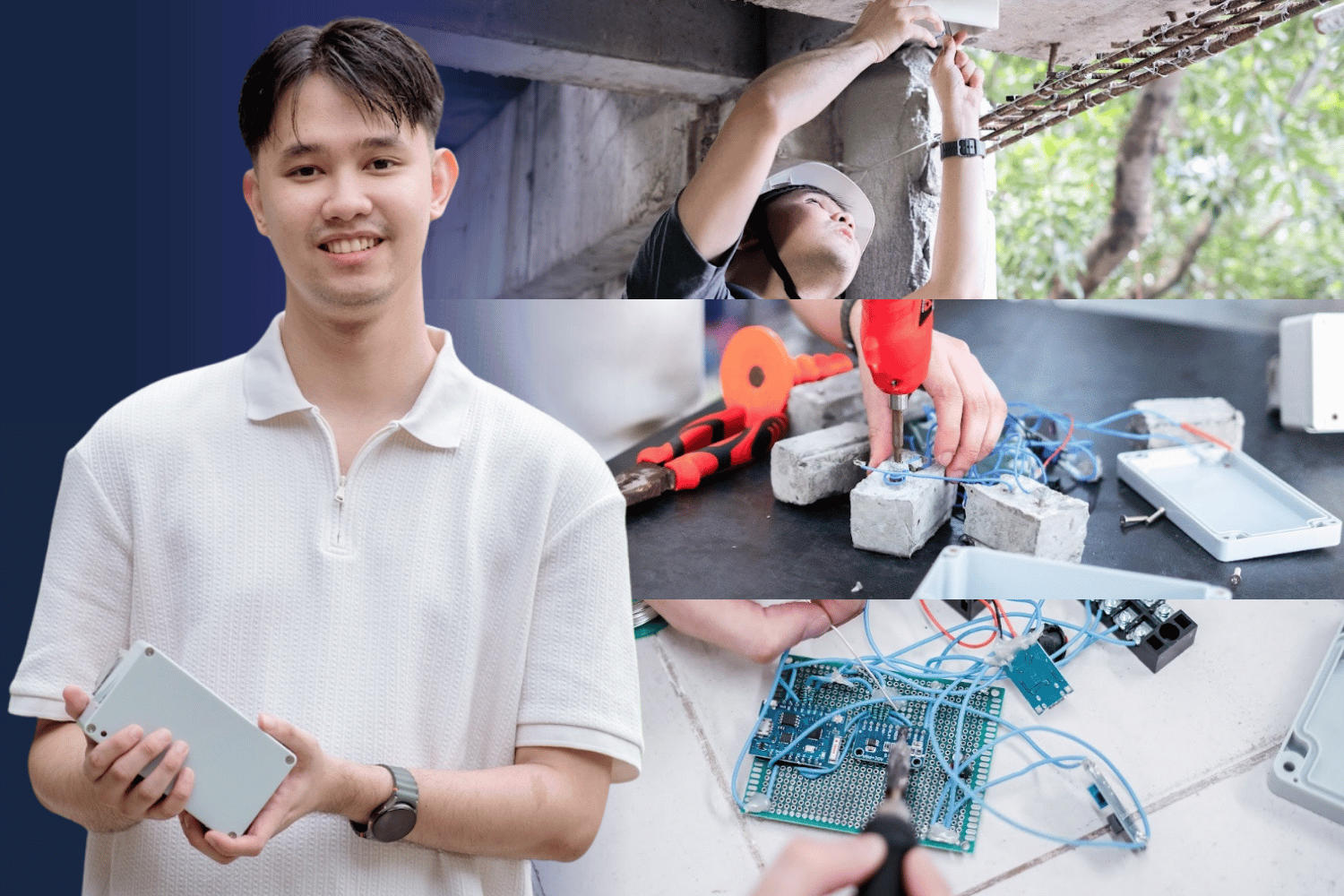
Sentinel turns a concrete spacer block, a component already used in construction to keep reinforcing steel in position, into a sensor that can detect changes associated with structural damage.
The block is made from self-sensing concrete containing conductive materials that allow electricity to pass through it. When the material cracks or sustains damage, its electrical resistance changes, giving the sensor a measurable indication of a possible problem.
Electrodes embedded in the block connect it to an electronic module that tracks changes against its original readings. When significant changes are detected, the data is transmitted wirelessly to an online dashboard where engineers can monitor the building remotely.
The technology is designed to be incorporated into reinforced concrete structures during construction without requiring a separate structural component, potentially making installation more affordable and practical for wider use.
Ong developed Sentinel through his master’s research on self-sensing concrete, testing more than 125 concrete samples over more than a year to refine the material and understand how its electrical resistance responds to loading and cracking.
The sensors have since been embedded in a building in the Philippines for real-world monitoring.
Ong plans to continue validating the technology, replace its hand-soldered electronics with a custom printed circuit board, and develop versions that can be installed in existing buildings.
The invention could help address delays in post-earthquake inspections, when engineers may need to assess numerous structures before residents, workers, and other occupants can safely return.
The James Dyson Award cited Sentinel’s use of an existing construction component as a practical way to detect potentially dangerous damage that might otherwise remain hidden.
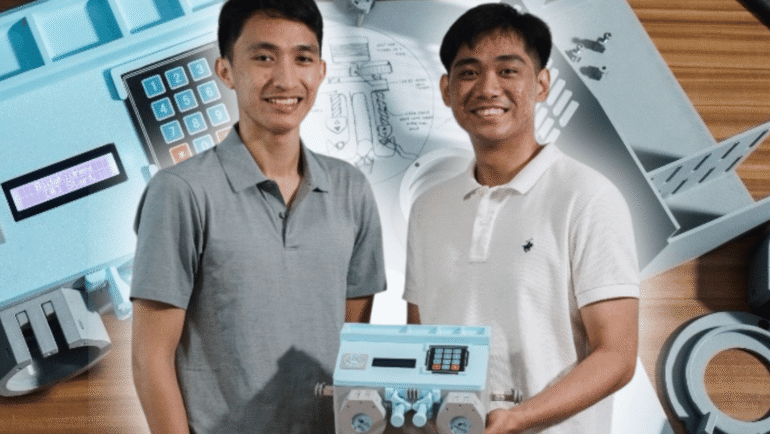
Sentinel was also named alongside Rumble Rims as one of the 2026 global winners. Rumble Rims, developed by Harvard University students, is a low-cost infrared eye-tracking headset designed to help screen athletes for concussions and guide return-to-play decisions.
The recognition marks a major achievement for Philippine engineering, with Sentinel offering a potential way to make structural monitoring more accessible and help identify earthquake damage before it leads to further risks.