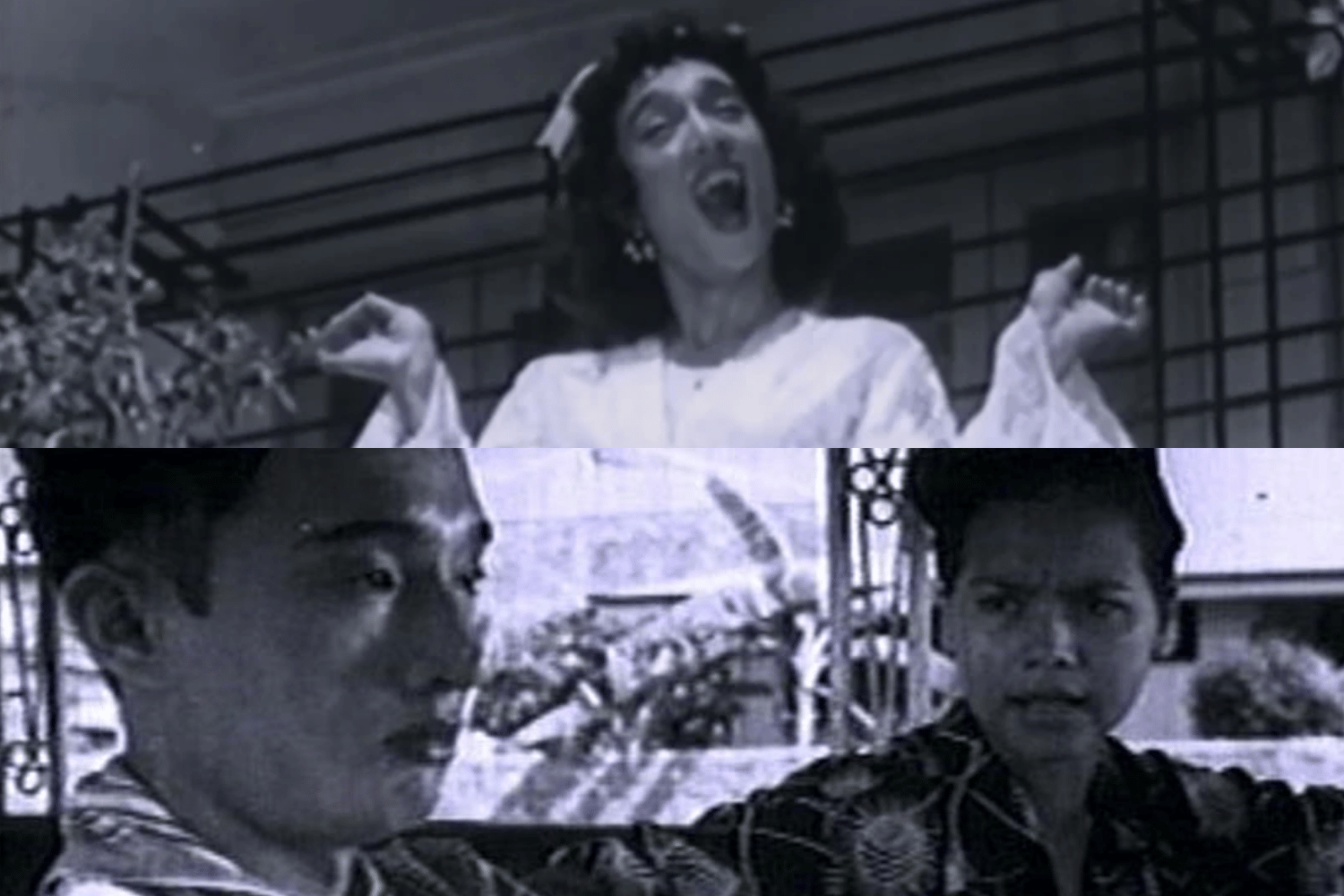
A flamboyant gay man doing household chores while his tomboy sister drives a jeepney to support their family. In conservative 1950s Philippines, this unusual reversal of gender roles became the premise of a blockbuster that would change local cinema.
Released in 1954, “Jack en Jill” introduced one of the earliest prominent portrayals of a bakla character in mainstream Philippine movies, played by a young Dolphy who would eventually become the country’s King of Comedy.
Produced by Sampaguita Pictures, directed by Mar S. Torres, and adapted from Mars Ravelo’s popular komiks, the film starred Dolphy as Gorio, an effeminate man also known as Jill, opposite Lolita Rodriguez as his masculine sister Benita.
Their unconventional personalities challenged traditional expectations of how Filipino men and women should behave.
The birth of a comedy icon
Dolphy was still establishing himself in show business when Sampaguita Pictures gave him the role that would transform his career.
Drawing from his experiences growing up around gay relatives and friends, the comedian brought exaggerated mannerisms, sharp timing, and physical comedy to his portrayal.
The film became a major commercial success, helping propel Dolphy and Rodriguez to stardom.
More significantly, it established a cinematic formula that would influence Filipino comedy for decades: the flamboyant bakla as a source of laughter and entertainment.
Dolphy would revisit similar characters in subsequent films, including “Facifica Falayfay” in 1969.
Representation or stereotype?
Although groundbreaking for its time, “Jack en Jill” also reflected the conservative attitudes of Philippine society.
The film treated its characters’ unconventional gender expressions as eccentricities that could eventually be corrected through heterosexual romance.
Film scholars have since questioned how such portrayals reinforced the idea that gay men must be flamboyant, effeminate, and inherently funny.
For decades, the bakla character became a familiar presence in Philippine entertainment, but often as comic relief rather than a fully developed individual with serious relationships and personal struggles.
That began changing as filmmakers explored homosexuality beyond comedy.
In 1971, Lino Brocka’s “Tubog sa Ginto,” starring Eddie Garcia and Mario O’Hara, offered a more serious portrayal of a homosexual relationship, confronting themes of secrecy, desire, and social expectations.
Later films would continue expanding queer representation, eventually producing works such as “Die Beautiful,” which placed a transgender woman’s life and struggles at the center of its narrative.
“Jack en Jill” remains a landmark in Philippine cinema, not because it offered a complete or progressive understanding of homosexuality, but because it brought a visibly gender-nonconforming character into the mainstream.
It also left a complicated legacy: Filipino audiences embraced the bakla on screen, even as the industry continued to define queer characters largely through comedy.