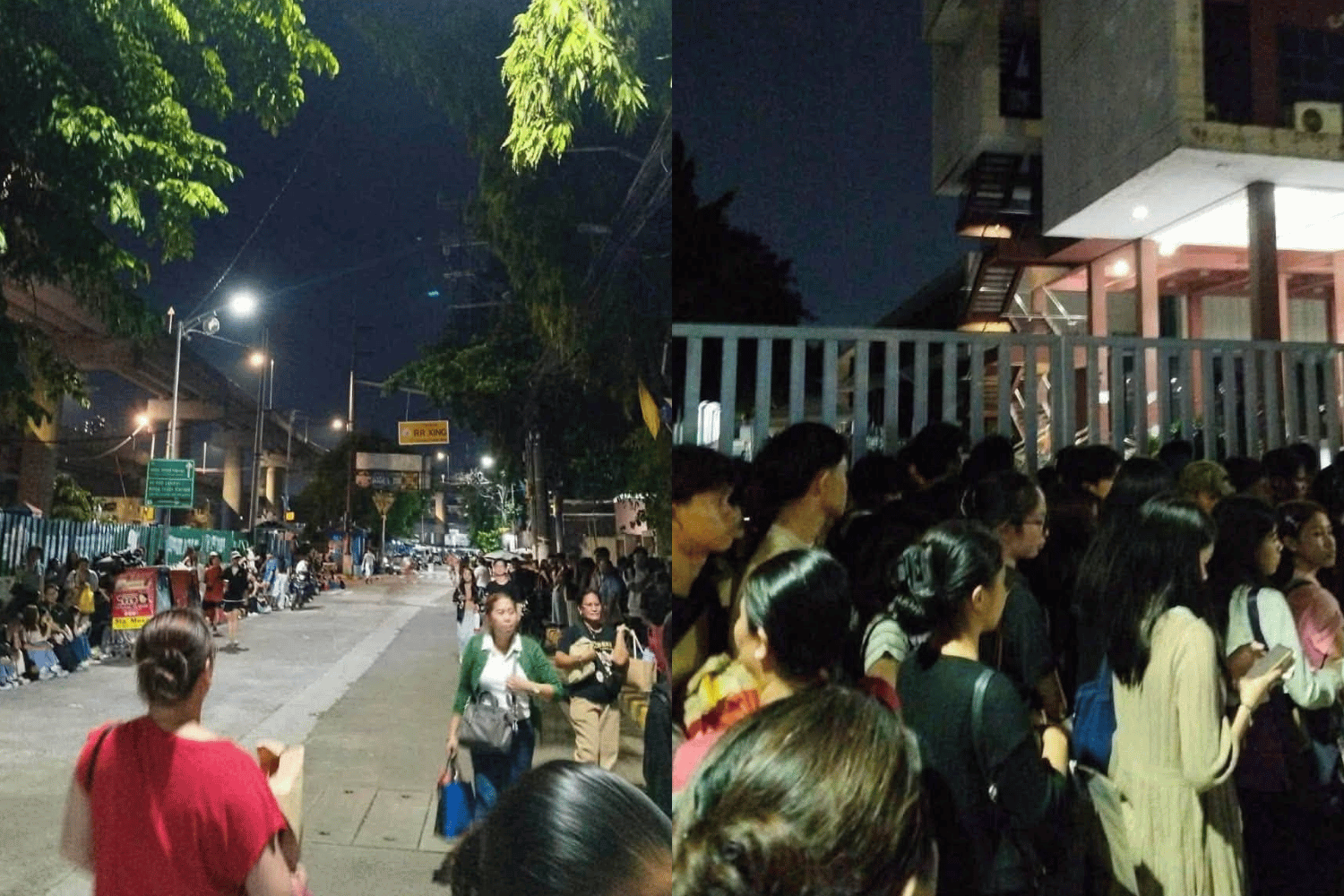
Hundreds of incoming freshmen camp outside the university as intense demand and limited capacity leave students racing to secure their preferred degree programs.
Hundreds of incoming freshmen spent the night outside the Polytechnic University of the Philippines’ Sta. Mesa campus today, enduring long queues, rain, hunger, and uncertainty over whether they would still be able to secure slots in their preferred degree programs.
For many students, the overnight wait for program slots, which are assigned on a first-come, first-served basis, has become an annual ritual, showing that the pressure begins even before classes start.
Student groups argue that the situation reflects the chronic underfunding of one of the country’s largest state universities despite the growing demand for free higher education.
PUP sought roughly ₱12.7 billion in funding for 2026 but received only around ₱3 billion, limiting the university’s capacity to expand facilities, open more class sections, and accommodate more students.
This year, more than 130,000 students reportedly took the PUPCET, but fewer than 30% secured admission, leaving thousands of qualified applicants with little choice but to pursue more expensive private education or postpone college altogether.
Those who do get in often face another set of challenges, with students citing overcrowded classrooms, aging facilities, limited equipment, and continued reliance on online classes due to space constraints.
The scenes at PUP mirror the reality facing many state universities and colleges across the country.
While the Universal Access to Quality Tertiary Education Act removed tuition fees in public colleges and universities, enrollment demand has continued to outpace the availability of classrooms, faculty, and infrastructure at many institutions.
For students from low-income families, state universities remain the most realistic path to earning a college degree. But when limited funding translates into limited slots, free education becomes available only to those fortunate enough to secure a place.
As thousands of young Filipinos continue chasing the same dream every enrollment season, many say the government must ensure public universities have enough resources to make that promise a reality for more students.
READ: