A barong is often saved for special occasions. Its piña fabric, prized for its delicate weave and craftsmanship, has long been associated with formalwear—and the careful handling that comes with it.
Lulu Tan-Gan has spent the past two decades challenging that idea.
Often referred to as the Queen of Knits, Tan-Gan began creating hand-loomed knitwear in the late ’70s and early ’80s, moving beyond the usual cardigans and sweaters. By 1983, her handcrafted pieces had reached the runways of Paris Fashion Week.
Drawn to wash-and-wear fabrics that did not need ironing, she wanted to create practical yet stylish options for career women. Decades before “sustainability” and “small batch” became fashion buzzwords, she was already knitting garments to shape using a hand loom—a process that put her at the forefront of artisanal, zero-waste fashion.
After two decades of working with knits, Tan-Gan turned to piña, prompted by a personal question: “What makes me a Filipino designer?” Her appreciation for the textile was also shaped by two important figures in her life: her father, whose barongs she wore, and designer Barge Ramos, whose work she admired.
At the time, piña was widely regarded as a stiff textile reserved for formalwear. Its need for dry cleaning also made it costly to maintain. Tan-Gan saw an opportunity to rework the material into versatile, ready-to-wear clothing.
“I started to develop Piña into washable, fluid textiles. I designed and engineered it for easier packing and travel,” she said.
She studied the fabric’s warp and weft, cutting it with precision so it would drape more naturally. She also immersed herself in dyeing, washing, and creating local motifs, combining piña with blended fabrics, prints, and beading to develop different textures and patterns.
As she works with the textile, she also makes sure to use every part of the weave. “I’m also mindful of ensuring that no inch of the weave is wasted throughout the design and cutting process,” she said.
For Tan-Gan, understanding the material and the technical side of construction must come before innovation. As she put it, “As an artisan, you have to understand the material and the technical side of constructing before you can innovate and make it relevant to use.”
Her approach also extends to sourcing. She describes “farm-to-fashion” as recognizing the provincial communities and farms where weaving traditions continue to thrive—an approach she believes can help build a more sustainable, circular fashion industry.
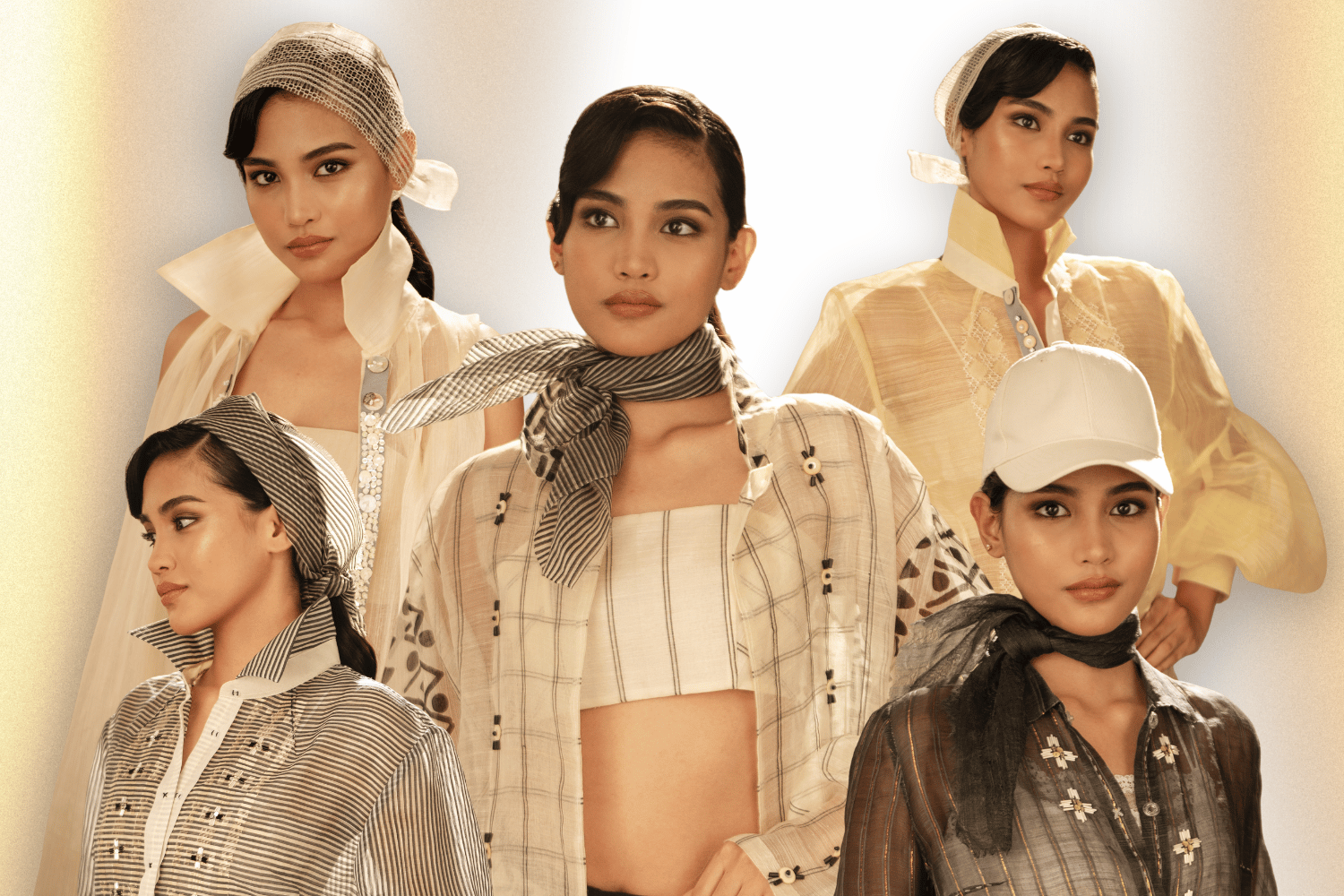
This Nov. 4, the Filipino designer will open a pop-up space at Power Plant Mall, where she will unveil Tailored Traditions, a collection of piña barongs, oversized dress shirts, and vests. Bringing together piña and the tailored shirt, the collection draws on her long exploration of the handwoven pineapple fabric.
“Over the past 20 years, I have explored and tested this raw, ethereal fiber,” Tan-Gan said. “I return to the essence of my journey: modeling heritage for contemporary use.”
That philosophy carries into Tailored Traditions, where Tan-Gan lets the material and craftsmanship speak for themselves.
“In a world often obsessed with extravagance, true luxury resonates to those who understand the value of refinement and quiet confidence,” she said. “It transcends trends and ostentation, focusing instead on the inherent beauty of materials and craftsmanship. It embraces simplicity and authenticity.”