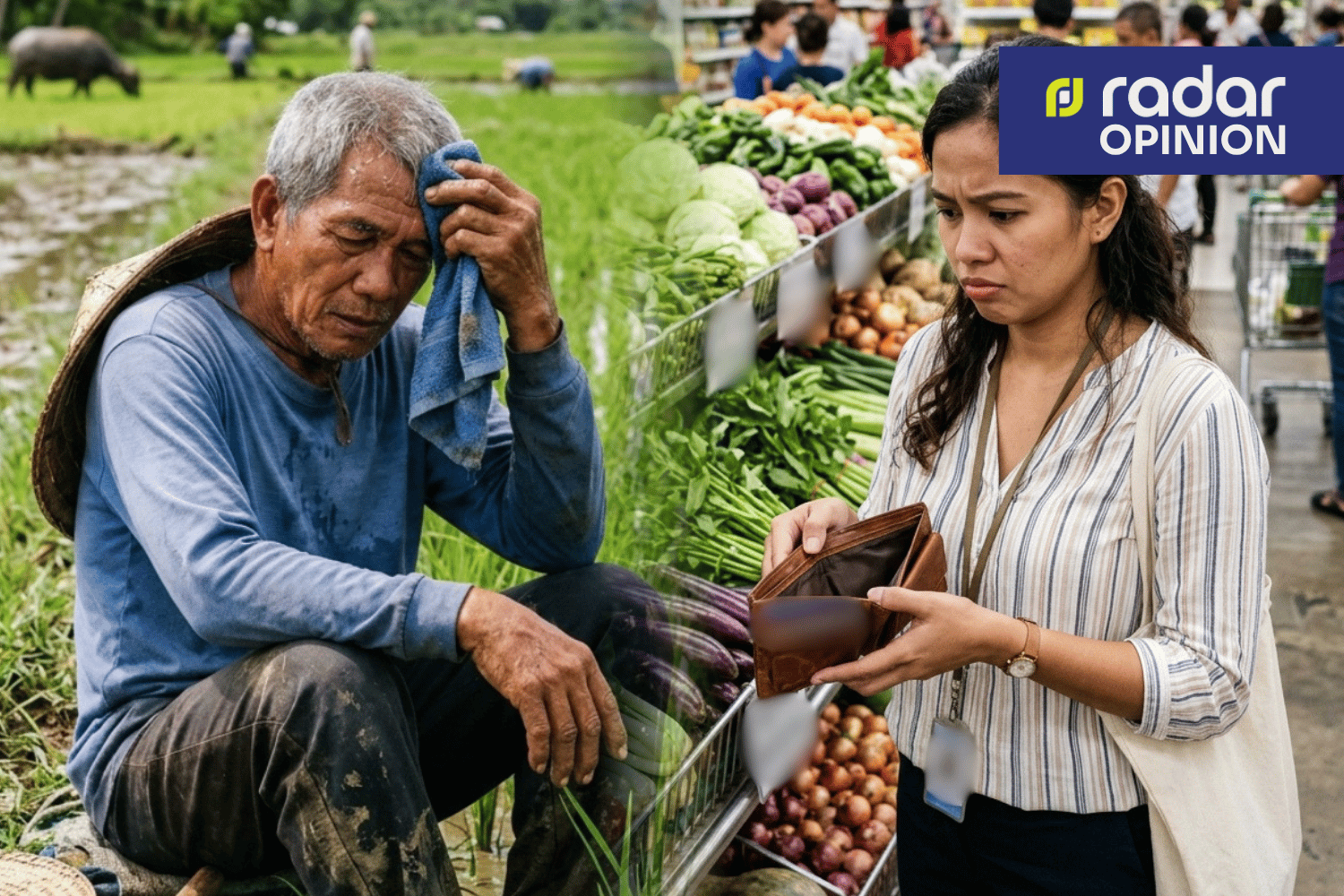
The government wants to protect Filipino farmers from falling crop prices. But what happens when the country’s agricultural policies end up making food more expensive for everyone without doing enough to improve how much farmers can produce?
That’s a problem worth looking into.
The Organization for Economic Co-operation and Development (OECD) estimates that government policies provided support equivalent to 22% of farmers’ gross receipts in 2023-2025. But roughly 90% of this support came from policies that influence the prices farmers receive, rather than investments that could help them grow more and work more efficiently.
In simple terms, much of the country’s agricultural support revolves around helping farmers get better prices for their harvests. While this has its benefits, it also comes at a cost. The OECD estimates that these policies increased consumers’ food expenditures by around 20% at farmgate prices, making consumers net contributors to the agricultural support system.
Filipinos already know how much food prices can eat into household budgets. Restaurants, food manufacturers and other businesses that rely on agricultural products also have to deal with the cost of their ingredients.
What’s more concerning is that all this support has yet to translate into stronger agricultural productivity. Between 2014 and 2023, Philippine agricultural production grew by an average of just 0.1% annually, compared with 1.8% globally. The amount of agricultural output generated from available resources has also declined.
This isn’t an argument against helping farmers. They need protection from unpredictable prices, rising production costs and increasingly difficult weather conditions. But guaranteeing better prices cannot solve problems such as inadequate storage facilities, poor post-harvest infrastructure, limited access to technology and inefficient supply chains.
The OECD is urging the government to gradually move away from policies that distort agricultural prices and invest more in facilities and services that help farmers become more productive. This includes modern storage, agricultural research, better farming advice, healthier soils and access to reliable climate information.
The Philippines has already made investments in some of these areas, including cold storage facilities and the modernization of National Food Authority warehouses. These efforts need to be sustained and expanded.
After all, helping farmers shouldn’t end with ensuring they get a better price for what they harvest. It should also mean helping them grow more, lose less of what they produce and bring their goods to market more efficiently.
Consumers need affordable food, businesses need reliable supplies, and farmers need a livelihood that can withstand market fluctuations.
The country cannot keep trying to solve agricultural problems by focusing on prices alone. It needs to fix the conditions that make farming difficult and productivity weak in the first place.
That’s the point.