Why basic transport upgrades keep passing as progress in Metro Manila.
There’s a certain rhythm to how these things play out in Metro Manila. A train station gets a visual refresh, signage becomes easier to read, a new walkway opens, and suddenly people are in full applause mode, as if this isn’t exactly what should have been there in the first place.
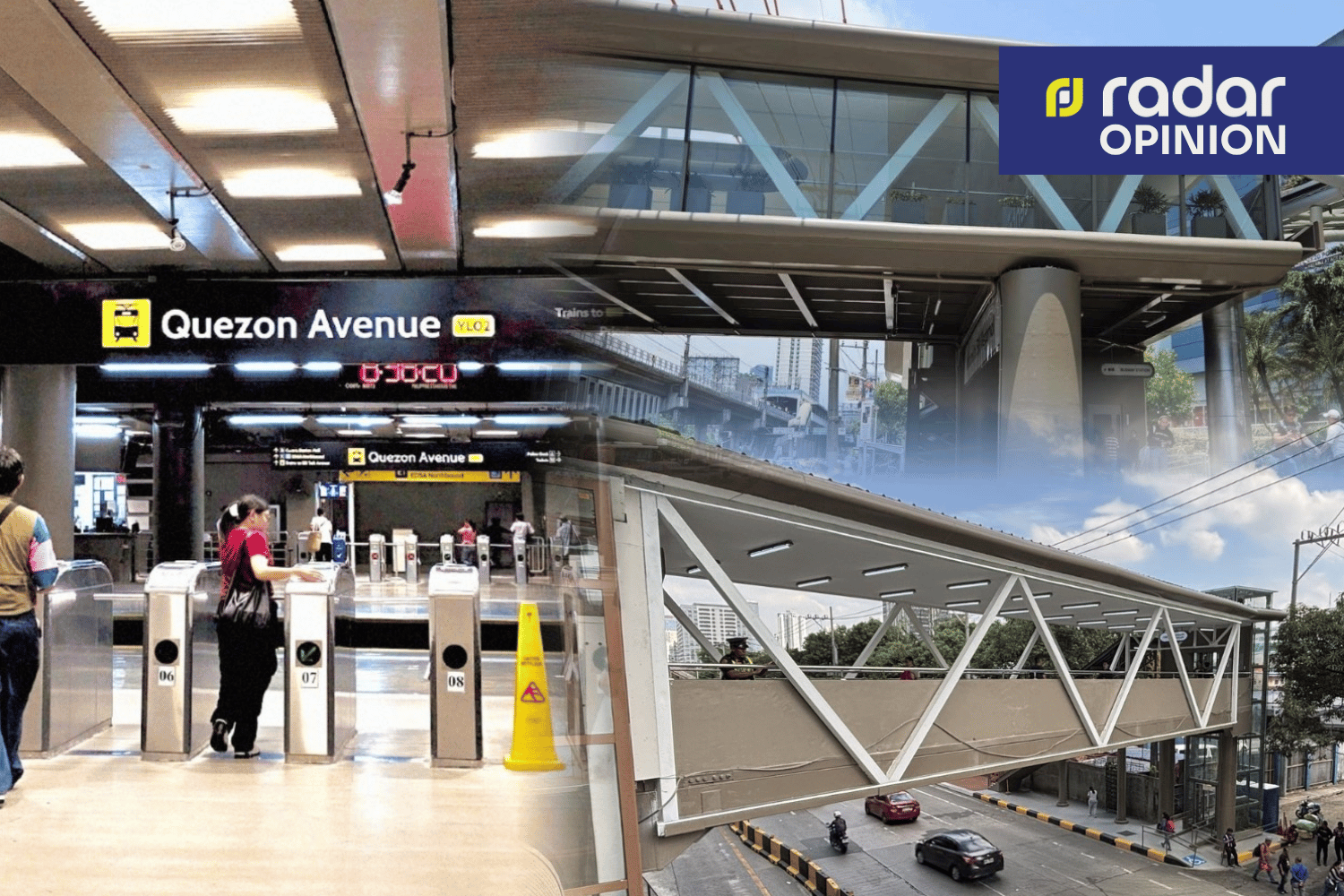
Look at the clearer signage at MRT-3 Quezon Avenue station, the more organized stops along the EDSA Busway near Kamuning, and the new SM Megamall Busway Concourse that connects directly to the Ortigas Station. These are real improvements, the kind that make commuting on a good day slightly less punishing.
But the way posts on social media about these “improvements” go viral says a lot. They become shareable and are even described as “world-class.” The collective sigh of people saying “finally” is almost palpable, like we’ve all been waiting for something extraordinary. Except none of this is extraordinary.
For the record, this isn’t about dismissing the improvements or the effort behind them. But why aren’t we asking the more uncomfortable questions? Is this it? Is this really the best we can do? Why only this? Is this all we think we deserve? Todo na ba ito?
Because if you zoom out and look at cities like Singapore, Bangkok, or Kuala Lumpur, this is simply the baseline. Infrastructure doing its job is not something people pause to celebrate. It just works.
Optics vs. overcrowding
Here, it still feels like a reveal, which is equal parts reassuring and telling.
Reassuring, because even incremental improvements do make daily commuting more manageable. In a system where small inefficiencies stack up quickly, even minor fixes can ease the daily grind.
But it’s also telling because the reaction hints at how low expectations have been set. When “functional enough” has been the norm, anything beyond that starts to feel impressive. And once something feels impressive, it’s easy to treat it as the goal instead of the baseline.
That’s where the disconnect sits.
A handful of upgraded stations does not fix overcrowding across the network. A cleaner platform does not solve capacity issues. A new walkway, no matter how welcome, does not suddenly make the system seamless. These are improvements within the system, not a transformation of it, and that distinction matters.
Still, the optics are strong. A brighter station photographs well. Clear signage is easy to appreciate. Order stands out quickly in a system that has long lacked it. These are visible wins, and visible wins travel fast, especially when they’ve been scarce.
But public reaction also shapes what comes next. If long-overdue basics are received like breakthroughs, it quietly lowers the pressure to go further. It suggests, even unintentionally, that this level of progress might already be enough.
It isn’t.
Metro Manila doesn’t just need upgrades that look good in isolation. It needs a system where these features are consistent, expected, and unremarkable, where the reaction shifts from “finally” to “of course.”
Until then, every improvement will keep getting its moment, and we’ll keep reacting like it’s bigger than it actually is.
Why are we applauding for signs and stairs? Discover why the SM Megamall Concourse and MRT-3 refreshes are signs of a system that has set the bar too low for 2026.
READ: