OPINION: Why are we subsidizing the wealthy?
The economics of PWD discounts
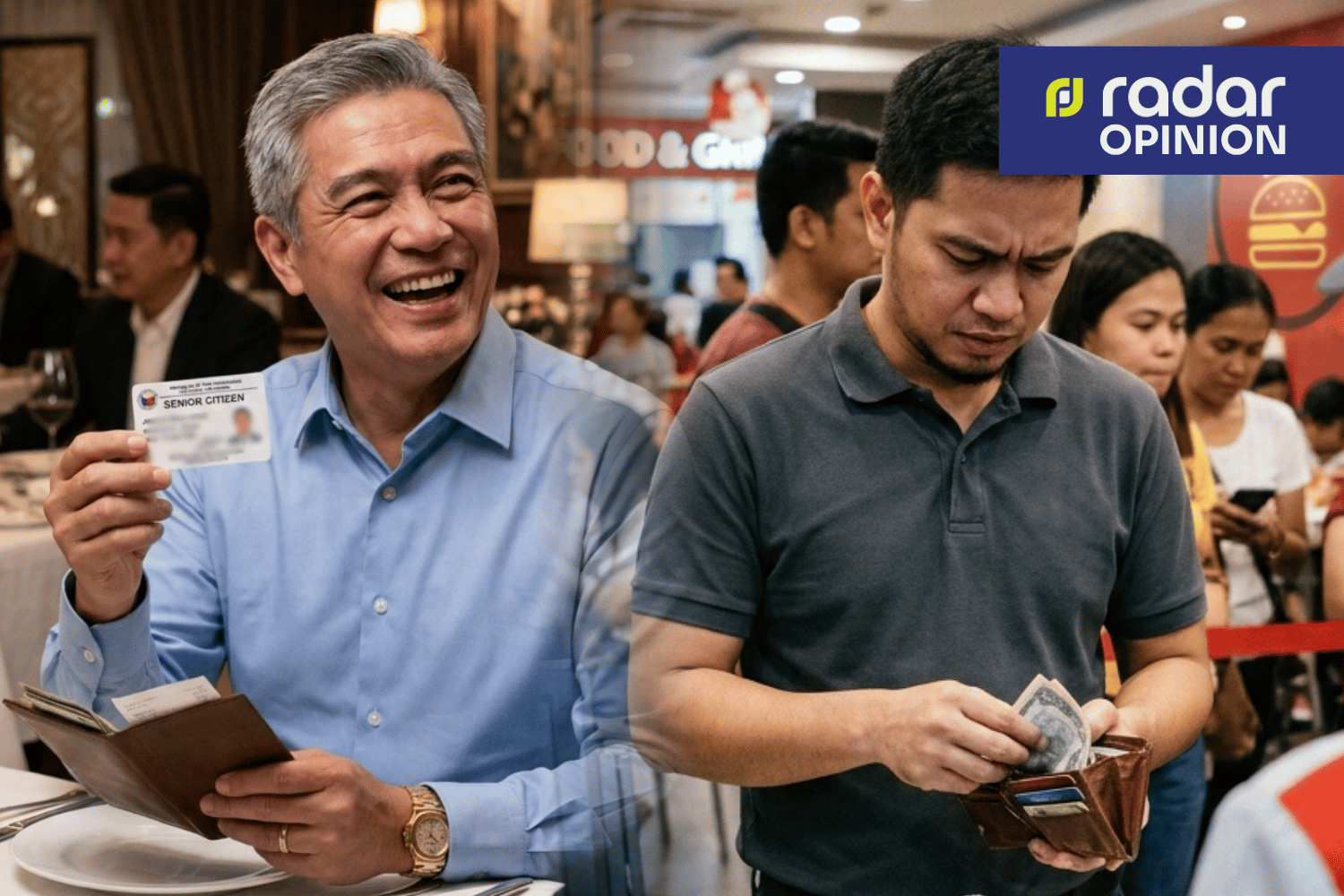
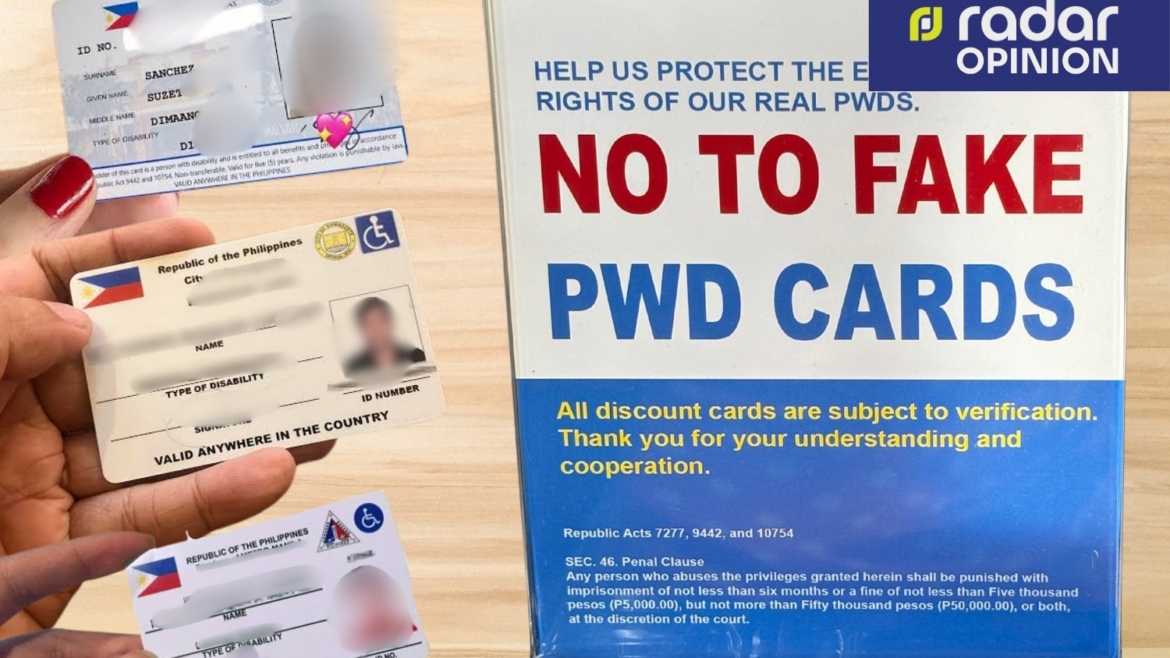
The controversy over fraudulent PWD IDs has understandably focused on enforcement. Reports of fake identification cards and improper issuances have raised concerns about the abuse of benefits intended for persons with disabilities. The government’s response has largely centered on stricter verification and penalties for fraud.
But the controversy exposes a more fundamental problem with the policy itself. By extending mandatory discounts to restaurants, hotels, and other discretionary spending without regard to financial capacity, the Philippines has created a system that can disproportionately benefit affluent consumers while imposing substantial costs on small businesses.
The central issue is whether a social welfare policy should subsidize consumption based on the amount people spend rather than the level of assistance they actually need.
The class imbalance in PWD discounts
Under Republic Act No. 10754, qualified PWDs receive a 20% discount and VAT exemption on specified goods and services, including medicines, medical treatment, transportation, restaurants, hotels, and recreational activities.
The justification for subsidizing essential expenses is readily apparent. Persons with disabilities may face additional medical costs, employment barriers, and mobility challenges. However, the rationale becomes considerably weaker when the same entitlement applies to expensive restaurants, luxury accommodations, and other discretionary purchases.
Consider a minimum-wage worker paying ₱150 for lunch and a wealthy professional with a valid PWD ID spending ₱5,000 before VAT on dinner. The worker receives no discount. The professional saves ₱1,000 from the statutory discount alone, apart from the VAT exemption.
To illustrate, if the ₱5,000 represents the VAT-exclusive price of qualifying items, the 20% discount reduces the bill by ₱1,000, bringing it down to ₱4,000. The customer also benefits from the VAT exemption, avoiding the tax that would otherwise apply to the purchase. This means the total savings are greater than the ₱1,000 discount alone.
This illustrates the distributional weakness of percentage-based subsidies. The more expensive the qualifying purchase, the larger the discount in absolute pesos. Affluent consumers also have greater opportunities to patronize establishments and enjoy experiences that remain financially inaccessible to most Filipinos.
Poorer PWDs may depend heavily on discounts for medicines and transportation. But this does not justify extending the same unrestricted benefit to luxury consumption. A policy intended to address economic disadvantage deserves scrutiny when its financial benefits can increase alongside a person’s purchasing power.
When discounts favor the wealthy
The arrangement becomes more questionable when we consider who actually finances these benefits.
Unlike government-funded welfare programs, mandatory PWD discounts are initially shouldered by private businesses. Although qualifying discounts may be claimed as income-tax deductions, these are not equivalent to peso-for-peso reimbursement.
For small restaurants, cafés, and neighborhood establishments operating on thin margins, the financial impact can be substantial. Consider a restaurant earning a 10% operating margin on a meal. A mandatory 20% reduction in revenue, without a corresponding reduction in costs, could turn a profitable transaction into a loss.
For illustration, assume a meal has a VAT-exclusive selling price of ₱1,000 and costs the restaurant ₱900 to prepare and serve, including its allocated operating expenses. The restaurant initially earns ₱100, equivalent to a 10% margin. If a 20% discount reduces its revenue to ₱800 while the costs attributable to that meal remain at ₱900, the transaction results in a ₱100 shortfall. This is a simplified hypothetical example, not an estimate of typical restaurant margins or the exact accounting impact on every establishment. Actual costs and tax treatment will vary.
Small businesses also shoulder the administrative costs of compliance, recordkeeping, and dealing with questionable IDs. Their limited resources make these burdens particularly significant.
The broader microeconomic consequences deserve attention. Lower profitability can constrain a small enterprise’s ability to hire workers, increase wages, reinvest in equipment, or expand operations. Businesses may also raise prices to recover part of the expense, shifting the burden to other consumers.
This creates the possibility of a regressive transfer: a modestly profitable neighborhood restaurant effectively subsidizing the expensive consumption of a customer wealthier than its owner.
The government receives political credit for providing the benefit, while the financial obligation is imposed on businesses regardless of their ability to pay.
Discretionary spending creates incentives for fraud
Fraud aggravates an already questionable economic arrangement.
The financial incentive to obtain a fraudulent PWD ID becomes particularly attractive when discounts apply repeatedly to restaurants, hotels, entertainment, and travel. Someone who frequently spends on these activities can accumulate substantial savings over time.
The actual number of fraudulent IDs remains disputed, and legitimate PWDs, particularly those with invisible disabilities, should never be subjected to unwarranted suspicion.
Nevertheless, the economic incentive is clear. As long as the system provides potentially substantial discounts on discretionary consumption, individuals seeking to exploit it have a continuing reason to do so.
Improved verification is necessary, but enforcement alone cannot eliminate the financial incentives that encourage abuse. Narrowing the scope of discretionary discounts would reduce the value of fraudulent IDs and potentially discourage people from acquiring them for financial gain.
Government should pay or narrow the discounts
There are two policy alternatives worth considering.
The first is direct government reimbursement. If the state believes that discounts on restaurants, hotels, and recreation are necessary for social inclusion, the corresponding costs should be financed through public funds rather than imposed on private enterprises. A properly administered reimbursement system, supported by reliable verification and auditing, would distribute the burden more transparently.
The second is to remove mandatory discounts on discretionary spending while preserving strong protections for essential goods and disability-related services.
Neither approach requires abandoning disability rights. Accessibility, reasonable accommodations, and protection against discrimination remain fundamental obligations. Social participation is important, but it does not necessarily require unlimited preferential pricing on expensive consumption.
Both alternatives would require careful implementation. Government reimbursement entails fiscal and administrative costs, while narrowing discounts must avoid depriving financially disadvantaged PWDs of meaningful access to everyday services.
The objective should be a more equitable system that protects legitimate beneficiaries without imposing disproportionate burdens on small enterprises.
The controversy over fake PWD IDs should therefore prompt a broader examination of the policy’s economic design. A welfare entitlement is not necessarily progressive simply because it benefits a protected group. Its fairness also depends on who receives the greatest financial benefit, who bears the cost, and whether it advances genuine social needs.
In a country marked by significant income inequality, there is a legitimate question about why we require struggling businesses to subsidize discretionary spending by people who can already afford it.
Editor's note
The views expressed in this article are those of the author and do not necessarily reflect the views of radar.
READ:
OPINION: The government is counting the cost but missing the growth
Von Cuerpo
July 30, 2026
OPINION: The Philippines cannot keep fixing food prices without fixing agriculture
Kenneth M. del Rosario
November 4, 2026
OPINION: Fake PWD IDs continue to cost restaurants billions
Nikko Miguel Garcia
May 8, 2026