The famous Philippine carabao mango is not actually indigenous to the country.
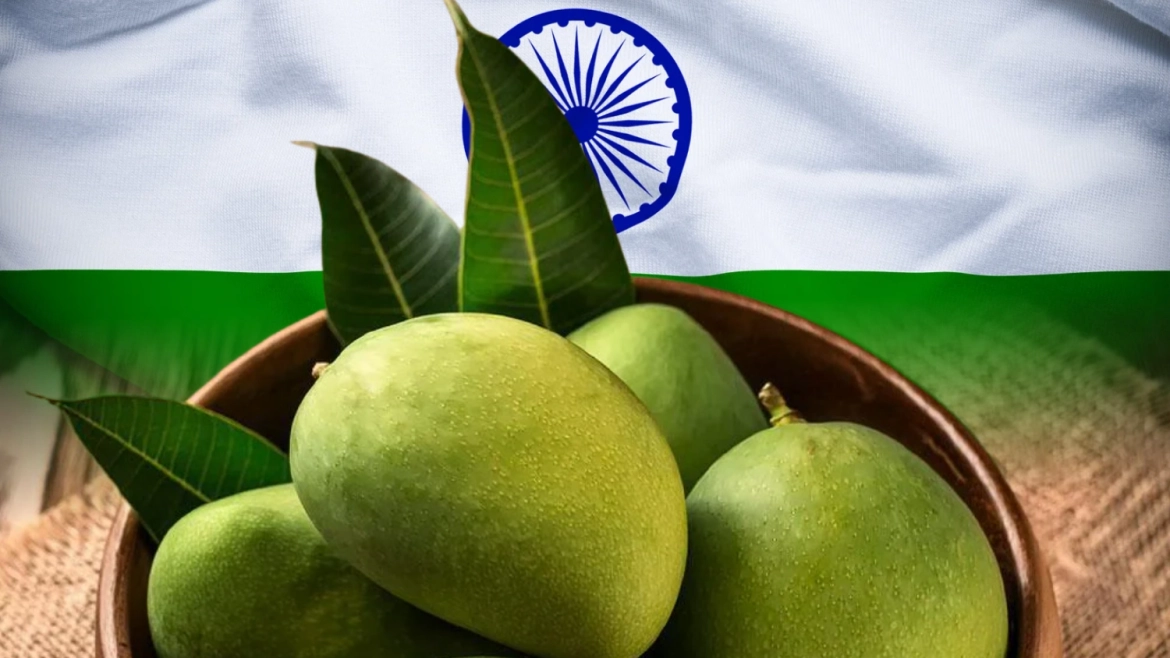
Surprisingly, the sweet, golden fruit that has become one of the Philippines’ most recognizable agricultural products belongs to Mangifera indica, a species originating from South Asia, particularly the Indian subcontinent, that was introduced to the archipelago centuries ago.
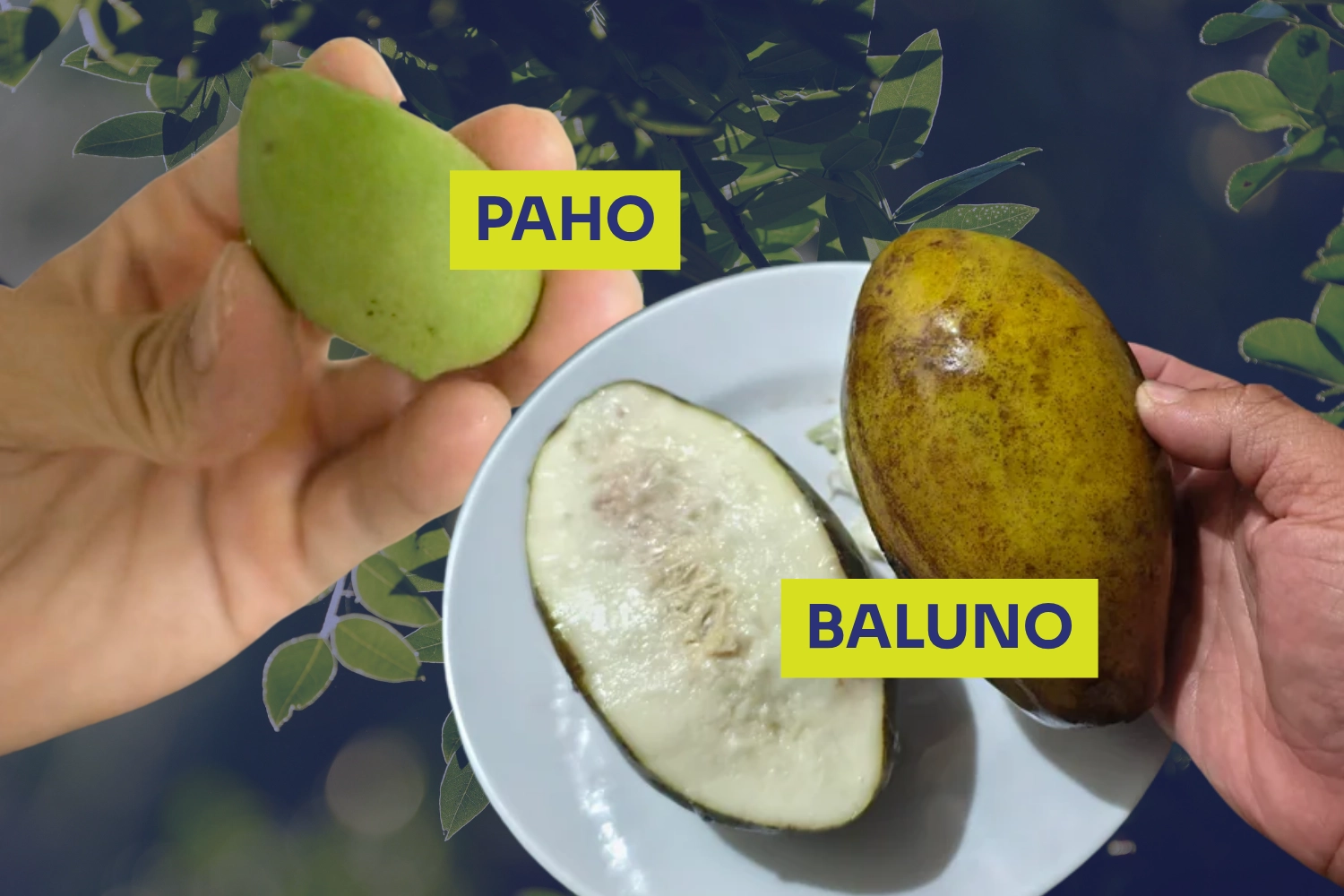
But the Philippines has its own remarkable mango heritage, including paho, a miniature wild mango endemic to the country, and baluno, a giant white-fleshed mango long associated with the food traditions of Palawan and Mindanao.
These lesser-known mangoes look and taste dramatically different from the carabao mango most Filipinos recognize.
Paho: The tiny indigenous mango
Paho is one of the Philippines’ fascinating native fruits.
Associated with Mangifera monandra, a species endemic to the Philippines, paho grows on tall trees and produces tiny, aromatic fruits that can be as small as olives.
Unlike the sweet carabao mango, paho is intensely sour, making it particularly suitable for pickling and traditional Filipino salads.
According to culinary historian Felice Prudente Sta. Maria, early Spanish accounts described Filipinos preserving these miniature mangoes in saltwater, much like European olives.
Today, paho remains a seasonal delicacy in Batangas, Quezon, Laguna, Mindoro, and other provinces.
It is commonly prepared as ensaladang paho, mixed with tomatoes, onions, and bagoong, or preserved in brine.
Because it is rarely cultivated commercially, paho is difficult to find in supermarkets. It occasionally appears in traditional markets during the summer months.
Baluno: The giant white mango
At the opposite end of the spectrum is baluno, also called bulno, bayuno, or bauno in different Philippine communities.
Scientifically known as Mangifera caesia, baluno is native to parts of Southeast Asia and has a long history in the food traditions of Palawan and Mindanao, although botanical records classify it as introduced to the Philippines.
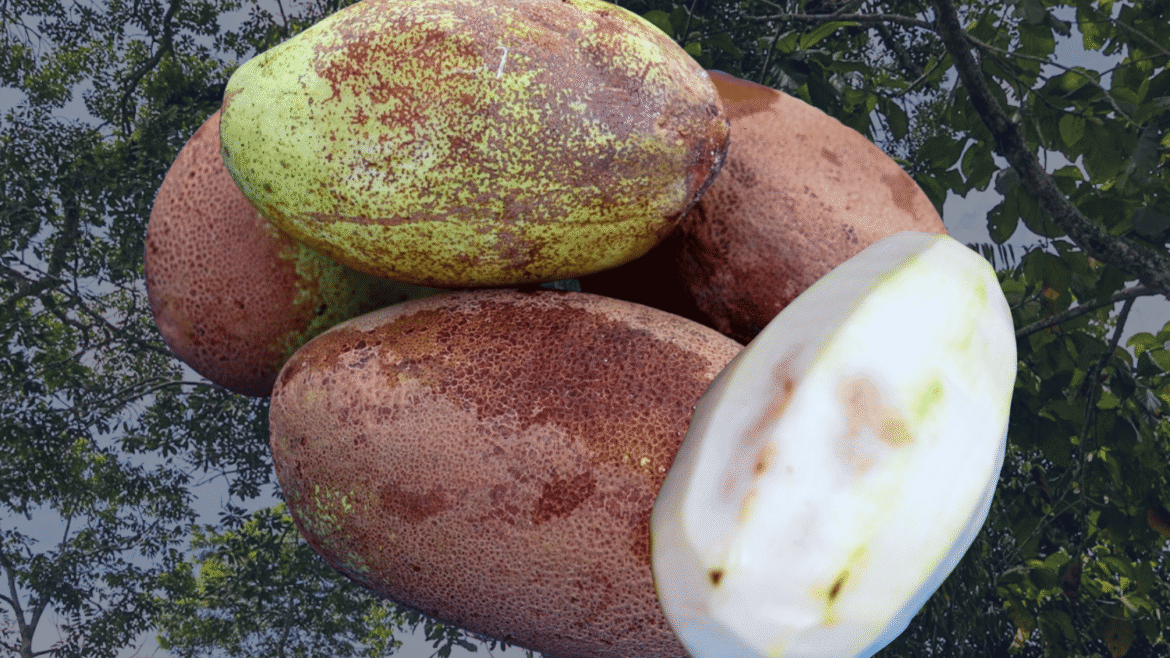
Unlike the miniature paho, baluno produces large, pear-shaped fruits that can approach one kilogram in weight.
Its greenish-brown skin conceals soft, creamy-white flesh with an unusual combination of sweetness, acidity, and a powerful fragrance.
Some describe its flavor as a cross between mango, guyabano, and custard.
The tree itself can reach approximately 30 to 45 meters in height, towering over surrounding vegetation.
In parts of Palawan, Zamboanga, Basilan, Sulu, and other areas of Mindanao, baluno remains a traditional seasonal fruit.
However, its delicate flesh and short shelf life make commercial transportation difficult. Consequently, it is rarely encountered in Metro Manila supermarkets.
A forgotten chapter of Philippine food heritage
The stories of paho and baluno reveal that Philippine mango heritage extends far beyond the internationally celebrated carabao mango.
While paho represents the country’s indigenous mango biodiversity, baluno illustrates how other Southeast Asian mango species became deeply embedded in local food traditions.
Their limited commercial cultivation has made them unfamiliar to many younger Filipinos.
Preserving these traditional fruit trees means protecting biodiversity, regional cuisines, and generations of knowledge about the country’s edible plants.
The carabao mango may have made the Philippines famous worldwide, but it is only one chapter in a much richer mango story.