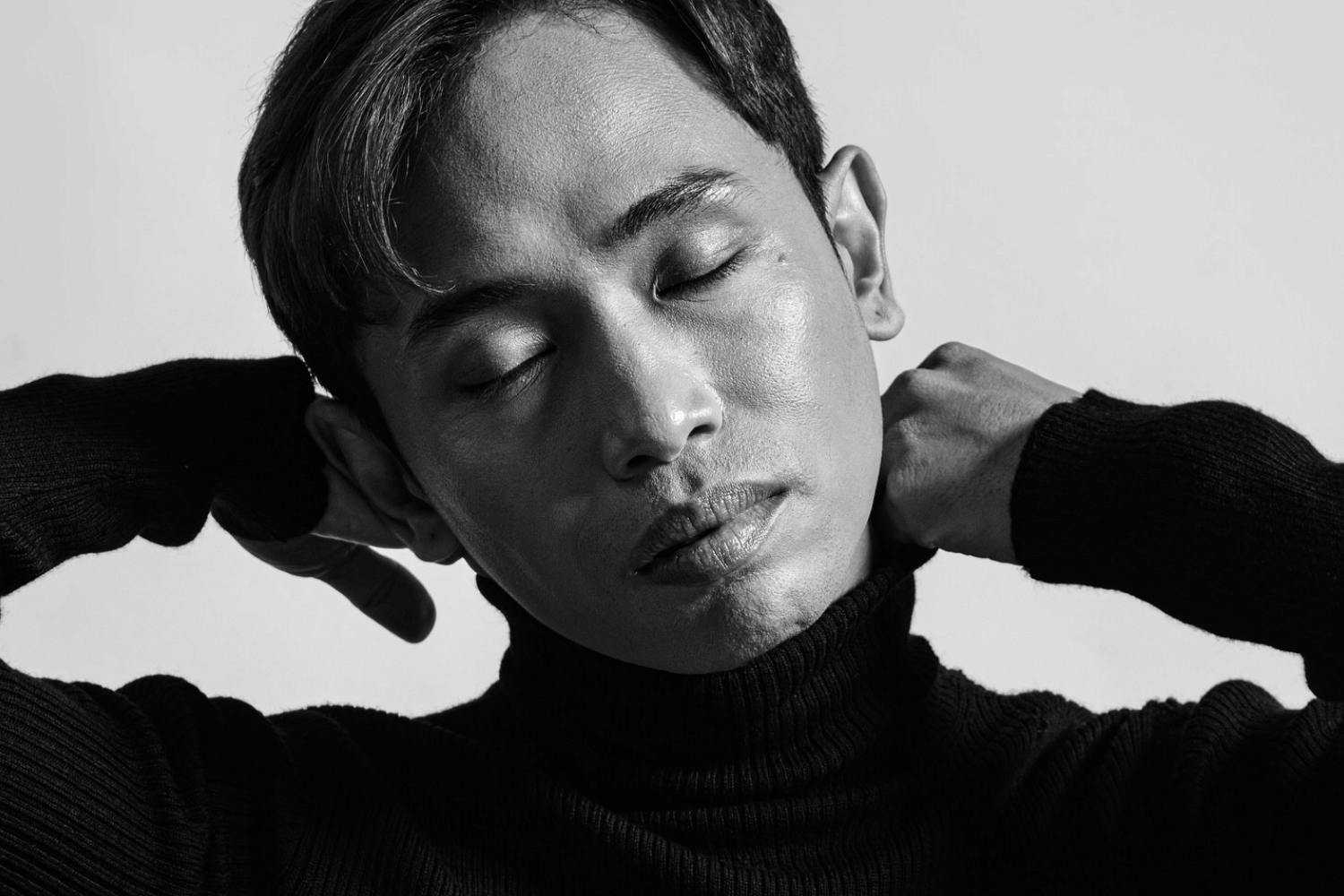
Instead of erasing these identities, he challenged the creative industry to add necessary depth to these often one-dimensional roles.
“What we should do, as part of the creative industry, is to humanize the stereotype,” he added. “Hindi natin kinakahon na, for example, bakla, parlorista. Hindi pwedeng bakla at parlorista lang. Kailangan nating malaman kung anong klaseng tao siya.”
He acknowledged a recent discussion sparked by a peer, validating the conversation as a necessary starting point, but stressed that the dialogue must lead to actual character development rather than remaining a mere talking point.
Glaring double standard in acting
Beyond the stage, Palmos has made significant waves on screen, appearing in the worldwide trending Netflix Original movie “Doll House,” Regal Film’s “Shake, Rattle and Roll Extreme,” and GMA’s hit drama Widow’s War.
Throughout his expansive career, he said he has observed a glaring hypocrisy in how queer actors are critiqued compared to their straight counterparts.
He questioned the frequent expectation for queer actors to play straight roles just to prove their versatility—a standard rarely, if ever, imposed on heterosexual actors playing straight characters. He emphasized that the quality of an actor lies in their ability to transform into different characters while simultaneously pulling from their own lived experiences.
“Bakit hindi natin tinatanong si Vilma Santos na panay babae lang ang roles niya at panay nanay lang ang roles niya? Hindi ko nilalang, pero, bakit ‘yon lang ang roles niya?” Palmos argued. “So tatanggalin na ba natin ang moniker ni Christopher de Leon as one of our best actors kasi never pa siyang gumanap na bakla?”
He extended the comparison to Hollywood legends, noting that limiting an actor’s worth to their ability to play opposite genders fundamentally diminishes the accomplishments of greats like Meryl Streep, compared to peers like Cate Blanchett who have famously played male roles.
Palmos, who won a PhilStage Gawad Buhay award for his featured role in Barefoot Theater Collaborative’s “Laro” in 2023, firmly stated his refusal to subscribe to that kind of limiting perspective. He made it clear that he will never force himself to act masculine merely to secure jobs or validate his talent to critics.
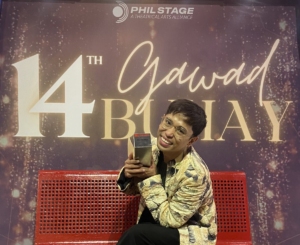
“Hindi ako magsu-subscribe na kailangan kong patigasin ang sarili ko just so I can have roles,” he declared. “I don’t have to be masculine just so I can have roles because there are roles. There are roles for me.”
The unseen emotional labor of queer roles
While lazy critics might assume that a queer actor playing a queer role is an effortless task, Palmos revealed the intense emotional labor required to authentically portray these characters. He cited his experience playing Young Anthony in the “Ang Huling El Bimbo” musical as the most difficult acting challenge of his career.
“Pinaka-nahirapan ako kay young Anthony,” Palmos shared. He explained that because he was fortunate enough to be wholly accepted by his parents and loved ones in real life, he lacked the “emotional bank” to draw from for Anthony, a character who is painfully hiding in the closet.
“So, hindi dahil bakla, madali nang mag-play ng bakla kasi madaming facets ‘yan, kaya nga rainbow eh. That’s why it’s a spectrum,” he stressed, shutting down the diminishing narrative that queer roles require less acting prowess from queer individuals.
Protecting the dreams of queer youth
Ultimately, Palmos’ defiance serves a much larger, more profound purpose: safeguarding the aspirations of the next generation of LGBTQIA+ creatives. He warned that constantly demanding queer actors to fit a certain traditional mold unknowingly limits the dreams of young, effeminate queer kids looking up to them.
“Tinatanggalan natin ng karapatan mangarap ang isang batang bakla at ang nakikita niya sa sarili niya ay limited siya kasi femme siya, at bakla siya. at hindi na siya mabibigyan ng roles,” Palmos stated. “Akala ko ba every dream is valid?”
By fiercely advocating for nuanced, expansive representation, Palmos is ensuring that the theater and film spaces remain a welcoming platform where authenticity is not just accepted, but celebrated.