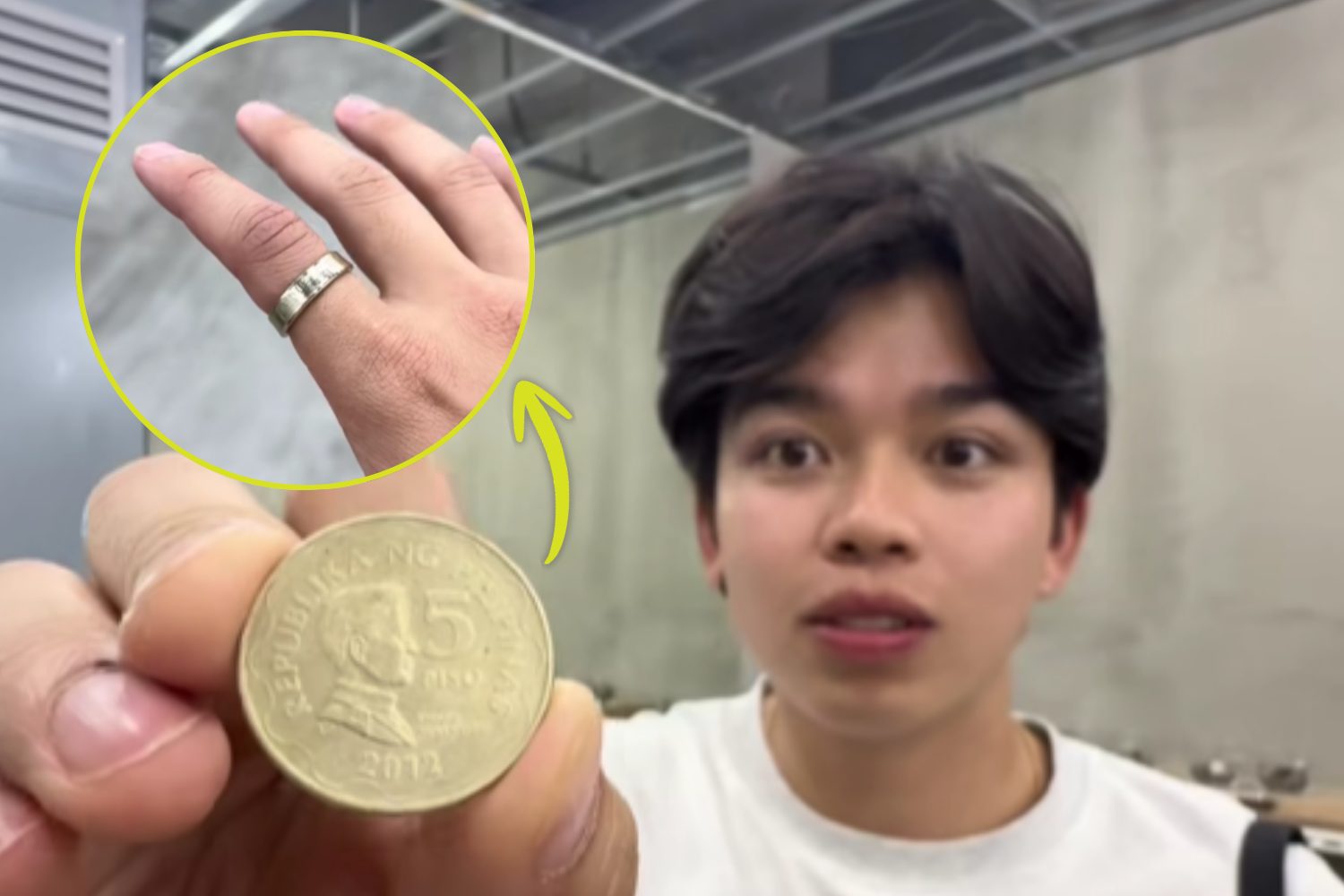
Mikasan clarified that the coin used for the ring was provided and handled solely by the HISEKI, a ring studio in Osaka. Photo by Mikasan / Facebook
Netizens criticized the content creator for choosing a Philippine coin that remains in circulation.
Japan-based Pinoy vlogger Mikasan drew criticism online after sharing a video of a custom ring made from a Philippine ₱5 coin that remains legal tender, prompting discussions about laws that prohibit the mutilation and defacement of Philippine currency.
On July 18, Mikasan posted a vlog documenting a visit to HISEKI, a ring studio in Osaka that offers custom coin ring-making services using coins from different countries. The studio allows customers to choose from various currencies, including Philippine coins ranging from demonetized pieces to those that remain legal tender.
Under Presidential Decree No. 247, the willful defacement, mutilation, tearing, burning, or destruction of Philippine banknotes and coins is punishable by a fine of up to ₱20,000 and/or imprisonment of up to five years.
While turning a legal tender Philippine ₱5 coin into jewelry would fall under the acts prohibited by the decree, the law generally applies within Philippine jurisdiction. Since the coin was processed in Japan, it does not automatically mean Mikasan would face legal liability under Philippine law.
In response to critics, the vlogger clarified that the coin used for the ring was provided and handled solely by the studio. According to him, the video was only intended to share the experience and not to disrespect or misuse any currency.
“Daming expert sa batas bigla a,” he said in a follow-up comment.
Still, many social media users criticized the vlogger for choosing a Philippine coin that remains in circulation.
“Kahit na nasa ibang bansa ang pera, pag-aari yan ng Pilipinas,” one Facebook user commented.
Authorities have previously warned against the practice. In 2025, five individuals were arrested in Siquijor for making rings out of ₱10 coins that were sold to tourists. The Bangko Sentral ng Pilipinas (BSP) and the Philippine National Police filed criminal complaints against the suspects for allegedly violating P.D. No. 247, saying the practice could disrupt coin circulation.
P.D. No. 247 states that defacing, mutilating, tearing, burning, or otherwise destroying Philippine currency renders it unfit for circulation, shortens its usable life, and creates a negative image for the country.
The BSP also underscored the importance of respecting Philippine currency in Circular Letter No. CL-2025-009, saying the country’s banknotes and coins are more than just a means of payment.
“They symbolize national heritage and pride. Handling them with respect honors our heritage and the natural treasures they depict,” the BSP said.
Athena Dagli is a long-time campus journo who especially enjoys all things pop culture and sports. She takes all the chances to rave about them through her writing and radio (or her secret social media accounts.)