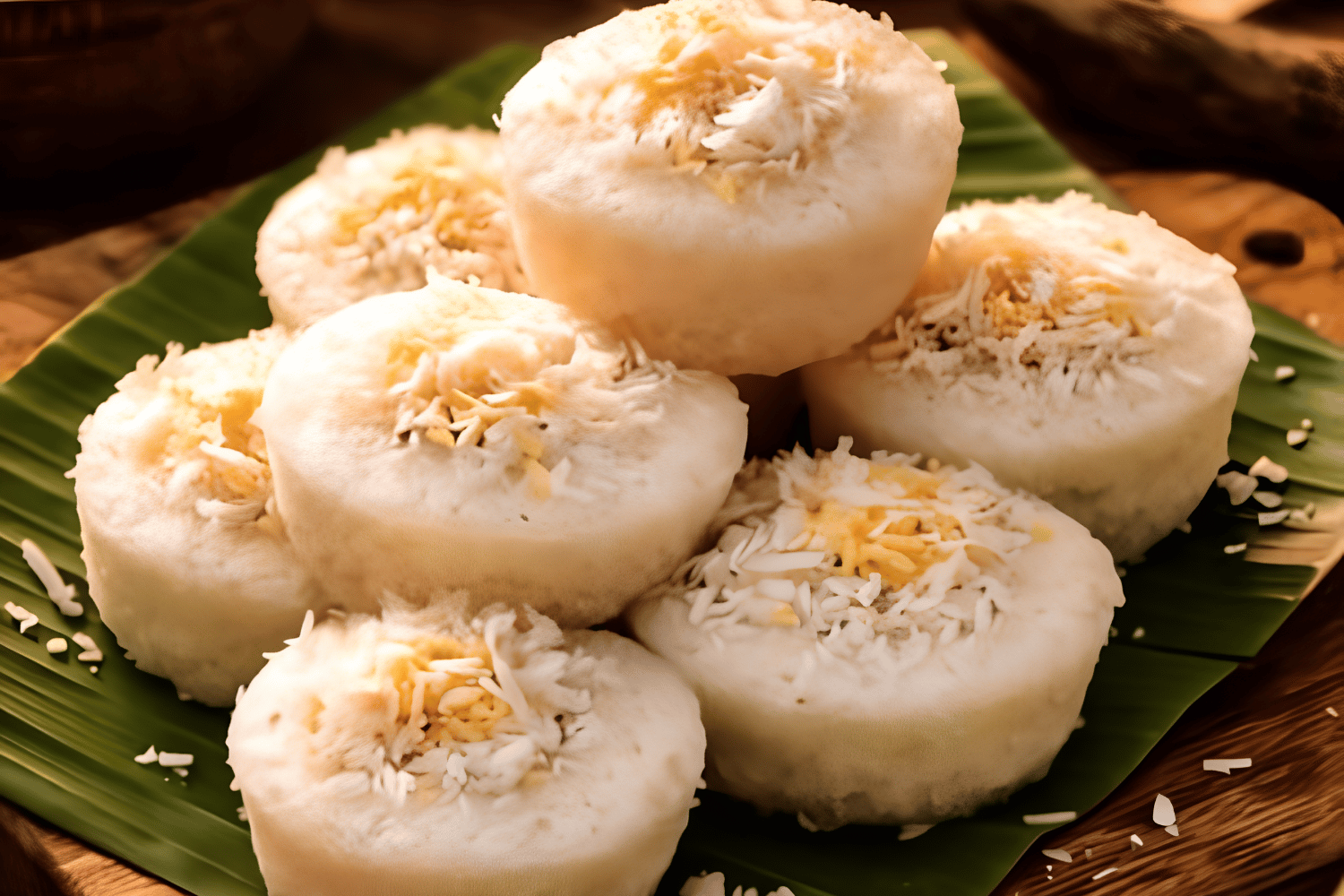
The lid of the steamer lifts, releasing a cloud of hot vapor into the kitchen. Inside are small portions of grated cassava and coconut, packed into simple molds and steamed until dense and chewy.
Beside them waits a pot of black coffee or hot sikwate.
For generations in parts of the Visayas, this was merienda: uncomplicated, filling and made largely from ingredients that could be harvested from the backyard.
This is putong balanghoy.
Known elsewhere as puto lanson or aripahol, the delicacy stands apart from the familiar soft, rice-based puto. Its texture is rougher and denser, with strands of cassava and coconut giving every bite a distinctly rustic character.
And that rusticity is precisely the point.
A root crop becomes Filipino
Cassava, or balanghoy, is not originally from the Philippines. Native to South America, the crop reached Asia through centuries of colonial-era exchange and eventually became deeply embedded in Filipino agriculture and cooking.
It found particularly fertile ground in rural communities because cassava was hardy and adaptable. Where rice could be scarce, costly or difficult to grow, root crops offered another dependable source of carbohydrates.
Filipino cooks did what they have repeatedly done throughout history: they took an introduced ingredient and made it unmistakably local.
The country’s older tradition of steaming rice-based kakanin provided the technique. Cassava supplied a different starch. Coconut and brown sugar—ingredients readily available in many communities—completed the transformation.
The result was putong balanghoy.
One delicacy, many names
Its different names reveal how food traditions evolve from one community to another.
In parts of Iloilo, a related delicacy is known as aripahol. Across Panay and Negros, puto lanson became a familiar market snack. The name “lanson” has been associated with the perforated tin molds traditionally used for steaming the cassava mixture—an ingenious use of ordinary or recycled containers.
In Cebu and other parts of the Visayas, puto balanghoy may be steamed in coconut shells lined with banana leaves.
There is no elaborate equipment involved. That simplicity is part of its heritage.
The taste of what was available
Traditional putong balanghoy begins with grated cassava. The liquid is squeezed out before the cassava is combined with coconut and sugar and steamed. Some versions add bukayo, or caramelized coconut, for a richer, sweeter center or topping.
The ingredients tell their own story: cassava from the soil, coconut from the backyard, sugar from the local market and banana leaves or coconut shells serving as natural cooking vessels.
Nothing needed to look luxurious.
For generations, this was food made from what a household had around it.
It became the kind of filling merienda that could sustain people through an afternoon of work, particularly in farming communities. Served warm with black coffee or sikwate made from cacao tablea, it was both practical nourishment and comfort food.
More than kakanin
Putong balanghoy also illustrates something important about Filipino cuisine: tradition does not always mean preserving something exactly as it existed centuries ago.
Sometimes tradition is adaptation.
Cassava may have arrived from another continent, but Filipinos incorporated it into local ingredients, cooking techniques and everyday rituals until the foreign crop became part of the country’s culinary vocabulary.
The molds changed from coconut shells to recycled tins. Recipes differed from town to town. Names changed across islands.
Yet the basic idea endured: grate what grows from the earth, combine it with coconut and sugar, steam it and share it.
That is why putong balanghoy deserves to be remembered as more than an old-fashioned provincial snack.
Its chewy, uneven texture carries a history of rural kitchens where little was wasted and where cooks did not need expensive ingredients to create something worth passing to the next generation.
In every steaming piece is a particularly Filipino tradition—the ability to take what is available, make it our own and eventually call it home.
READ:
FACT CHECK: Balut’s ‘Filipino Viagra’ reputation isn’t backed by science
Top Dagohoy
September 9, 2026
Nilupak proves Filipino resourcefulness can turn almost anything into a beloved kakanin
radar Lifestyle
June 13, 2026
Pampanga’s San Nicolas cookies carry 400 years of Filipino history in every bite
radar Lifestyle
June 30, 2026