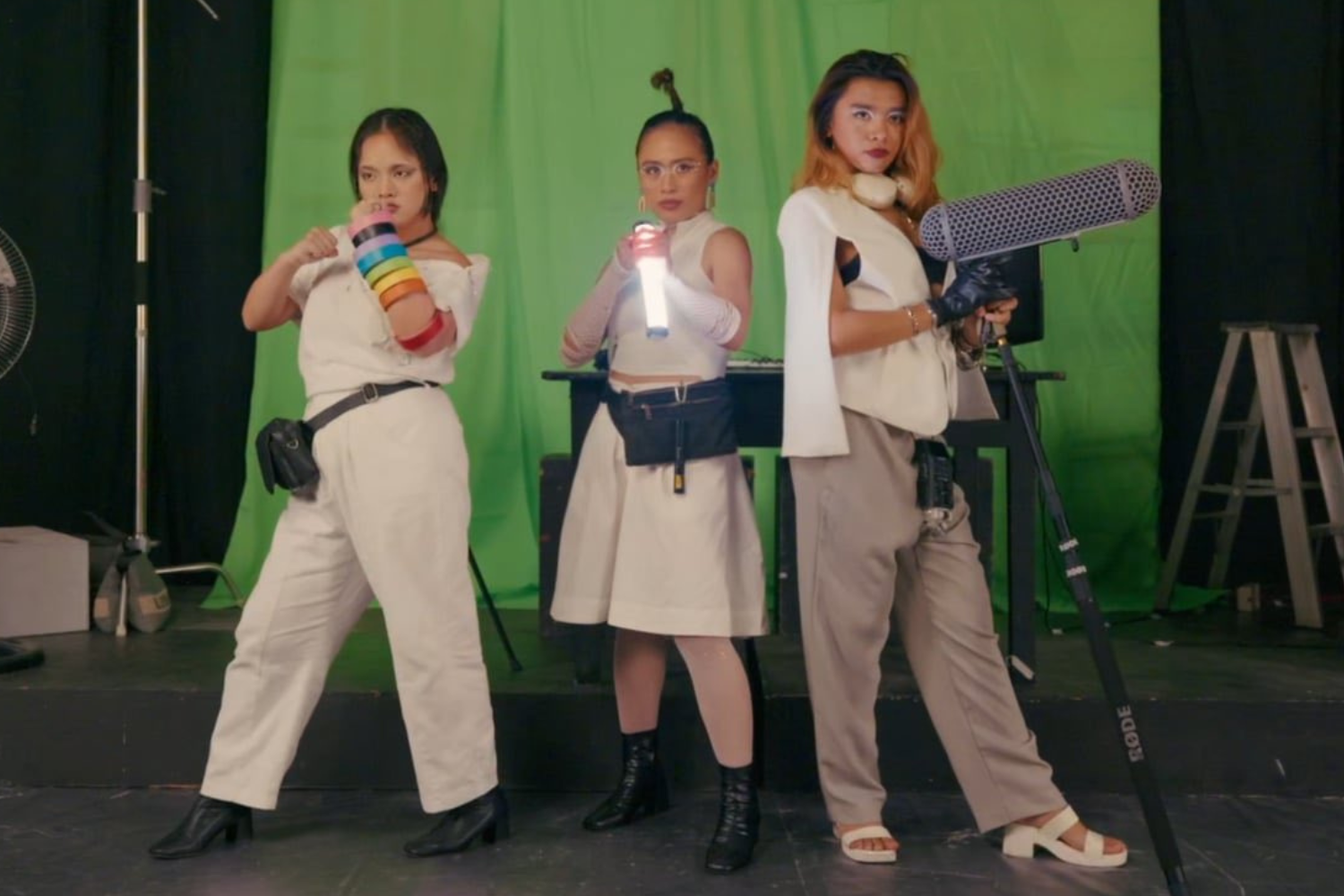
Director Allen Prodigalidad challenges BL dominance, spotlighting erased LGBTQIA+ identities in award-winning short film “Q.I.A.”
There is no denying that the pandemic irrevocably altered the landscape of Philippine entertainment, but perhaps its most fascinating cultural byproduct was the explosion of the boys’ love (BL) genre. When production was at a standstill and audiences were trapped in their homes, stories of young men falling in love became the industry’s unlikely lifeline.
Today, it’s incredibly easy to greenlight a BL project. They are bankable, palatable, and possess a crossover appeal that reaches far beyond the queer community. It is, by all metrics, a massive win for visibility. But as the dust settles on the BL boom, a critical question emerges: Who exactly is getting the spotlight, and who is being left in the shadows?
In the ongoing evolution of Philippine queer cinema, the community has inadvertently crowned a poster child: the masculine gay man. And while their stories are valid and necessary, relying solely on their narratives paints a dangerously monolithic picture of a community whose very strength lies in its diversity.
Privilege of proximity
“Sa totoo lang, diverse naman talaga ang Philippine queer cinema,” shares Allen Prodigalidad, a UP Film Institute graduate and the director of the award-winning short film “Q.I.A,” during an exclusive interview with radar Entertainment.
“Pero ngayon lang, with the rise of the BLs, nagiging poster child kasi ng queerness ‘yong masculine gay men. Parang sila ‘yong naging representative ng buong culture natin, when in fact, mali. Isang portion lang sila.”
Allen’s undergraduate thesis film, “Q.I.A.”—which recently bagged the Palermo Queer Prize at the Italy’s Sicilia Queer Film Festival—is a razor-sharp critique of this exact phenomenon. The film follows three film students: Queenie, a ‘babaeng bakla’ or “women who associate with and develop close friendships with gay men and participate in gay cultural activities,” Izzy, an intersex character, and Angie, an aromantic-asexual trans woman.
Their antagonist is Maskulado, a masked villain who believes that the current state of queer cinema is improper and seeks to transform the industry into an endless loop of BLs, turning anyone who doesn’t fit his hyper-masculine, palatable standard into paminta or closeted, masculine-presenting gay men.
The villain’s motivation in the film mirrors a real-world bias. When asked why masculine gay men are more easily accepted by mainstream Filipino audiences, Allen points to an uncomfortable truth about societal standards.
“May proximity kasi ‘yong masculine gay men to hetero, to straight men,” he observes, adding that this is because they can easily pass as straight if they choose to, they are granted a level of privilege within the community. They become the model of desire and self-worth. “Parang kapag hindi ganyan ‘yong hitsura mo, hindi ganyan ‘yong kilos mo, parang ‘lesser than’ ka or like hindi ka ‘in’ sa mga nakakataas sa social hierarchy.”
The erasure of ‘I’ and ‘A’
While we have seen a steady, albeit slow, rise in sapphic and transgender representation fighting for screen time alongside gay male stories, the letters further down the LGBTQIA+ acronym are almost entirely absent from the Philippine cinematic consciousness.
Intersex representation is virtually non-existent, with only a handful of mainstream films ever daring to tackle the subject. Aromantic and asexual (aro-ace) representation is even bleaker; Allen notes that you’d be hard-pressed to find more than a single short film from the early 2010s portraying the A-spectrum experience locally.
This erasure is what makes “Q.I.A.” such a vital piece of work. By centering Izzy and Angie, Allen is not just telling a story; he is demanding space. The film challenges the audience and the industry to look beyond the bare minimum of representation. It’s a call to action for producers and filmmakers to take risks on nuanced, diverse narratives rather than playing it safe with bankable tropes.
To be queer is to question everything
Ultimately, true queer representation cannot exist in a vacuum. It cannot just be about palatable love stories stripped of their socio-political context. The struggle for queer liberation is intrinsically tied to the struggles of other marginalized sectors.
For Allen, the queer mindset is inherently radical. “Napakaraming bagay na pinipilit lang satin na ito ‘yong normal, na ito ‘yong tama, na ito ‘yong dapat,” he says, reflecting on the historical erasure of queer identities like the asog and babaylan.
Living as a queer person in the Philippines means existing in a system that frequently works against you. That lived experience of marginalization should naturally foster empathy and a critical eye toward all systemic injustices.
“Hindi dapat natatapos sa pagiging bakla ang pagiging bakla,” Allen asserts passionately. “Dapat nakikialam ka, nakikisangkot ka sa mga isyu ng lipunan. As a queer person, alam mo kung ano ‘yong feeling ng hindi natatrato ng tama. So dapat nare-reflect mo ‘yon doon sa world around you. Sa laban ng mga kababaihan, sa laban ng mga manggagawa, ng mga tsuper, ng mga manininda, dapat naku-kuwestiyon mo na lahat ng bagay sa paligid mo.”
Beyond the bare minimum
Philippine queer cinema is at a crossroads. The success of the BL genre has proven that there is a massive, hungry audience for queer stories. The door has been kicked open. But now that we are inside the room, we have to decide what we are going to say.
Filmmakers like Allen are leading the charge, proving that audiences are ready for stories that don’t just entertain, but challenge. It’s time for the industry to step up, to stop hiding behind the safety of the status quo, and to pass the mic to the out actors, the marginalized identities, and the radical voices waiting in the wings.
Because if we are only telling one kind of queer story, we aren’t truly telling the queer story at all.
READ:
All-queer Femme MNL goes global through sweat, hustle, and Hip Hop Int’l
Rafael Asonza
June 24, 2026
Filipino thesis film ‘Q.I.A.’ makes history with win at Italy queer festival
Nikko Miguel Garcia
June 2, 2026
Filipino trans film ‘Dreamboi’ lands int’l premiere at historic SanFo Frameline fest
Rafael Asonza
May 13, 2026