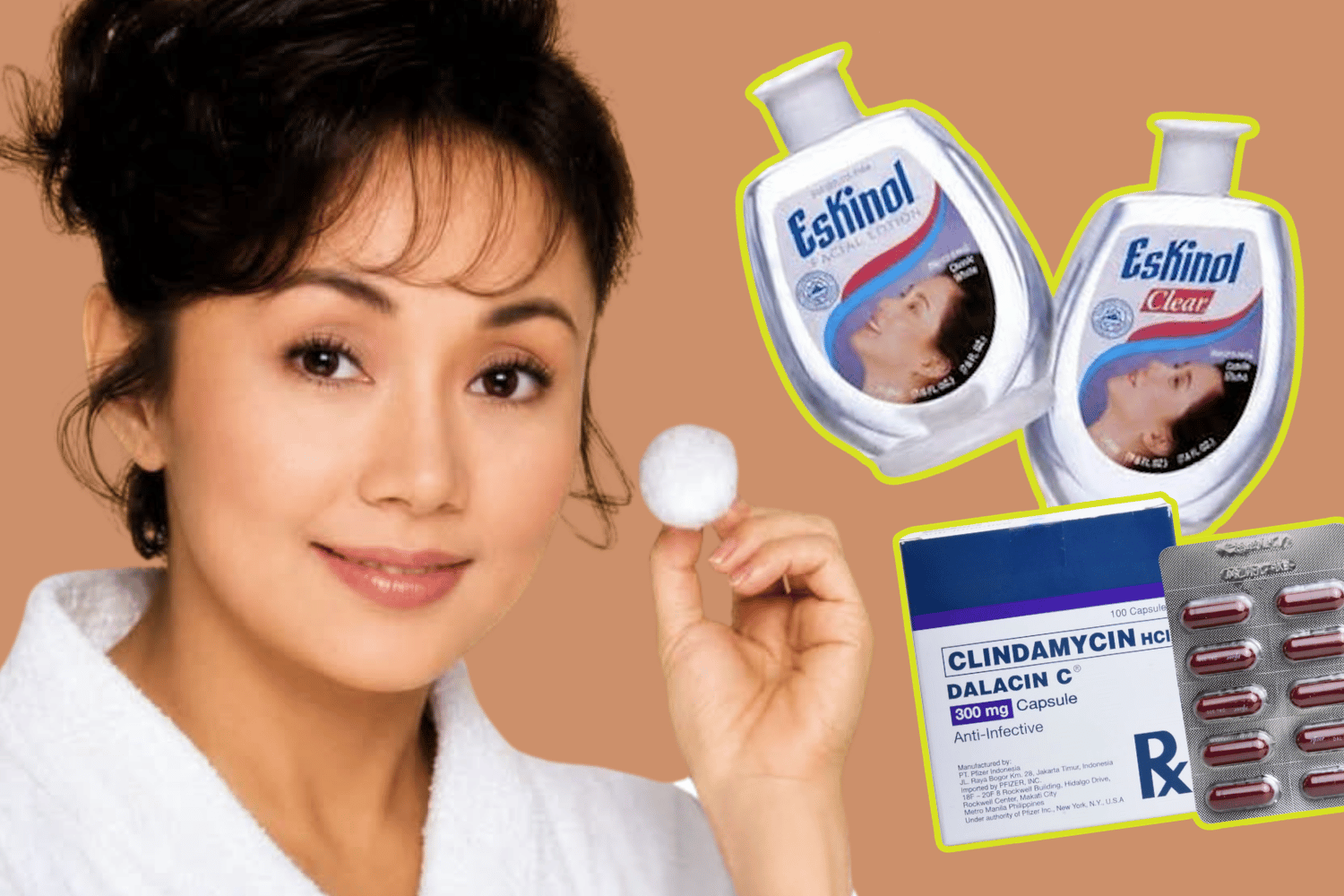
The once-popular Flipino acne hack may have done more harm than good, according to dermatologists.
A teenager stares into the mirror before school, frustrated by another fresh pimple that seemed to appear overnight. Desperate for a quick fix, they complain to a cousin, classmate, or neighbor—only to hear the same advice that countless Filipino teens once swore by:
“Maglagay ka ng Dalacin C sa Eskinol. Tanggal ’yan.”
No prescription. No dermatologist. Just open a few Dalacin C capsules, pour the powder into a bottle of Eskinol facial cleanser, shake well, and use it every night. Some even added Myra E capsules, believing they would prevent dark spots and lessen the dryness.
For many Filipinos growing up in the late 1990s and 2000s, it wasn’t just another beauty tip—it was considered the ultimate budget-friendly acne solution, passed from one generation of teenagers to the next long before skincare influencers, ingredient checkers, and dermatologist-created content dominated social media.
Today, however, dermatologists say the once-popular DIY remedy is one skincare trend that should stay in the past.
When word of mouth was the expert
The popularity of the mixture reflected a very different era of skincare.
Today’s consumers have easy access to board-certified dermatologists on social media, evidence-based skincare advice, ingredient databases, and affordable products formulated for specific skin concerns.
Two decades ago, that wasn’t the case.
Scientific information about skincare wasn’t as accessible to the general public, while misinformation spread mainly through personal recommendations. If a cousin claimed the mixture cleared their pimples in a week, chances were dozens of others would try it too.
Professional acne treatments were also less accessible and often expensive, making homemade remedies especially attractive.
Why people believed it worked
The logic seemed convincing.
Dalacin C contains clindamycin, an antibiotic commonly prescribed to treat bacterial infections. Many believed adding it to Eskinol would directly kill acne-causing bacteria on the skin.
Meanwhile, traditional Eskinol formulations contained alcohol and salicylic acid, ingredients known for removing excess oil and helping dry out pimples. Together, users believed they had created a powerful acne treatment at a fraction of the cost of seeing a dermatologist.
Many even reported visible improvements, at least initially.
What dermatologists say today
Modern dermatologists, however, strongly discourage the practice.
One of the biggest concerns is antibiotic resistance.
Clindamycin is a prescription antibiotic. Using it improperly—especially by opening oral capsules and applying them directly to the skin without medical supervision—can encourage acne-causing bacteria to develop resistance. When that happens, the medication may become less effective when patients genuinely need it.
Another issue is damage to the skin barrier.
The powder inside oral capsules was never designed for topical use. Combined with the high alcohol content found in older Eskinol formulations, the mixture can cause excessive dryness, irritation, peeling, redness, and even worsen inflammation.
Experts also point out that medicines are carefully formulated to remain stable at specific pH levels. Randomly mixing an antibiotic into a commercial facial cleanser can alter its chemical stability, potentially making it less effective—or even irritating to the skin.
Skincare has evolved
The Dalacin C-and-Eskinol mixture has become a nostalgic memory for many Filipinos, but it also reflects how much skincare has changed.
Today’s acne treatments are supported by significantly more scientific research than they were decades ago. Dermatologists now emphasize protecting the skin barrier, avoiding unnecessary antibiotic use, and using ingredients such as benzoyl peroxide, adapalene, salicylic acid, azelaic acid, and properly formulated prescription medications when appropriate.
The story of Eskinol and Dalacin C isn’t just about an old beauty trend. It is a reminder of a time when skincare advice relied more on anecdotal success than scientific evidence—and why many of yesterday’s “miracle hacks” are now being replaced by safer, research-backed treatments.
READ:

Bebebalm founder Carol Ong on turning a personal need into a growing skincare brand
Kiara Gorrospe
November 7, 2025
MYTH BUSTER: Is tallow really a miracle skincare product?
Top Dagohoy
July 4, 2026
‘Metrosexual’ helped normalize skincare, fashion, and self-care among Filipino men in the early 2000s
radar Lifestyle
May 7, 2026