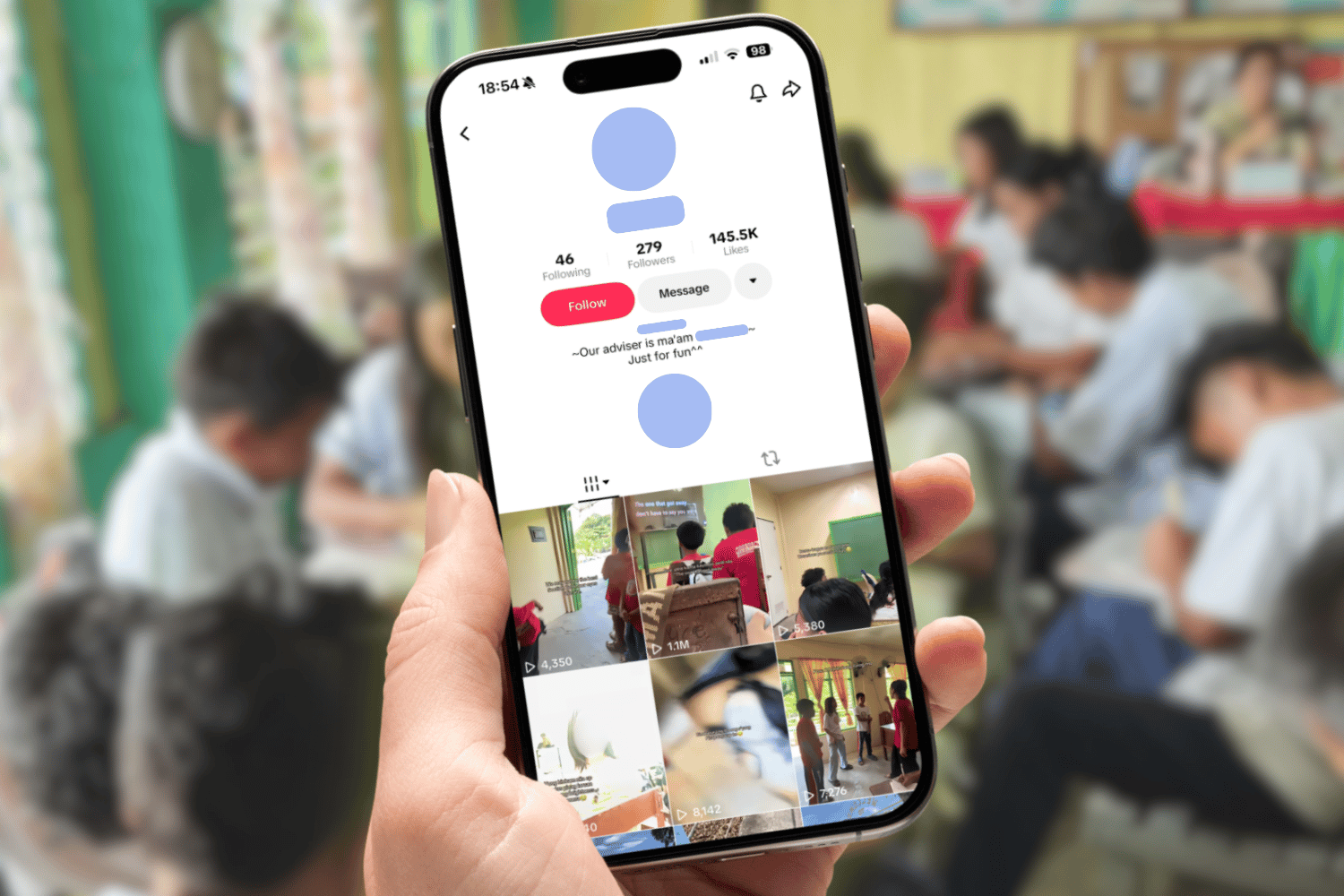
Some raise concerns over privacy, digital safety, graded online requirements.
“Your section absolutely does NOT need a social media manager.”
This was the sentiment behind a viral X post that sparked discussion over a growing trend among Filipino grade school and high school students, where class sections are creating their own social media accounts—and even appointing student officers to manage them.
From classroom updates and birthday greetings to group photos and TikTok trends, these pages have become a sort of digital yearbook where students document their lives in the classroom. But as these accounts become increasingly common, some have begun asking: what happens when classrooms become public content?
Online, some users supported the trend, saying it is simply the younger generation’s way of creating and preserving memories. Others, however, argued that platforms such as TikTok make it easier for students—and their personal information—to reach unintended audiences.
Some students revealed that these accounts are not always created just for fun, claiming that they are also required for school activities.
“Our PE and Health teacher told us kailangan namin mag-post [on] our page about our esports game na gaganapin sa section, kasi raw our generation is technically connected with the media,” a student shared on X. “Akala namin for trends din, pero actually, for grades din po ang purpose ng school pages/accounts.”
This prompted users to question whether engagement metrics, such as likes, comments, and shares, have also become part of classroom requirements. This supposed practice of requiring students to publicly post content for grades has also raised concerns about participation, consent, and digital safety.
With these posts featuring students’ names, class sections, and unblurred faces, what may seem like a harmless online keepsake may also become a permanent digital footprint for minors.
In a 2024 memorandum, the Department of Education reminded schools that posting images or personal information of students on social media requires parental consent. More recently, the agency reiterated its guidelines on maintaining safe learning environments, prohibiting students and school personnel from using gadgets for social media and content creation during class hours.
For many users online, the rise of student-run class pages reflects a broader challenge of preparing the youth for an increasingly digital world without making privacy the price of participation. As students continue to preserve school memories online, questions remain about how much of their student lives should end up on the public feed.
READ: