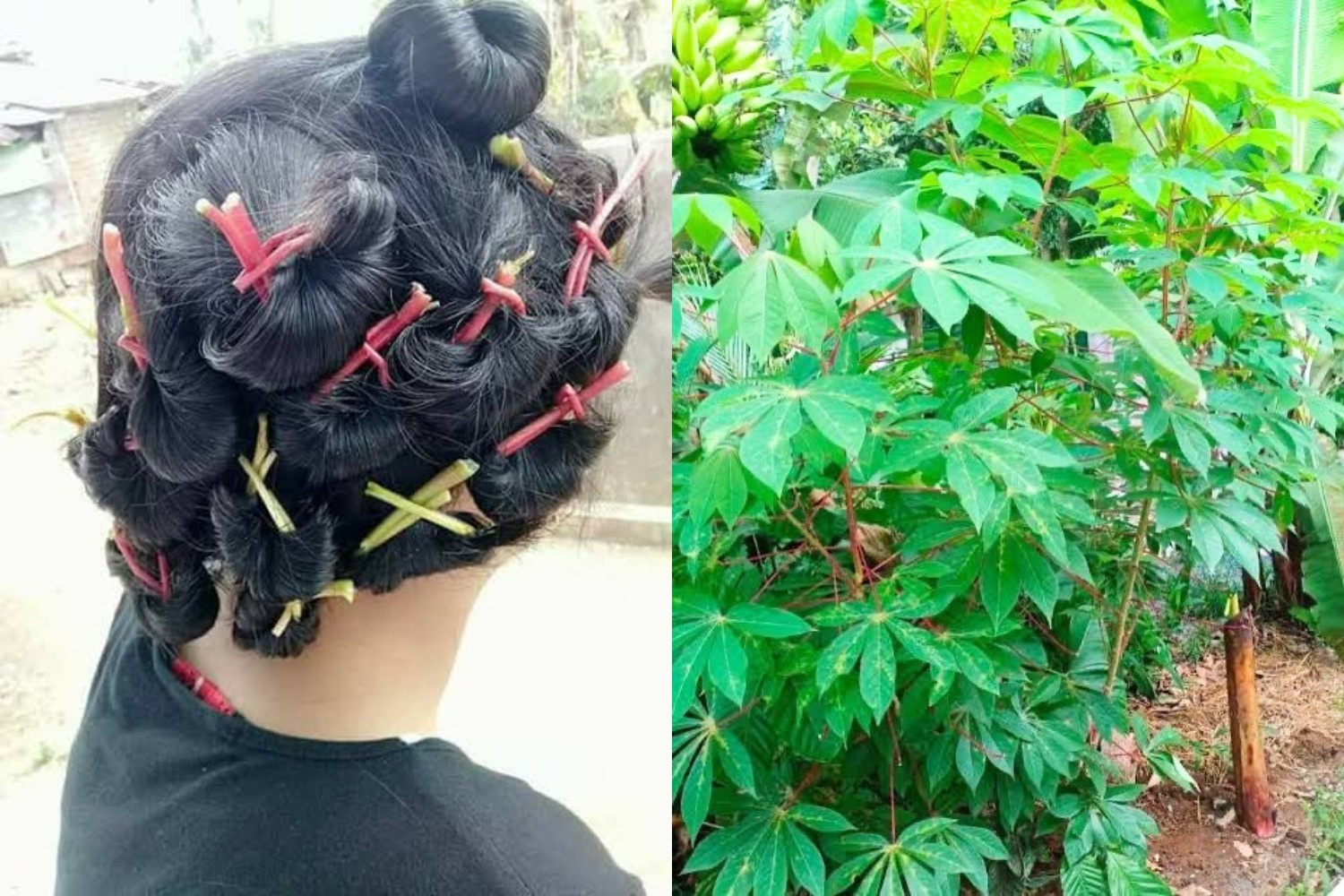
The fibrous architecture of the cassava plant and the hanging habits of the Philippine parrot birthed a heatless curling tradition in the heart of the provinces.
In many rural communities in Southern Luzon, Western and Central Visayas, and even Northern Mindanao where cassava thrives as a secondary crop, using cassava stalks to curl hair is a childhood rite of passage.
Often called ‘kulasisi‘ or simply natural perming, this practice usually happens during lazy afternoons or before a local barangay fiesta. It is not a solitary activity, and that’s the beauty; it forms a core memory when mothers sit behind daughters on a bamboo bench or playmates do each other’s hair while sharing stories.
The term ‘kulasisi’ is actually the local name for the Philippine Hanging Parrot (Loriculus philippensis). These tiny parrots are known for their habit of hanging upside down from branches. Rural folk noticed that the way the hair is “hung” and looped on the cassava stalks resembled the way the kulasisi bird clings to trees. Eventually, the hairstyle itself inherited the name.
Parrots and stalks
While Filipinos have likely been playing with cassava stalks for centuries, cultural analysts suggest the 1960s and 70s were the “Golden Age” of this practice. During this era, professional salons were rare and expensive in the provinces. Rural mothers adapted their knowledge of the plant—already used for food and laundry starch—into a tool for vanity.
So how does it work? The cassava leaf stalk is unique because it is fibrous yet flexible. When you “crack” or bend the stalk into a series of interconnected V-shapes, the fibers don’t fully snap. This creates a sturdy, geometric frame that can hold the tension of the hair without needing a single bobby pin or elastic band.
Nature’s bouncy bond
Freshly cut cassava stalks contain a high water content. As the hair is wrapped around the stalk, it stays slightly damp. As the stalk begins to dry over several hours, it undergoes a minor contraction. This “sets” the hydrogen bonds in the hair—the same scientific principle behind why wet hair takes the shape of a roller once it dries.
Unlike modern curling irons that use high temperatures to break the hair’s disulfide bonds (which can cause damage), cassava rollers use tension and time. This results in sausage curls that are surprisingly bouncy and, more importantly, completely heat-damage-free.