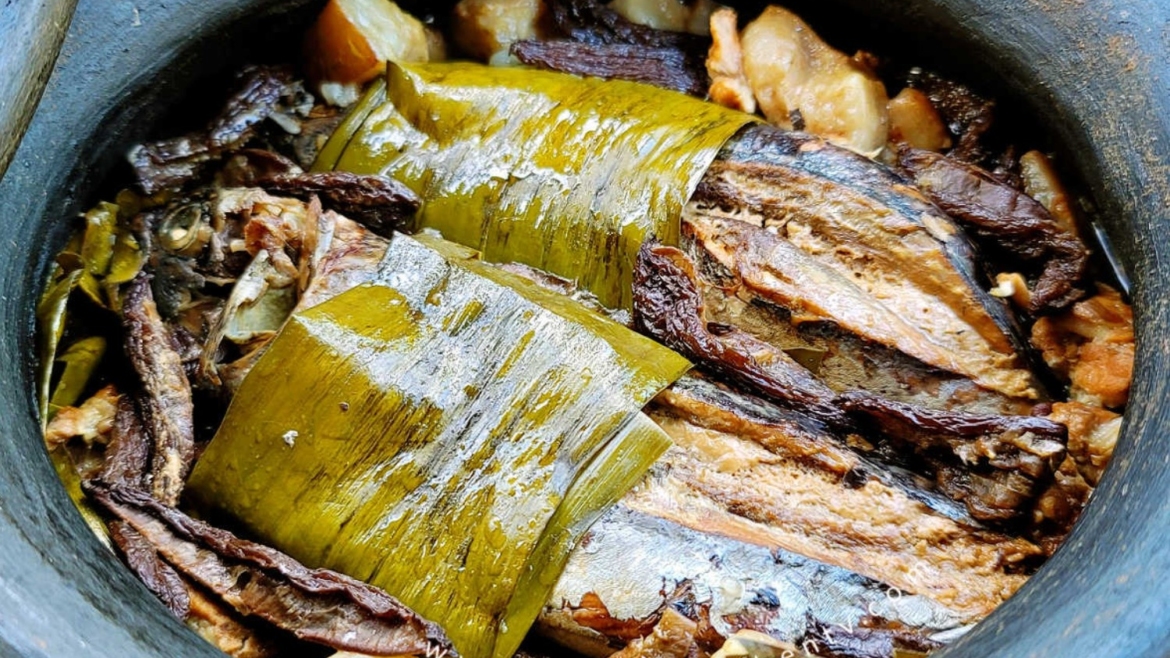
Tenga ng daga brings a distinct texture in traditional Filipino kitchens.
A bowl of freshly cooked pancit arrives at the table. Among the noodles, carrots, and cabbage sits a curious dark ingredient—thin, wrinkled, and oddly shaped. A first-time diner pokes it with a fork, hesitates for a moment, then takes a bite. It is crunchy yet chewy, slightly gelatinous, and surprisingly pleasant. Then comes the revelation: it’s called tenga ng daga.
The name alone is enough to make some people raise an eyebrow. After all, tenga ng daga literally translates to “rat’s ear.” For the uninitiated, it sounds less like food and more like a dare. But despite its unusual name, tenga ng daga has absolutely nothing to do with rodents.
Tenga ng daga is actually a mushroom.
Known internationally as wood ear mushroom or black fungus, it belongs to the Auricularia family of edible fungi. Its Filipino name comes from its appearance. The mushroom grows in dark, ear-shaped folds on decaying wood, resembling tiny ears attached to tree trunks. Somewhere along the way, Filipinos looked at it and decided it looked remarkably like a rat’s ear—and the name stuck.
While the name may sound intimidating, the mushroom has long been a staple ingredient in many Asian dishes, including several Filipino favorites. Its appeal lies less in its flavor and more in its texture. Unlike meaty mushrooms such as oyster or button mushrooms, tenga ng daga delivers a distinctive crunch and chewiness that remains even after cooking.
In Filipino kitchens, it commonly finds its way into pancit canton, pancit bihon, vegetable stir-fries, sopas, and dishes featuring upo. It absorbs the flavors of broths, sauces, and seasonings exceptionally well, making it a versatile ingredient. Most versions sold in markets come dried and shriveled. A quick soak in warm water for about 15 to 30 minutes transforms it into a plump, ready-to-cook ingredient.
Beyond texture and versatility, tenga ng daga also offers impressive nutritional benefits. It is naturally low in calories and fat while being rich in dietary fiber, making it a good addition to weight-conscious diets. It also contains B vitamins that help the body convert food into energy and provides antioxidants that may help protect cells from damage and support overall health.
For a food item with such an alarming name, tenga ng daga turns out to be surprisingly wholesome. It may sound like something best avoided, but beneath the unfortunate label is a nutritious mushroom that has quietly earned its place in Filipino kitchens for generations. Sometimes, the strangest names hide the tastiest surprises.
READ: