PhilHealth is supposed to be the people’s safety net when it comes to health-related concerns.
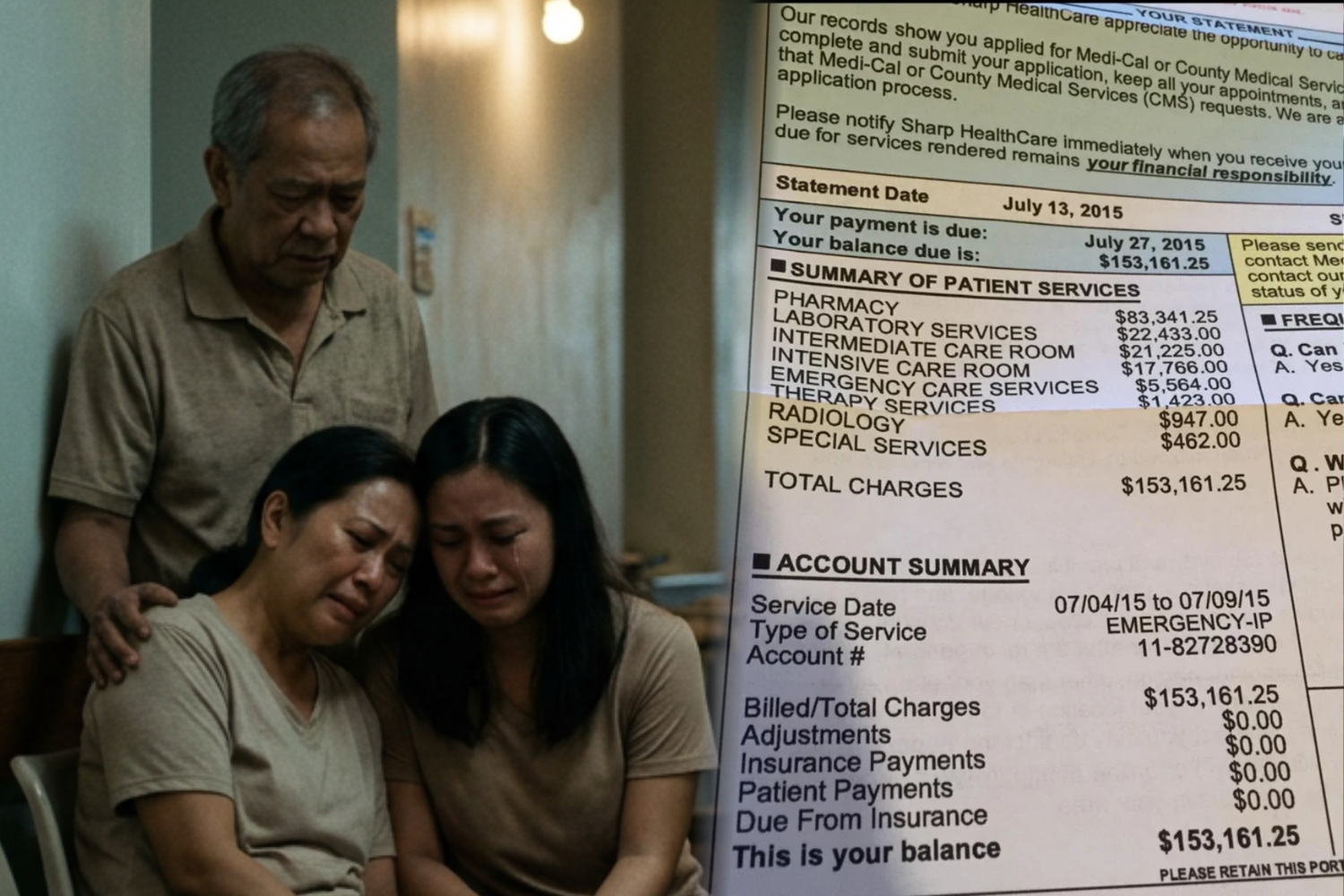
Imagine a Filipino family trying to make ends meet.
A 40-year-old office employee and his 35-year-old wife, a grocery cashier, work long hours to support their two children. Their combined income is enough to pay rent, keep the lights on, put food on the table, and send their children to school. There is little left for savings, but they manage.
Like millions of Filipino families, they live one emergency away from financial disaster.
Then one of them gets seriously ill.
Suddenly, there is only one income coming into the household. Hospital bills begin to pile up. Medicines need to be purchased. Laboratory tests become more frequent. Rent goes unpaid. Utility bills are delayed. The children’s education is placed in jeopardy.
The family borrows from relatives. Friends contribute what they can. They seek help from politicians and local officials, only to discover that assistance is often limited, inconsistent, or subject to political considerations.
The illness is already devastating. But what makes the situation unbearable is the realization that the very institution created to protect them may not be there when they need it most.
This is why PhilHealth matters.
But it is also why PhilHealth’s failures matter.
For decades, Filipinos have been told to contribute faithfully to the national health insurance system. Workers see deductions from every paycheck. Employers remit contributions. Citizens are assured that when illness strikes, the system will provide a safety net.
Yet what happens when that safety net fails?
The tragic case of Marvin Sulit illustrates the problem.
According to public accounts shared by his widow, Maria Lourdes Sulit, Marvin had contributed to PhilHealth for more than 25 years. When he suffered a fatal brain hematoma, his family was already struggling to raise the enormous amount needed for emergency treatment. After his death, they turned to PhilHealth for assistance.
Instead of receiving help, they were informed that he was ineligible for certain benefits because he had been confined for less than 24 hours.
A technicality.
Not the fact that he had contributed for more than two decades.
Not the fact that his family was left with substantial hospital expenses.
Not the fact that a wife had just lost her husband.
The rule was applied mechanically, regardless of the human consequences.
To many Filipinos, the message was chilling: years of contributions can apparently be outweighed by a bureaucratic requirement measured in hours.
This is where the debate about PhilHealth ceases to be about accounting and becomes about compassion.
Healthcare systems exist because sickness does not follow rules. Emergencies do not wait for paperwork. Death does not respect administrative guidelines.
When institutions become more concerned with technical compliance than human outcomes, the people they were created to serve become casualties of the system itself.
The concerns extend beyond hospital benefits.
PhilHealth’s Yaman ng Kalusugan (YAKAP) Program was introduced with an ambitious promise: provide Filipinos with greater access to preventive healthcare, consultations, diagnostics, and primary care services before illnesses become severe and expensive.
The vision was laudable.
But reports of delayed reimbursements and payment issues involving partner physicians, clinics, and healthcare providers have created serious challenges in implementation. When healthcare providers are not paid promptly, many become reluctant to participate or expand services under government programs.
The result is predictable.
Patients, particularly those from poor communities, find fewer providers willing to accept them. Access becomes more difficult. Preventive care is delayed. Conditions that could have been treated early become more serious and more expensive.
Ultimately, it is the poor who suffer most.
A wealthy Filipino can seek treatment elsewhere.
A middle-class family can perhaps borrow money or use private insurance.
But for a minimum-wage worker, a market vendor, a tricycle driver, or a grocery cashier, government healthcare programs are often the only realistic option.
When those programs fail, there is nowhere else to turn.
The irony is painful.
PhilHealth was established to prevent medical bankruptcy, yet its shortcomings can sometimes contribute to the very suffering it was designed to prevent.
Families facing hospitalization are not looking for miracles.
They are looking for fairness.
They are looking for a system that recognizes years of contributions.
They are looking for a system that understands that healthcare is not merely a transaction but a public service.
Most of all, they are looking for compassion.
The challenge facing PhilHealth today is not simply expanding benefit packages or collecting more premiums. It is restoring public trust.
That requires a hard examination of policies that prioritize technicalities over people. It requires ensuring that doctors, clinics, and healthcare providers are paid promptly so that services remain available to those who need them most. It requires leadership that understands that behind every claim is a family in crisis.
The government must rethink not only how PhilHealth operates but also whether its current leadership possesses the vision, urgency, and compassion needed to fulfill the institution’s mandate.
Because healthcare is not merely about balancing books.
It is about protecting lives.
And when a family loses everything because of bureaucratic indifference, the cost cannot be measured in pesos alone.
READ:

Widow says PhilHealth denied husband benefits despite 25 years of contributions
John Lloyd Aleta
June 14, 2026

Lawyer slams PhilHealth statement as ‘damage control’ after widow’s viral plea
radar Business
June 14, 2026