A New York-based Filipino food event says global ube creations highlight culture, community, and small businesses.
Organizers behind a New York-based Filipino food event are pushing back against claims that the global ube trend has crossed into exploitation, saying the movement shows cultural pride and creativity among overseas communities.
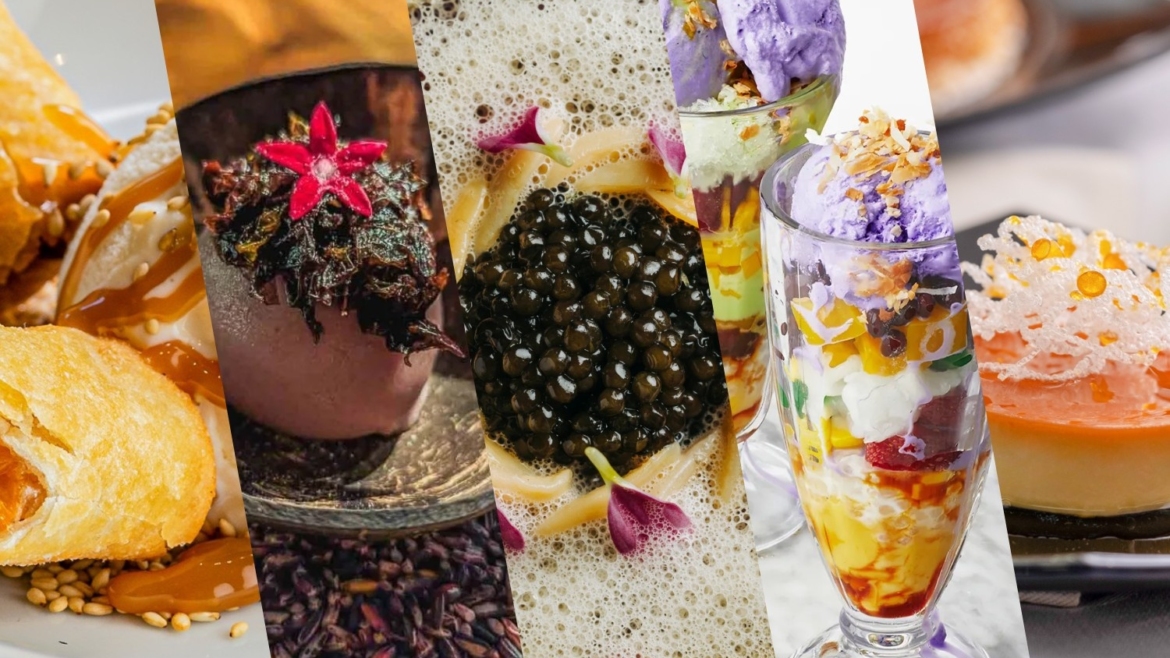
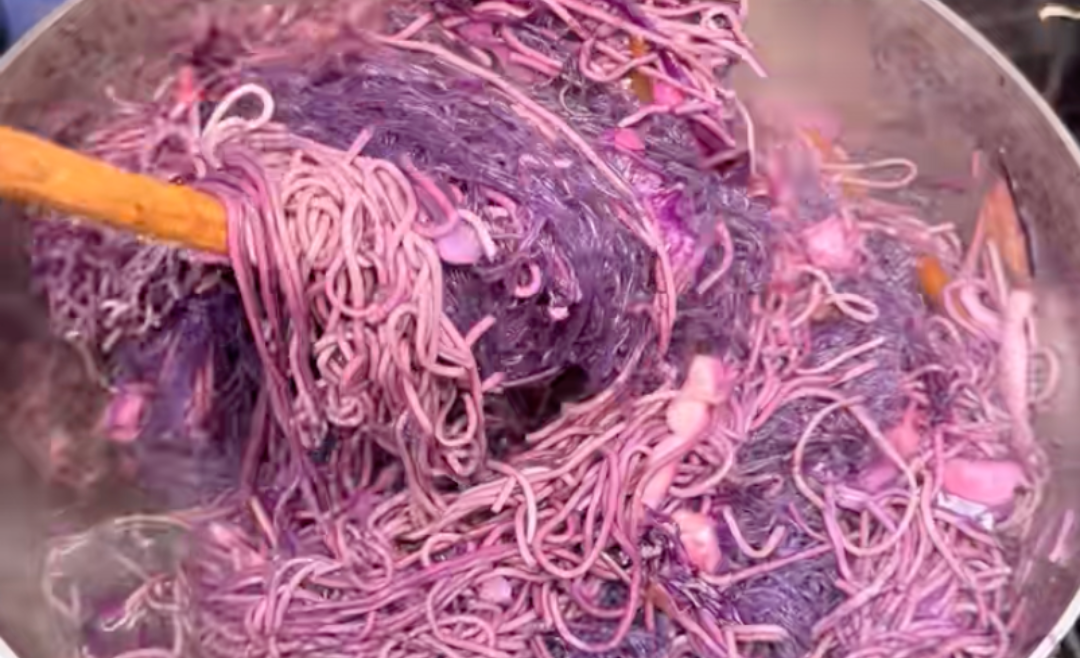
The response comes after an earlier radar report questioned how ube, a staple in Filipino desserts, is being used in unconventional dishes abroad, from pancit to spam musubi and smash burgers. Critics in that report pointed to what they described as forced pairings, with some saying the ingredient risks being reduced to a visual gimmick rather than a flavor rooted in tradition.
A voice from the roots
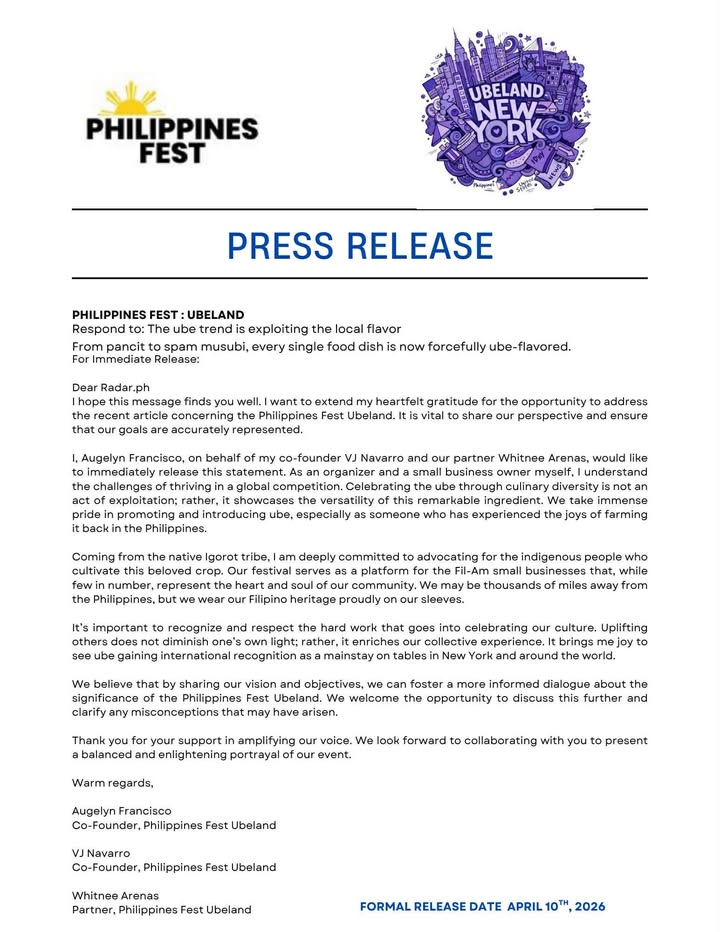
In an exclusive statement sent to radar, Philippines Fest Ubeland co-founder Augelyn Francisco said the intent behind the festival has been misrepresented.
“Celebrating the ube through culinary diversity is not an act of exploitation; rather, it showcases the versatility of this remarkable ingredient,” Francisco said, adding that the event was created to spotlight Filipino and Filipino-American small businesses.
Francisco, who said she has firsthand experience farming ube in the Philippines and comes from the Igorot community, emphasized that the festival also aims to highlight the people behind the ingredient. She pointed to indigenous farmers and migrant entrepreneurs as central to the story of ube’s growing popularity abroad.
“Our festival serves as a platform for Fil-Am small businesses that, while few in number, represent the heart and soul of our community,” she said.
Small business as the “heart and soul”
The organizers also framed ube’s global rise as a positive shift, particularly in cities like New York, where Filipino cuisine has had limited visibility. For them, wider experimentation signals growing recognition, not erasure.
The tension of innovation
Still, the debate underscores a broader tension, which is how far innovation can go before it disconnects from cultural roots. As ube continues to appear in new formats and cuisines, questions around authenticity, sourcing, and representation are likely to persist.
For now, Ubeland’s organizers are calling for a more nuanced conversation, one that considers both the risks of over-commercialization and the role of diaspora communities in bringing Filipino flavors to a global stage.
‘Culinary diversity is not exploitation.’ Ubeland organizers respond to radar’s report, defending their NYC festival as a celebration of Fil-Am entrepreneurs and indigenous roots.