While modern snack aisles are filled with processed chips, the heart of the Filipino neighborhood still beats to the rhythmic thud of the wooden pestle crafting the perfect buttery mash.
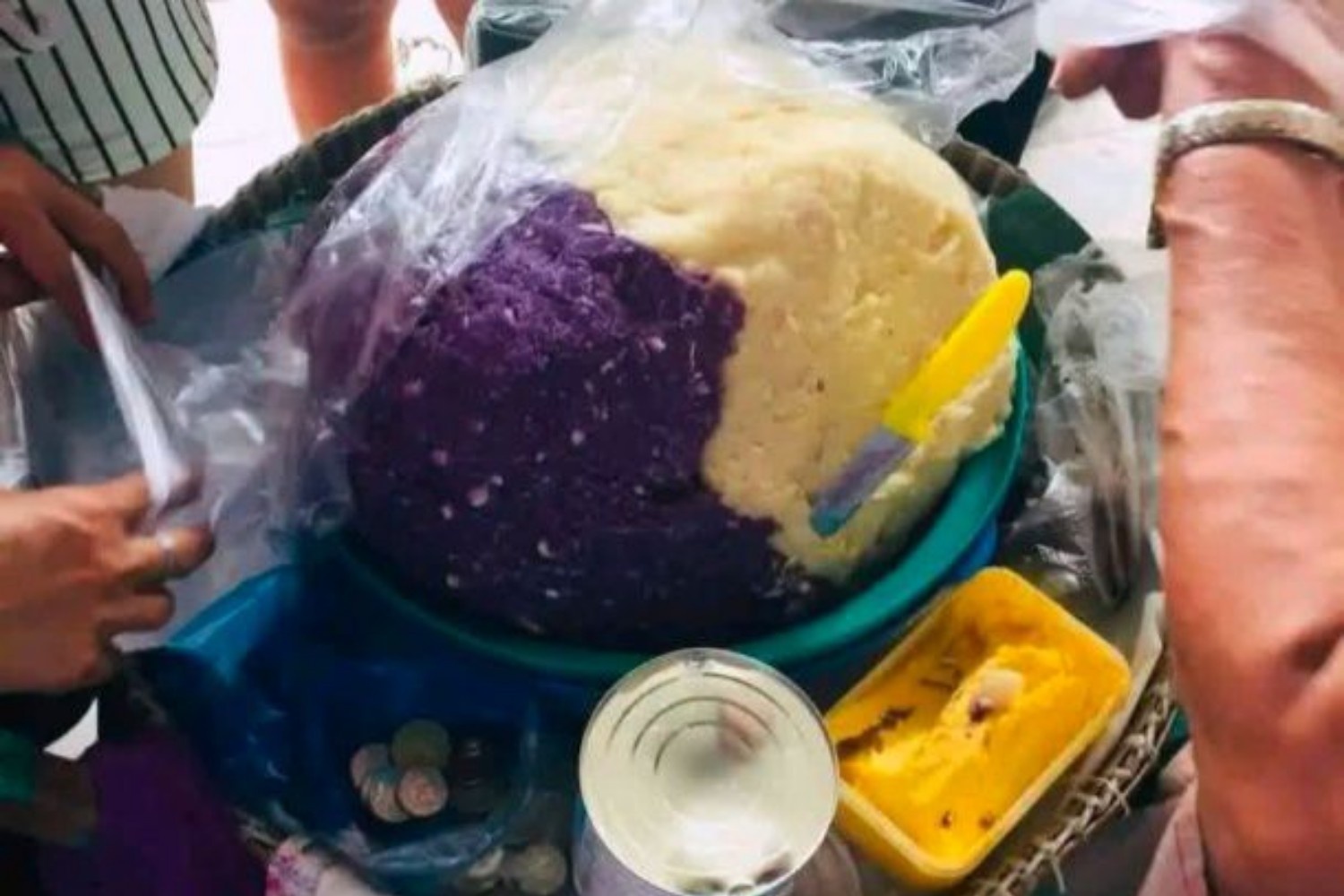
In a post in a popular Philippine nostalgia Facebook group, the admin uploaded a photo of deep purple and pale yellow nilupak, mashed together like a big Yin-Yang boulder of kakanin goodness. He asked members if nilupak is still available in their places. He got varying answers.
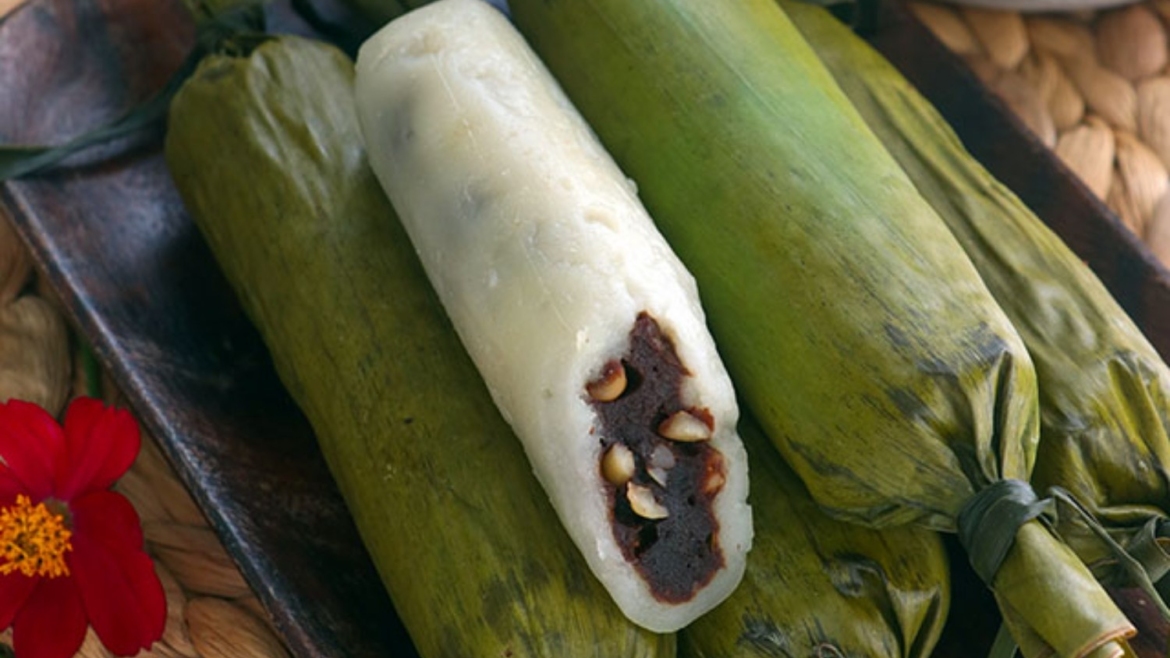
Juan Q. from Sta. Mesa, Manila claimed it is known by kayas-kayas. He used to have a suki vendor in V. Mapa and relished how it was served on a banana leaf. He said, “Sa lahat ng natikman ko nyan, para sa akin, sayo ang pinakamasarap.”
Thon S. of Batasan, Quezon City, confirmed, “May naikot tuwing hapon, food trip talaga muna bago umuwi.” Json P. of Alabang, Muntinlupa, likewise confirmed that in his neighborhood street corner, there are still vendors selling nilupak at 20 or 25 pesos per order.
From PNR tracks to street corners
On the other hand, Yuki S. said, “Bihira na lang may naglalako o naliligaw na nagtitinda dito sa Pandacan.” He said nilupak vendors in their place hail from Calamba, Laguna, and came to Manila via PNR.
Joh R. and Jomar S reminisced years ago that it used to be available in their respective schools at 5 pesos per order. Not anymore. One poster said that while few pasalubong centers and malls sell nilupak, it’s nothing compared with the ones sold on the street or in palengke.
Born from the Tagalog word lupak (to pound), nilupak traces its roots to the agricultural heartlands of Batangas and Quezon, where cassava and saba bananas are plentiful. It is made traditionally with a lusong (mortar) and a lilo (pestle): the heavy pounding breaks down the starch of the cassava or saba into a sticky, elastic mass that a food processor simply cannot replicate.
The alchemy of butter and cassava
The magic happens when the boiled cassava (or saba) is mixed with fresh-grated coconut, condensed milk, and a generous slab of butter. Every bite is a balance of creamy and chewy, topped with salty grated cheese or even more butter for that extra indulgence.
The traditional nilupak’s color is usually off-white, pale yellow, or a light cream. It has a glossy sheen from the butter or margarine folded in at the end. In some regions, especially in Laguna, they make a version using real purple yam (ube). Because ube is starchy, it behaves similarly to cassava when pounded. This results in a naturally deep purple, earthy-flavored nilupak.