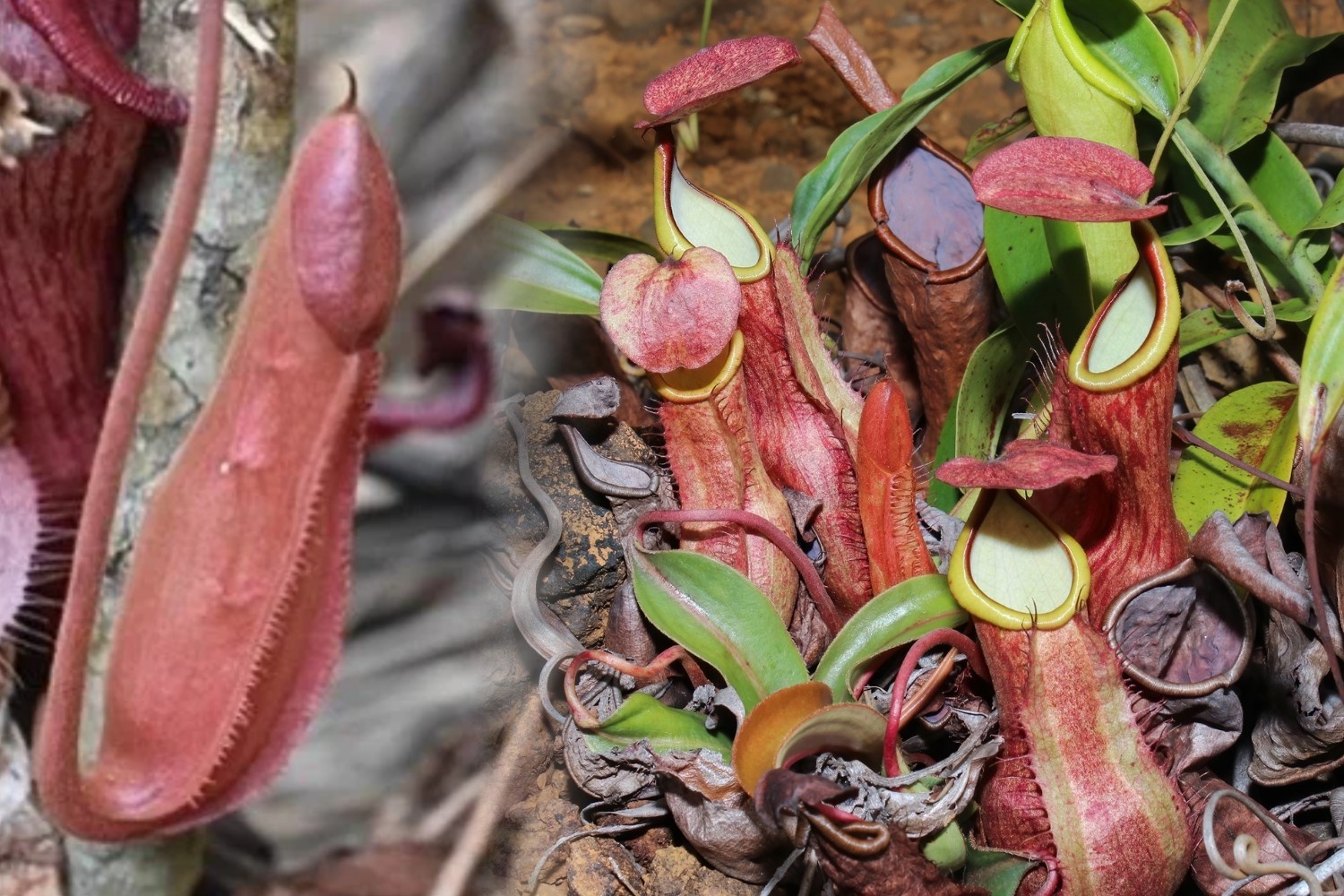
First described by John Muirhead Macfarlane in 1908, this Palawan native uses its suggestive anatomy to compensate for the ultramafic, nutrient-starved soils of the Calamian Islands. Photo by BOTANY.cz
Let’s be honest — it’s the shape that gets the double takes.
Standing tall, tubular, and unapologetically suggestive, Nepenthes philippinensis has quietly become one of the most eyebrow-raising plants in the Philippine wild. Its upright, elongated pitchers — smooth, cylindrical, and boldly protruding from trailing vines — have earned it curious stares and playful giggles online. Nature, it seems, has a cheeky side.
But beyond the phallic silhouette lies a fascinating survival genius.
Endemic to the Philippines — particularly found in Palawan and the Calamian Islands — this carnivorous plant thrives in coastal and forested areas up to around 600 meters above sea level. And those attention-grabbing “tubes”? They’re actually highly sophisticated pit traps.
Evolution’s hunger games
Each pitcher is a modified leaf forming a slick, nectar-laced chamber. Insects are lured by sweet secretions near the rim, only to slip inside the narrow opening and fall into a pool of digestive enzymes below. In nutrient-poor soil, this is how the plant supplements its diet — by literally digesting its prey. Beauty with bite.
Adding to its overachiever status, botanists note that Nepenthes philippinensis is among the more floriferous members of its genus, often producing abundant inflorescences when conditions are right. It doesn’t just stand tall — it shows off.
So yes, its shape may spark the snickers. But this Philippine endemic is more than just botanical eye candy. It’s a reminder that in the wild, evolution can be wildly creative — sometimes even a little provocative.