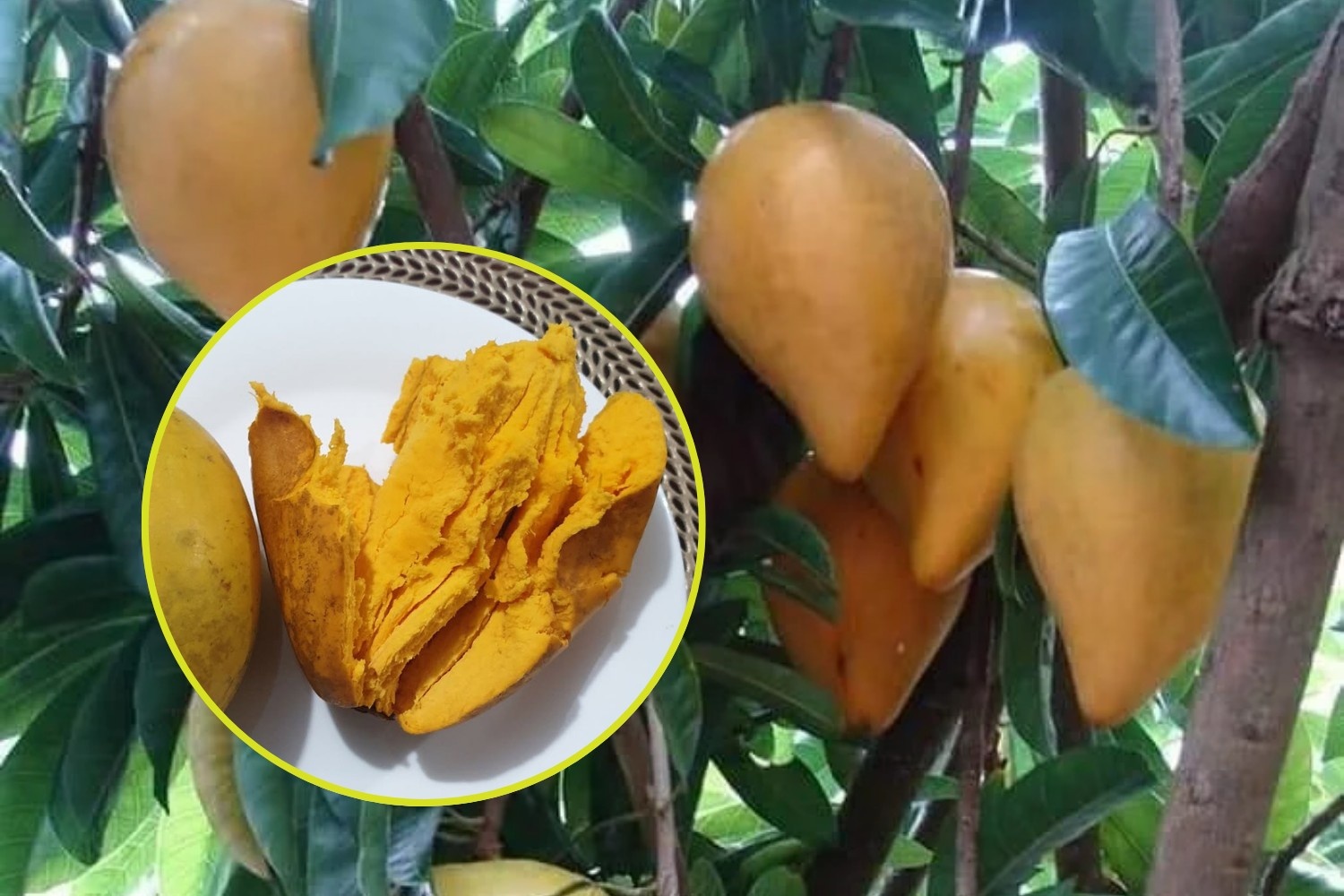
While its chalky texture made it a backyard dare for 90s kids, this nutrient-dense fruit is a resilient survivor of the traditional Filipino orchard.
There was a time when summer afternoons in the Philippines were measured not by clocks, but by what grew in the backyard. Mangoes meant sticky fingers, guavas meant salt packets, and then there was the oddball of them all—the chesa.
Chesa didn’t arrive with the same excitement as other fruits. It wasn’t juicy, it wasn’t refreshing, and it certainly wasn’t easy to love. With its golden-orange flesh and unassuming exterior, it looked promising enough. But one bite in, and reality set in: dry, dense, and almost chalky—like biting into a sweetened hard-boiled egg yolk. The kind of fruit that made you instinctively look for water after every mouthful, or risk choking mid-chew.
And yet, for many kids of the ’80s and ’90s, that was exactly the point.
The great backyard dare
Eating chesa became a challenge—a backyard dare passed between playmates. Who could finish a slice without reaching for water? Who could keep a straight face while their mouth went dry? It wasn’t just food; it was a game. Laughter would erupt as someone inevitably coughed or surrendered, running to the nearest gripo. In a time before gadgets and screens, even a stubborn fruit could become a source of entertainment.
There was also something deeply communal about it. Chesa trees weren’t planted for profit or display—they just existed, quietly bearing fruit season after season. Neighbors shared them, kids climbed for them, and parents casually sliced them up, sometimes sprinkling a bit of salt or sugar to make them more palatable. It was a fruit that required patience, and maybe a bit of acquired taste.
A relic in the concrete jungle
Today, spotting a chesa tree feels like stumbling upon a relic. Urbanization has replaced many of the backyards where it once thrived, and newer generations—raised on imported fruits and convenience—rarely encounter it. Even in markets, it’s become an uncommon find, overshadowed by shinier, juicier options.
But for those who grew up with it, chesa remains unforgettable. Not because it was the best fruit, but because it was one of the most memorable. It taught a generation that not everything sweet comes easy—and that sometimes, the most unlikely things can bring the loudest laughter.
In the end, chesa wasn’t just about taste. It was about childhood—dry, a little difficult, but strangely worth going back to.
READ: