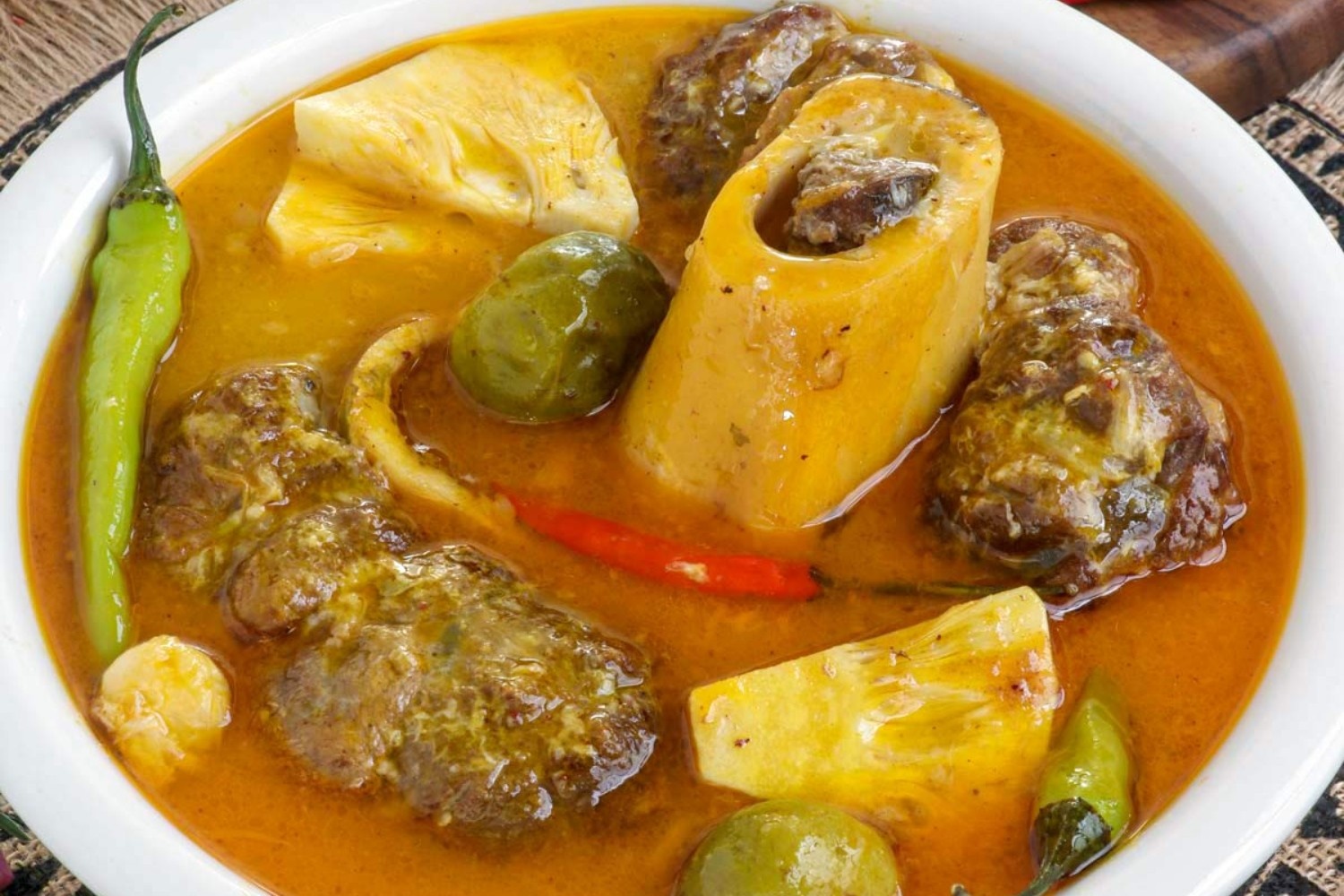
The sourness of batuan and the richness of beef shank made kansi the ultimate comfort food export of Negros and Panay.
The looks of bulalo, the sourness of sinigang, Kansi of western Visayas proves it is more than just a lovechild of the two. Derived from the Hiligaynon word for “beef shank,” this beef soup viand traces its lineage to the family tables of Iloilo before conquering the shopping districts of Bacolod in the 1980s.
The soul of kansi lies in batuan fruit. This green, mangosteen-like fruit is native to Panay and Negros and provides a sourness so unique that no tamarind or kamias can replicate. Add a dash of atsuete (annatto) for that vibrant sunset-orange glow, and you’ve got a dish that’s as “Instagrammable” as it is delicious.
While some modern versions omit it, traditional kansi almost always includes sliced unripe jackfruit. It acts as a meat extender with a fibrous texture that soaks up the sour broth, much like a sponge.
The batuan factor
Then of course, there are the aromatics and spice: lemongrass (tanglad), which provides another layer of citrus; ginger, onion, and garlic (the holy trinity of Pinoy dishes); and finger chillies (siling haba) for a gentle, creeping heat.
Institutions like Sharyn’s Cansi House in Silay and Pat-Pat’s Kansi in Iloilo have turned this into a national favorite since the 1980s.
But you will be glad to know that this Ilonggo staple has also made its way to Metro Manila. Pat-Pat’s Kansi House now has branches in San Antonio, Makati, and Kapitolyo, Pasig. Another joint in Pasig is the Dude’s House of Kansi, where they even offer a modern take on the dish with their “Sizzling Kansi.”
So, if you’re looking for a hot and steamy stew to beat the amihan chill, consider kansi on your menu.