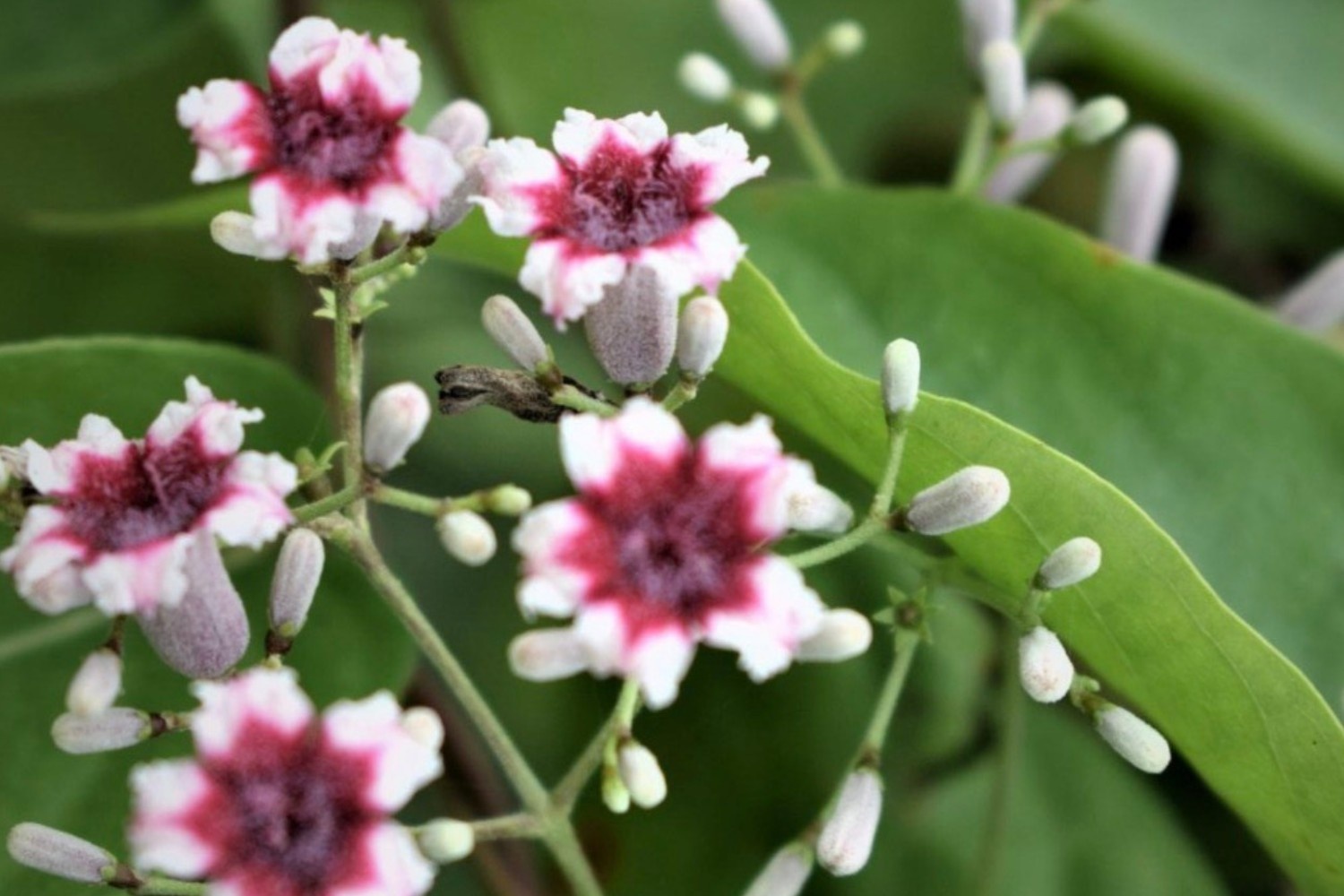
While its name sparks laughter across Filipino social media, the Paederia foetida—featured at the Makiling Botanic Gardens—is actually a powerhouse of biodiversity. Photo by UPLB Makiling Center for Mountain Ecosystems / Facebook
Behind the viral smirks and the pungent “skunk vine” aroma lies an ancient healer that has spent centuries curing toothaches and filling soup bowls across Asia.
Meet Kantutan (Paederia foetida), a climbing vine known across Asia for its strong, sulfuric smell when its leaves are crushed. The announcement quickly caught attention on social media, not just for the plant’s pungent reputation, but also because “kantutan” is slang for sex in Filipino.
Stink with a purpose
But beyond the giggles, the plant has a surprisingly rich story. According to the Makiling Botanic Gardens, Kantutan produces delicate dark purple and grayish-white flowers, offering a striking contrast to its foul odor. Its scientific name even reflects this duality: Paederia refers to something beautiful, while foetida points to its infamous stink.
Across different parts of Asia, the vine is more than just a conversation starter. Its leaves are used in traditional dishes, including soups and noodle recipes, and it also plays a role in folk medicine. It has been used to treat gas, fever, toothaches, and even snake bites in some cultures.
The featured plant is part of the gardens’ ongoing effort to introduce the public to lesser-known species found around Mount Makiling, an ASEAN Heritage Park and one of the country’s richest biodiversity sites.
So while the name may sound cheeky to local ears, UPLB reminds visitors that Kantutan is proof that even the most awkward-sounding plants can be both useful and beautiful.
Paederia refers to something beautiful, while foetida points to its infamous stink.