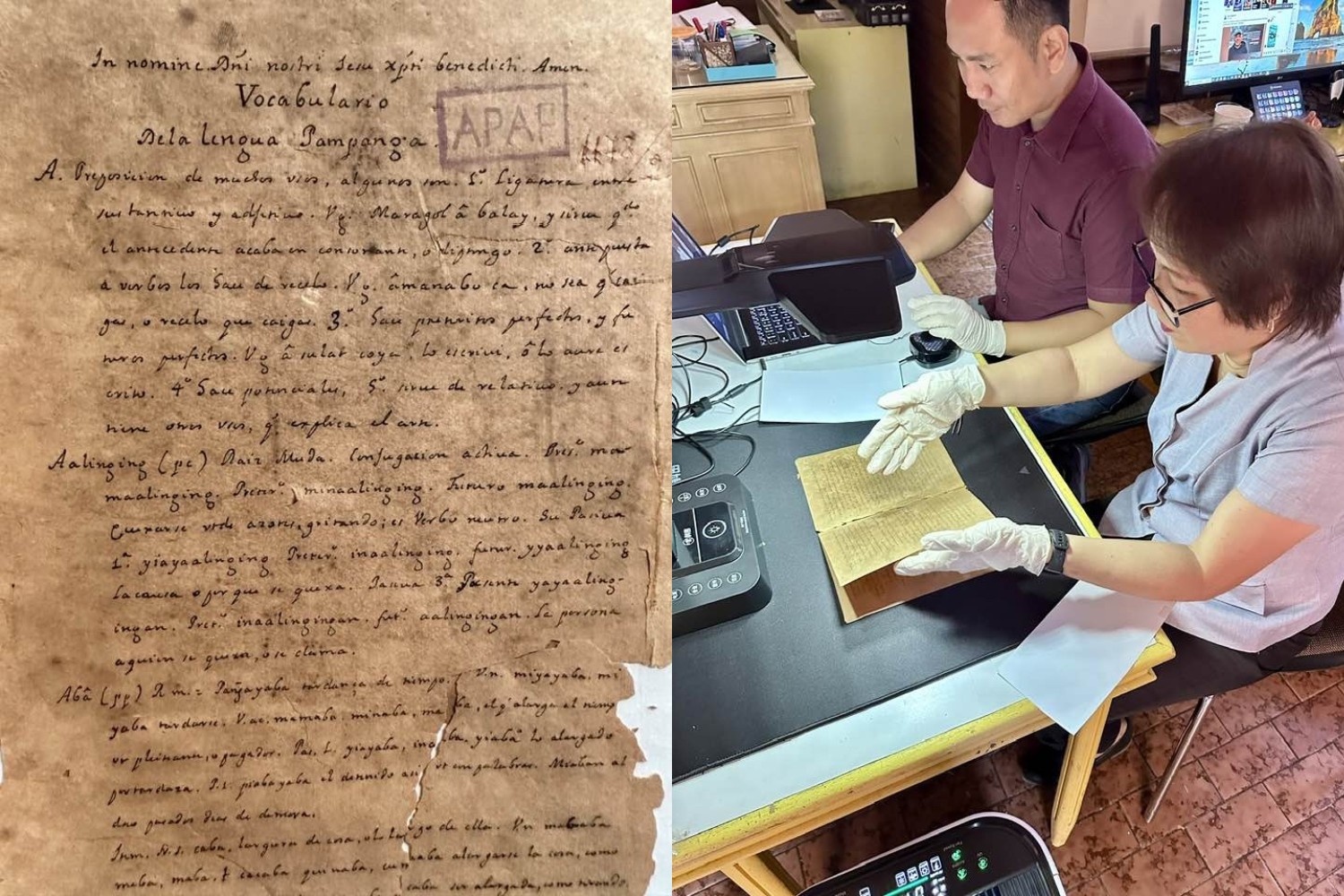
Researchers at the Center for Kapampangan Studies (CKS) use a specialized non-invasive scanner to digitize the 1699 Arte y Diccionario Pampango (left). The 327-page manuscript, authored by Augustinian friar Alvaro de Benavente, is one of the world's most significant "linguistic time capsules," detailing the language before centuries of colonial and modern evolution.
Rare 17th-century manuscript scanned by the Center for Kapampangan Studies as experts push for restoration, translation, and long-term preservation of one of the earliest records of the language
Fragments of a centuries-old language are being preserved as researchers work to safeguard what remains of the country’s early written records.
Using a specialized scanner, the team digitized the fragile manuscript, preserving it without causing damage to the original document. The digital copy allows closer study of the text while reducing the need to physically handle the deteriorating pages.
CKS Director Robby Tantingco said in a social media post that the team plans to transcribe, translate, and publish the material to better understand how Kapampangan was spoken and written more than 300 years ago, offering insight into how the language has evolved over time.
The effort highlights ongoing challenges in preserving regional languages, many of which continue to shift with modernization, migration, and changing everyday use.
A 300-year-old secret is going digital. The CKS has scanned the fragile 1699 Benavente dictionary, a “time capsule” of the Kapampangan language. Discover how this high-tech preservation effort is bridging the gap between colonial history and modern survival.
John Lloyd is a journalist by trade and a House Stark loyalist at heart. He writes all things business and tech—with bits of Spanish and chess on the side.