The gentle ritual of unrolling a handwoven mat once defined the Filipino home.
Sleep, before modern beds with foam mattresses became common and affordable, came with the quiet rustle of woven palm and the cool embrace of a banig laid carefully on the floor. It wasn’t just where we rested—it was where stories ended and dreams began. At night, entire families would unroll these handwoven mats, claiming their small corners of space, side by side, with nothing but an electric fan humming in the background and the distant sound of crickets outside.
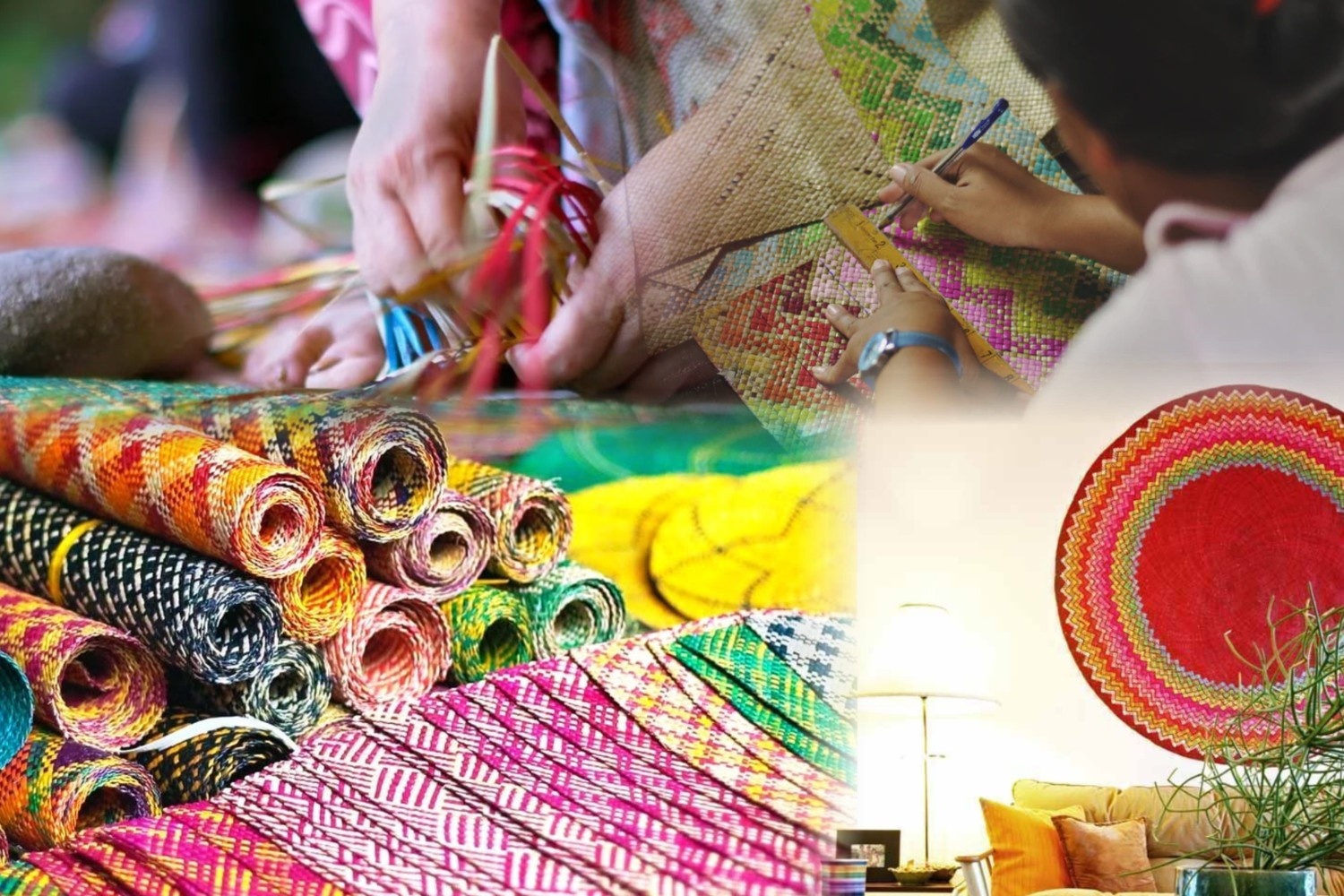
The banig was more than a sleeping mat. It was a constant—brought out for afternoon naps, unexpected guests, or even impromptu playtime. Its patterns, often geometric and vibrant, felt like a silent language passed down through generations. You could almost tell where a banig came from just by its weave: the tight, intricate patterns of Basey, Samar, or the bold, colorful designs from Mindanao.
The geometry of comfort
Back then, comfort didn’t come from thickness. It came from familiarity. From the way your body knew exactly how to settle onto its firm surface, from the faint scent of dried leaves, from the ritual of folding it neatly come morning.
Today, the banig has taken on a different role. In many urban homes, it is no longer a nightly essential but a decorative piece—hung on walls, styled in curated spaces, or brought out only for special occasions. Foam mattresses and modern beds have replaced its everyday function, quietly pushing it to the margins of daily life.
From floor to gallery
Yet beyond the cities, especially in rural communities across the Visayas and Mindanao, the banig remains unchanged in purpose. It is still unrolled at dusk, still shared among family members, still part of the rhythm of everyday living. There, it is not nostalgia—it is reality.
What has changed is how we see it. Once ordinary, the banig is now recognized for what it has always been: a remarkable piece of craftsmanship. Each mat is a product of patience and skill, woven by hand, strand by strand, often by artisans whose knowledge is inherited rather than taught in classrooms.
Perhaps the next chapter for the banig is not just preservation, but elevation. In a world searching for authenticity and sustainability, this humble mat holds global potential. Reimagined thoughtfully, it can move beyond souvenir status and stand proudly as a design object—functional, cultural, and distinctly Filipino.
Because for those who grew up on it, the banig will always be more than décor. It is memory you can almost touch—woven not just with leaves, but with the quiet, enduring warmth of home.