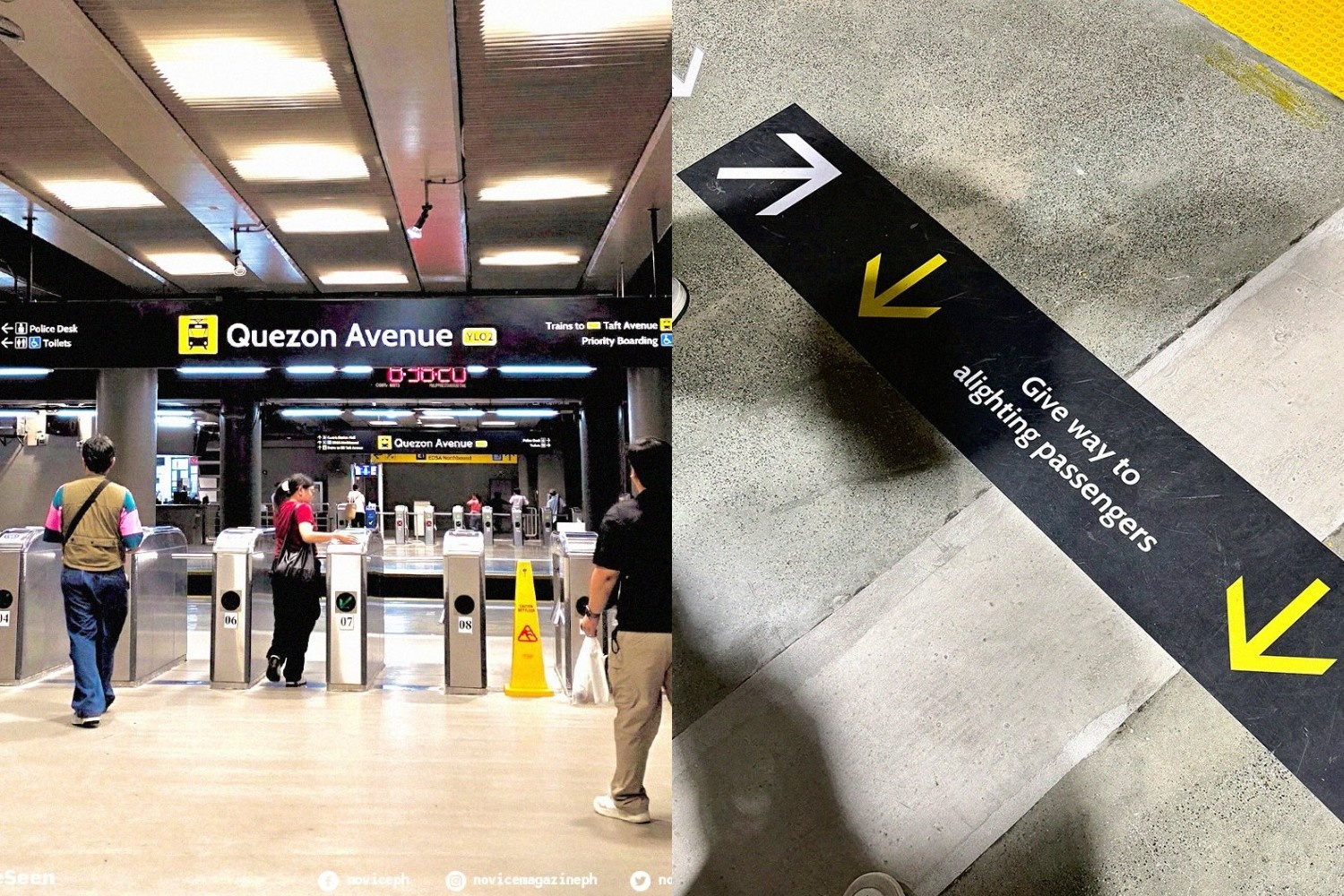
The new look at Quezon Avenue Station swaps messy ’90s clutter for a calmer design that makes it easier to find your way without the stress.
In a high-pressure environment like the MRT, cognitive overload is real. When you don’t have to think about where to turn, your commute feels faster and safer.
After Holy Week, the MRT-3 Quezon Avenue Station just got a major wayfinding upgrade. As the pilot for the line’s modernization program, the station is proving that sometimes, the biggest improvement in a commuter’s life is simply knowing exactly where to go.
The new signs feature a global-standard font and color scheme—designed to be readable even from across a crowded platform or for those with visual impairments.
By shifting away from the high-friction industrial look of the late ’90s toward a more human-centric design, the station now aligns with global transit best practices (similar to the Tokyo Metro or London Underground).
Designs for mental clarity
By moving from high-contrast, overstimulating primary colors to a taupe/earthy palette combined with new LED lighting, the new design creates neutral tones that are used to lower environmental stress from an industrial design perspective.
Taupe acts as a visual anchor, making the station feel cleaner and more spacious while allowing the signage (the most important element) to stand out through figure-ground contrast.
The signage made efficient use of wayfinding typography and hierarchy based on the wayfinding tenet: a commuter should be able to process their next move within three seconds of glancing up. Implementation of larger, sans-serif fonts and high-visibility directional markers enabled this.
Together with universal pictograms (e.g., for exits and restrooms), the design transcends language barriers and reduces cognitive load—the mental energy spent trying to figure out where you are.
Lighting design played a big part as well: High-quality lighting reduces shadows in corners, which historically are “anxiety zones” in public transit. Better illumination improves facial recognition and overall security perception without being blindingly clinical.