Palawan’s lamayo offers a tender alternative to the classic crunch of traditional danggit.
In the long list of Filipino pasubong, few items carry the same quiet reputation as lamayo from Palawan. Packed in simple plastic, often with the scent of vinegar and sea salt lingering, it’s the kind of take-home treat that doesn’t look flashy—but delivers a surprise once it hits the pan.
At first glance, lamayo is often mistaken for dried fish, especially the well-known danggit. Both are butterflied, both are salted, and both are best fried until crisp at the edges. But that’s where the similarity ends.
Lamayo sits in between worlds. It is neither fully fresh nor completely dried. For many first-timers, the closest comparison is a hybrid—something that feels like a fresh fish that went through a brief drying process, rather than the stiff, brittle texture people expect from traditional dried danggit. That’s because lamayo is only partially sun-dried after being marinated in vinegar, garlic, and spices, locking in moisture that fully dried fish loses.
The perfect texture
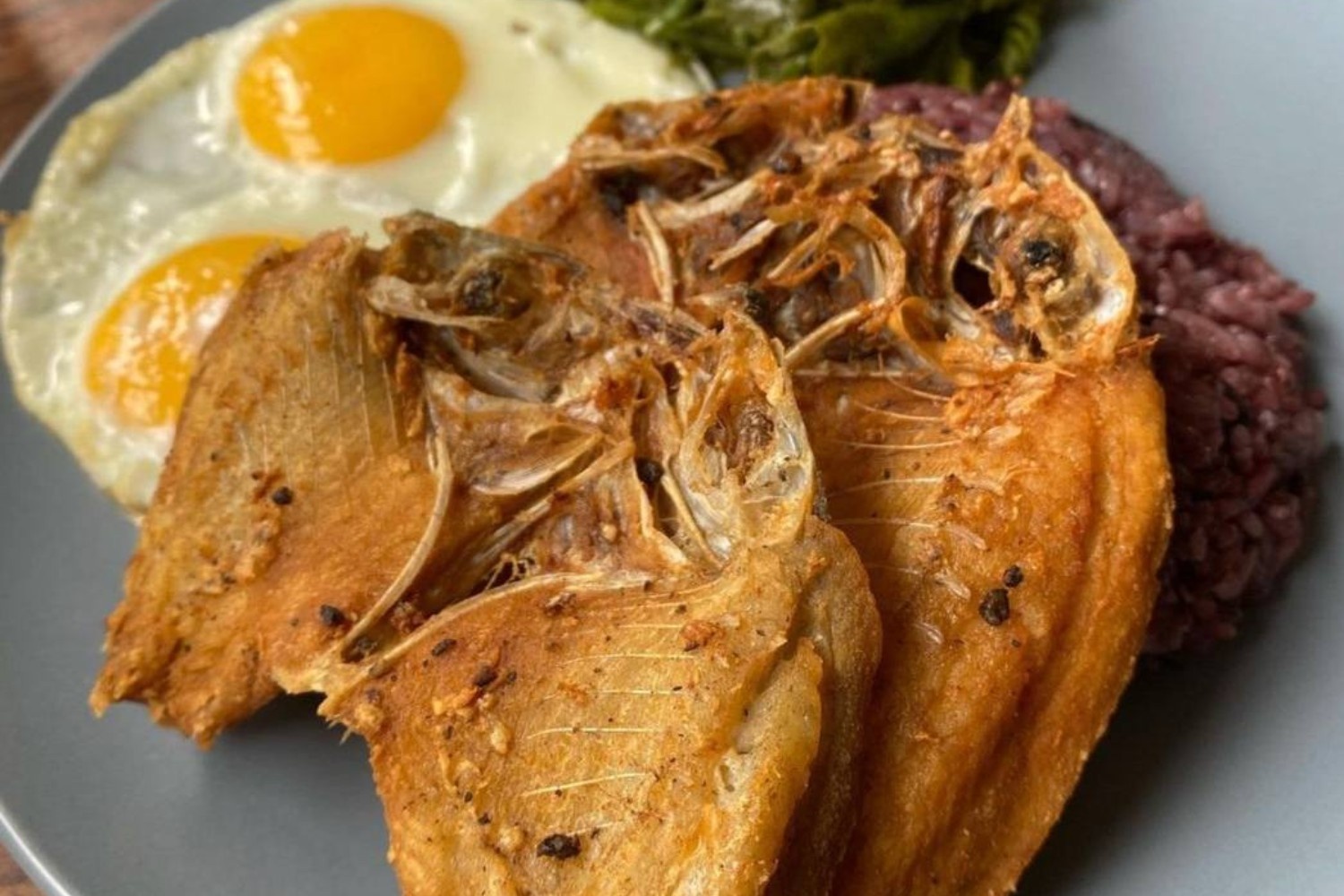
This difference becomes obvious the moment it’s cooked. While danggit turns crisp all the way through, lamayo develops a contrast. The outside lightly crackles, but the inside remains soft, juicy, and almost buttery. It’s this unexpected texture that wins people over.
For those used to dried fish, the first bite can be surprising. Instead of the usual chew and saltiness, lamayo reveals a tender, meaty center. The flesh flakes gently, carrying a subtle tang from the marinade. It feels richer, closer to a freshly cooked fish, but with just enough saltiness to make it addictive.
This is also why lamayo has become a favorite pasalubong from Palawan. It captures the essence of the sea, but in a form that feels more indulgent than practical. Unlike fully dried fish, which can last for weeks, lamayo is more delicate and often needs refrigeration. That alone signals that it offers something closer to freshness.
Served with garlic rice, eggs, and a dip of spiced vinegar, lamayo turns a simple breakfast into something memorable. It may not have the crunch of classic danggit, but it makes up for it with depth and texture.
In many ways, lamayo reflects the Filipino love for balance. Not too dry, not too raw. Just right. And for those who bring it home from Palawan, it becomes more than just pasubong. It’s a reminder that sometimes, the best flavors are found in between.





The hidden meanings of Carlo Tanseco’s Delata: Lagi Tayong Maging Tapat (Red) at Art in the Park 2026