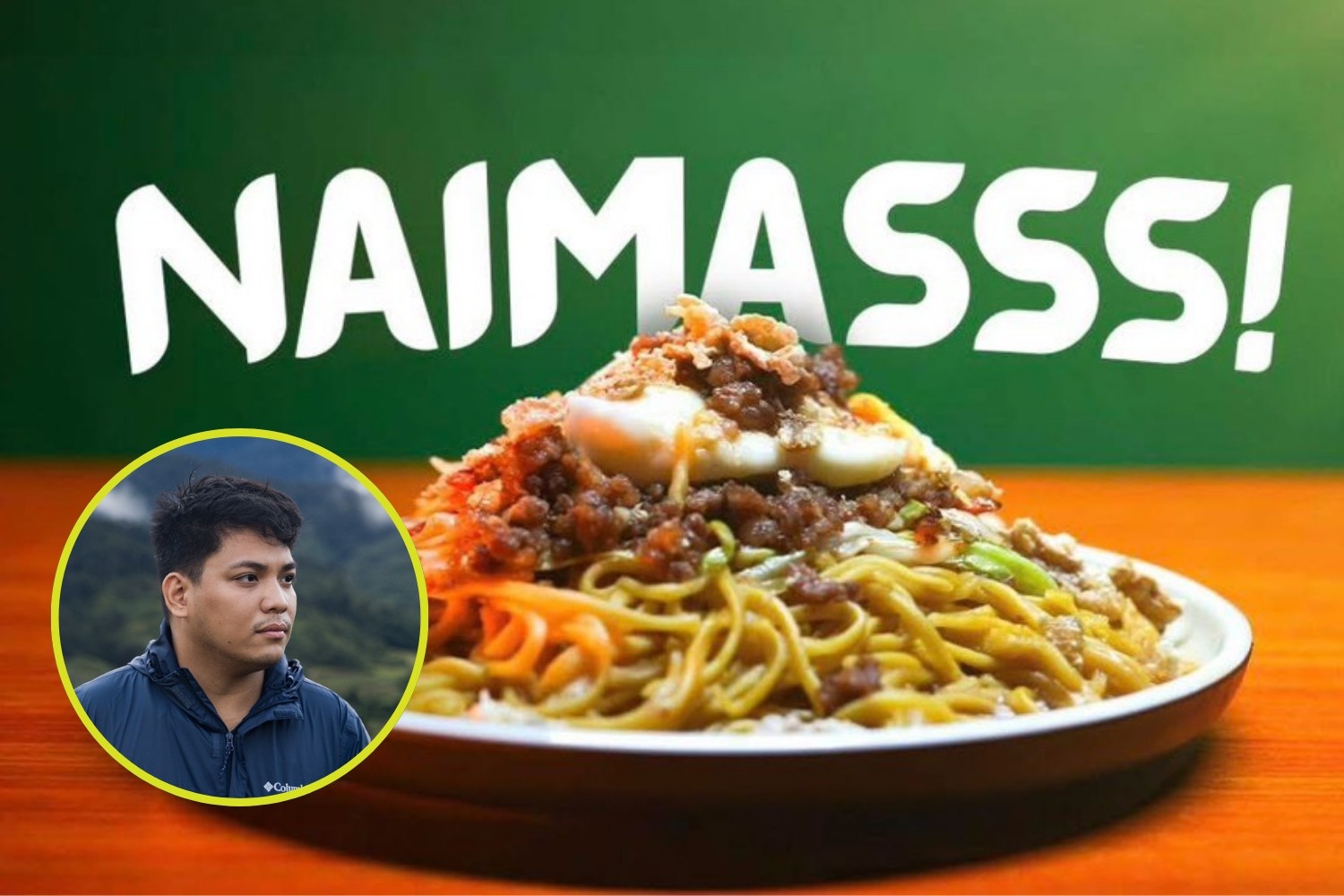
The criticism stemmed from a post by DOT’s The Philippines Facebook page promoting Ilocos cuisine, which captioned a dish as “a bowl of savory Pancit Miki.” The post described it as made with annatto seeds, flat noodles, boiled egg, and bagnet—hallmarks of Ilocano miki.
But Felix pointed out discrepancies between the description and the actual image.
The miki vs. batil patung debate
“That is not pancit miki. It looks like a batil patung/potun of Tuguegarao City of Cagayan. The poached egg on top is the clue,” he wrote.
He added that while the noodles resembled those used in Pancit Cabagan from Isabela due to their cylindrical shape, the plating further contradicted the caption.
“Also, the caption is ‘bowl,’ but the photo shows a plate of noodles. The description and photo are very confusing—AI slop?” Felix noted.
He clarified that authentic Ilocos miki is typically served as a noodle soup dish, distinct from what appeared in the image.
“The Ilocos miki with annato, bagnet, and boiled egg is a noodle soup dish. Not the one in the photo,” he added.
The stakeholder response
Felix is known for documenting Filipino food heritage and is the figure behind Lokalpedia. He has built a following of over 100,000 on Facebook, where he shares insights on regional cuisine and culinary traditions.
His post quickly gained traction, with netizens weighing in on the apparent mismatch and calling for more accurate representation of Filipino dishes—especially from official government platforms tasked with promoting the country’s culture.
As of writing, the Department of Tourism has yet to issue a response or clarification regarding the post.
Is it Ilocos miki or Cagayan’s batil patung? Lokalpedia’s John Sherwin Felix calls out the DOT for a confusing and potentially AI-generated post.