The golden glow of the setting sun meant it was time for merienda, a cold soda, and a piece of alembong.
There was something deeply comforting about waking up from an afternoon nap to the smell of freshly bought bread and the sound of cartoons already playing in the sala.
You would open your eyes still feeling heavy and irritated from being forced to sleep in the first place. The electric fan hummed loudly. Sunlight slipped through the curtains in that distinct orange glow of late afternoon. Somewhere outside, you could already hear your friends shouting in the streets, waiting for permission to finally play. But first came merienda.
And waiting on the table, beside a cold glass of Sunny Orange or a bottle of Sarsi, was often alembong.
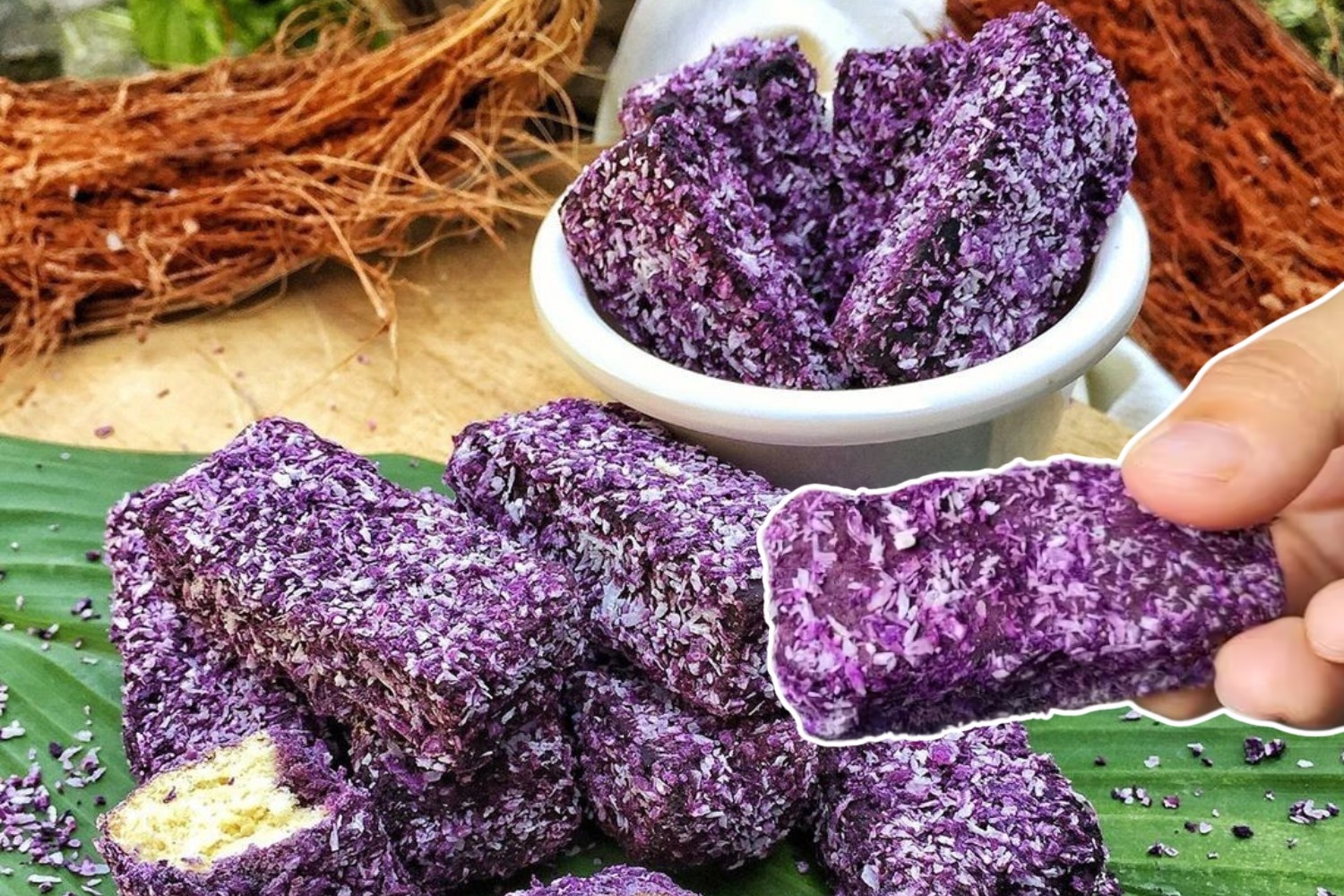
As kids, nobody really thought about how funny the name sounded. Adults would sometimes laugh because “alembong” meant flirtatious or coquettish, but to us, it simply meant soft ube bars coated in sweet purple syrup and rolled in coconut. Slightly sticky, a little messy, and dangerously addictive.
The sticky magic
The best ones came from small neighborhood bakeries, packed in brown paper bags that made the bread smell even better on the way home. The moment you bit into one, your fingers would immediately catch traces of violet syrup and shredded coconut. Sweetness lingered on your tongue while the artificial ube flavor somehow made everything feel more magical than it probably was.
Then came the perfect pairing: afternoon television.
“He-Man,” “Transformers,” “Care Bears,” and other dubbed cartoons became background noise to childhood itself. You sat cross-legged on the floor, half-awake, chewing slowly while staring at the bulky TV screen. The world outside moved lazily. Tricycles passed by. Somebody’s mother called children home from the street. The air smelled faintly of dust, bread, and the coming evening.
It was such a simple experience, but it carried a strange kind of happiness unique to growing up Filipino in that era.
Today, alembong feels almost forgotten beside trendy pastries and expensive café desserts. But for many Filipinos, one glance at those bright purple ube bars is enough to bring back an entire feeling — sleepy afternoons, sticky fingers, cold soft drinks, and the quiet joy of being a child with nowhere else to be.