Pump prices may have retreated from their record highs, but times are still tough.
Make no mistake about it, we’re still in a crisis.
Yes, fuel prices have come down over the past month, and yes, diesel is no longer sitting at the record highs that shocked motorists just weeks ago.
But lower pump prices do not mean things are back to normal.
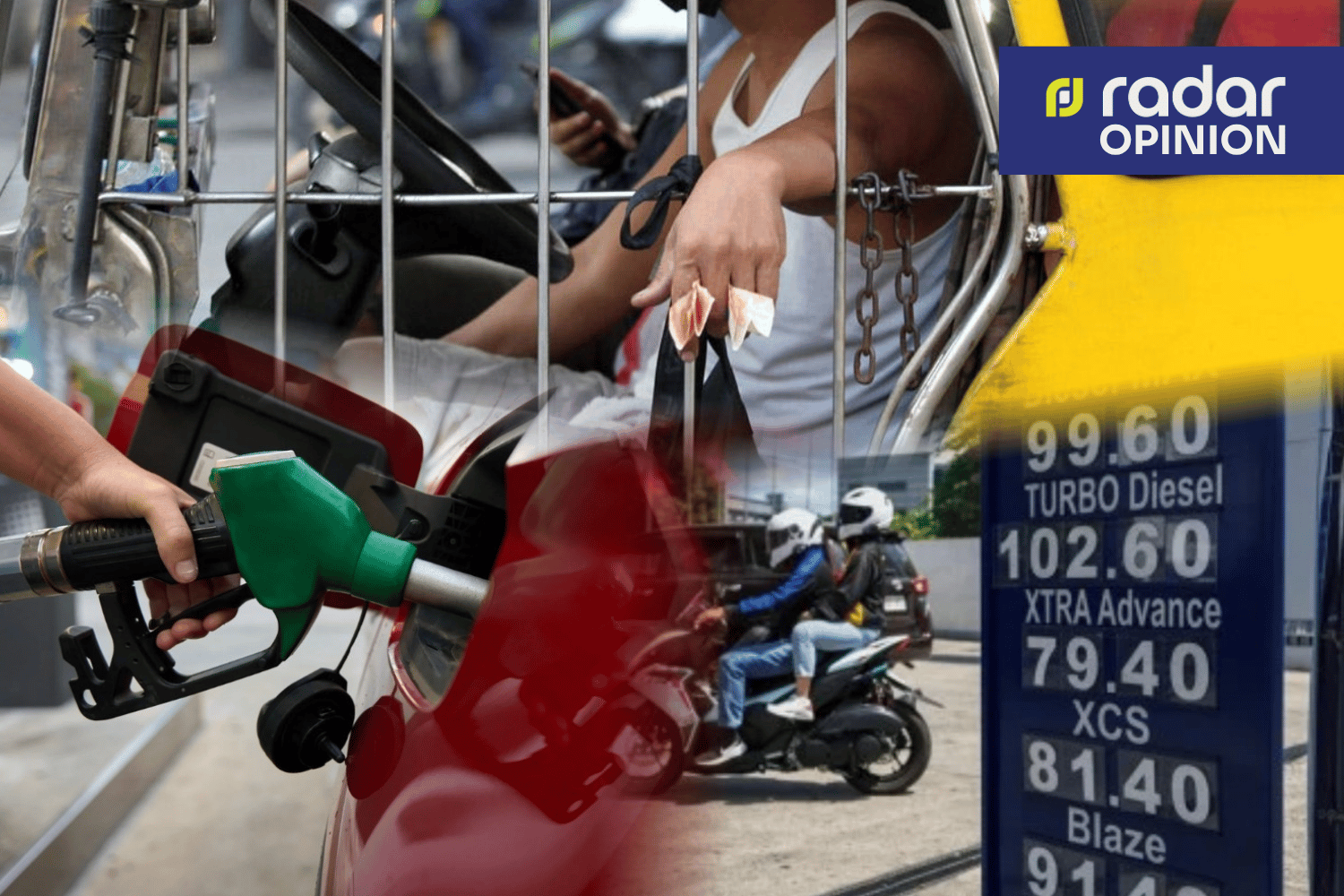
At one Petron station in Makati, for example, diesel was selling for ₱77.30 per liter on Tuesday, just hours after the May 12 price adjustment took effect, while its XCS gasoline was priced at ₱83 per liter. For many motorists, seeing diesel priced below gasoline again feels familiar, even reassuring, as diesel returns to levels lower than gasoline after weeks of trading significantly higher than gas.
The illusion of relief
And to be fair, that is real relief. Drivers have been hit hard. So have delivery riders, jeepney operators, truckers, fishermen, farmers, and business owners who have spent weeks trying to stretch every peso while fuel kept climbing.
But lower prices should not be confused with recovery.
At around ₱90 per liter, diesel remains nowhere near what many operators would consider sustainable. Before this crisis, diesel prices often hovered closer to ₱45 to ₱50. Even after several rollbacks, current pump prices remain nearly double what many drivers had built their daily budgets around.
When fuel climbs this high, the pressure sticks around even as pump prices start to ease.
Many drivers have already burned through their savings. Some have borrowed money simply to keep their vehicles on the road. Others have reduced trips, accepted smaller earnings, or postponed household expenses just to get through another week.
Those reductions certainly bring welcome breathing room, but the reality on the ground is far more complicated. Fares remain elevated, food prices have already climbed, and delivery costs continue to put pressure on consumers and businesses alike, while small operators are still trying to recover from weeks of punishing fuel costs.
The sticky nature of inflation
This is exactly why lower pump prices should not lead to complacency. Support efforts from government, private groups, community pantries, food drives, and ordinary Filipinos, who continue helping those in need and still have an important role to play. Drivers still appreciate passengers who can afford to pay a little extra. Delivery riders still benefit from customers who leave tips. Families who have spent weeks stretching every peso still need help.
Policymakers, meanwhile, cannot afford to look at lower fuel prices and assume the worst is behind us. Global oil markets remain volatile, supply concerns have not completely disappeared, and another spike in pump prices could arrive with very little warning.
Fuel prices may no longer be at record highs, and seeing diesel once again trade below gasoline in many stations is certainly welcome, but none of that changes the bigger picture that millions of Filipinos continue to live with every day.
Make no mistake about it, we are still very much in the middle of a serious energy crisis. We are getting by, but this is not a situation we can afford to normalize or settle into.
Don’t let the rollback fool you. Fuel prices may have retreated, but with diesel still at ₱77.30—nearly double the pre-crisis norm—millions of Filipinos are still “burning through savings.
READ: