Educator questions credibility of South Korea-based WURI rankings, warns against treating results as an academic benchmark.
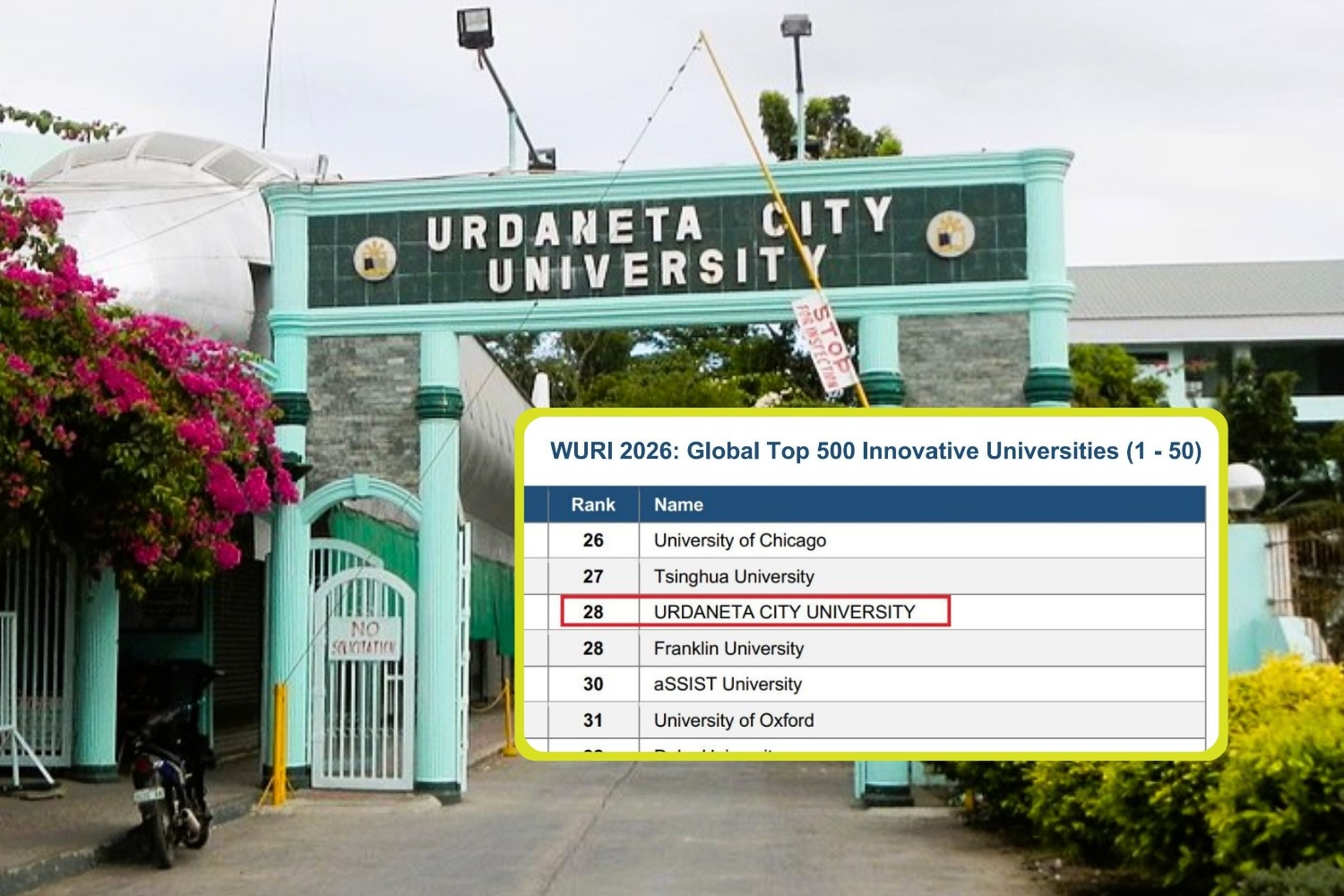
A global university ranking has placed a Philippine university ahead of institutions such as the University of Oxford and Peking University, prompting educators to question the credibility of the results and the way academic performance is being measured.
Prof. Christian Della, a professorial lecturer at the University of the Philippines Diliman, urged the public to stop relying on the South Korea-based World University Rankings for Innovation (WURI), arguing that the rankings appear unreliable and non-transparent.
“Urdaneta City University ranked above Oxford? By what criteria?” he wrote online, while also calling on the Commission on Higher Education and EDCOM 2 to examine the credibility of the ranking system.
Unlike traditional rankings that focus heavily on research output, citations, and academic reputation, WURI says it measures innovation and universities’ contributions to society across 24 categories.
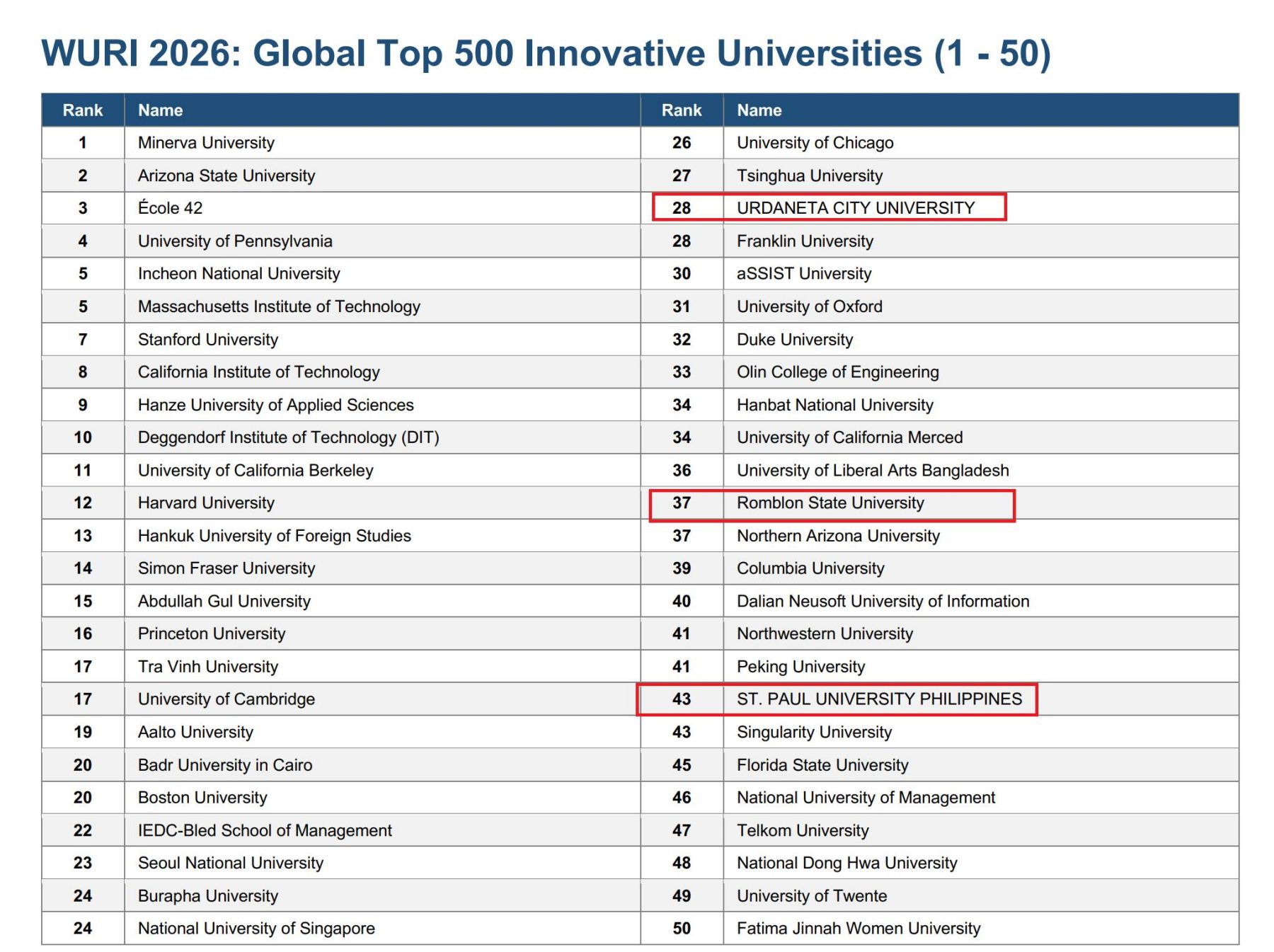
Other higher education institutions included within WURI’s top 50 are Romblon State University and St. Paul University Philippines. It did not include the country’s Times Higher Education-ranked schools this year, which include Ateneo de Manila University, De La Salle University, Mapua University, University of Santo Tomas, University of the Philippines, and Mindanao State University–Iligan Institute of Technology.
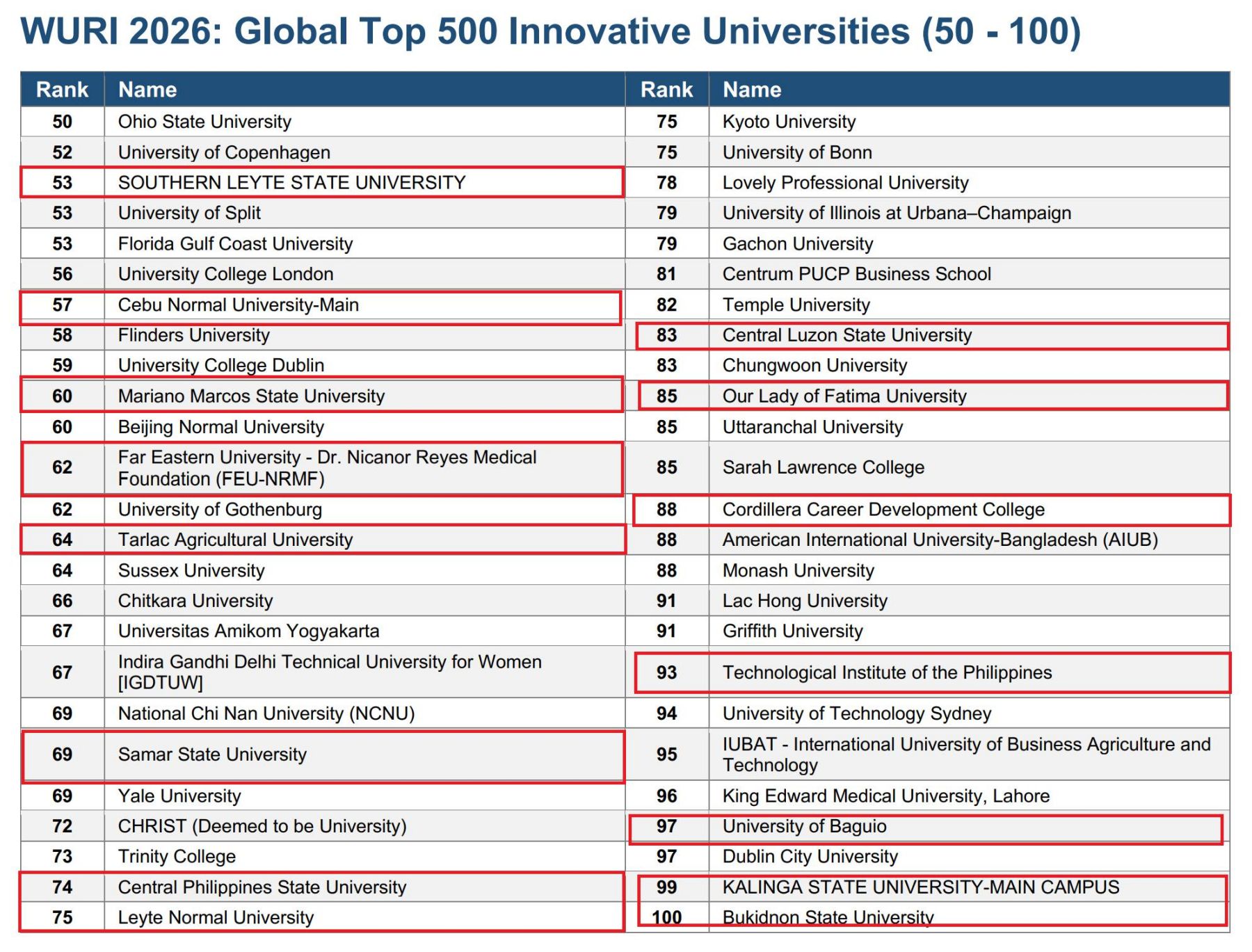
The rankings also drew debate online after unverified allegations emerged from individuals claiming familiarity with the evaluation process. Some alleged that project submissions are not independently audited and that evaluators could still identify participating schools despite the supposed blind review system.
Urdaneta City University above Oxford? Professors are questioning the WURI rankings after local schools surged past global giants.