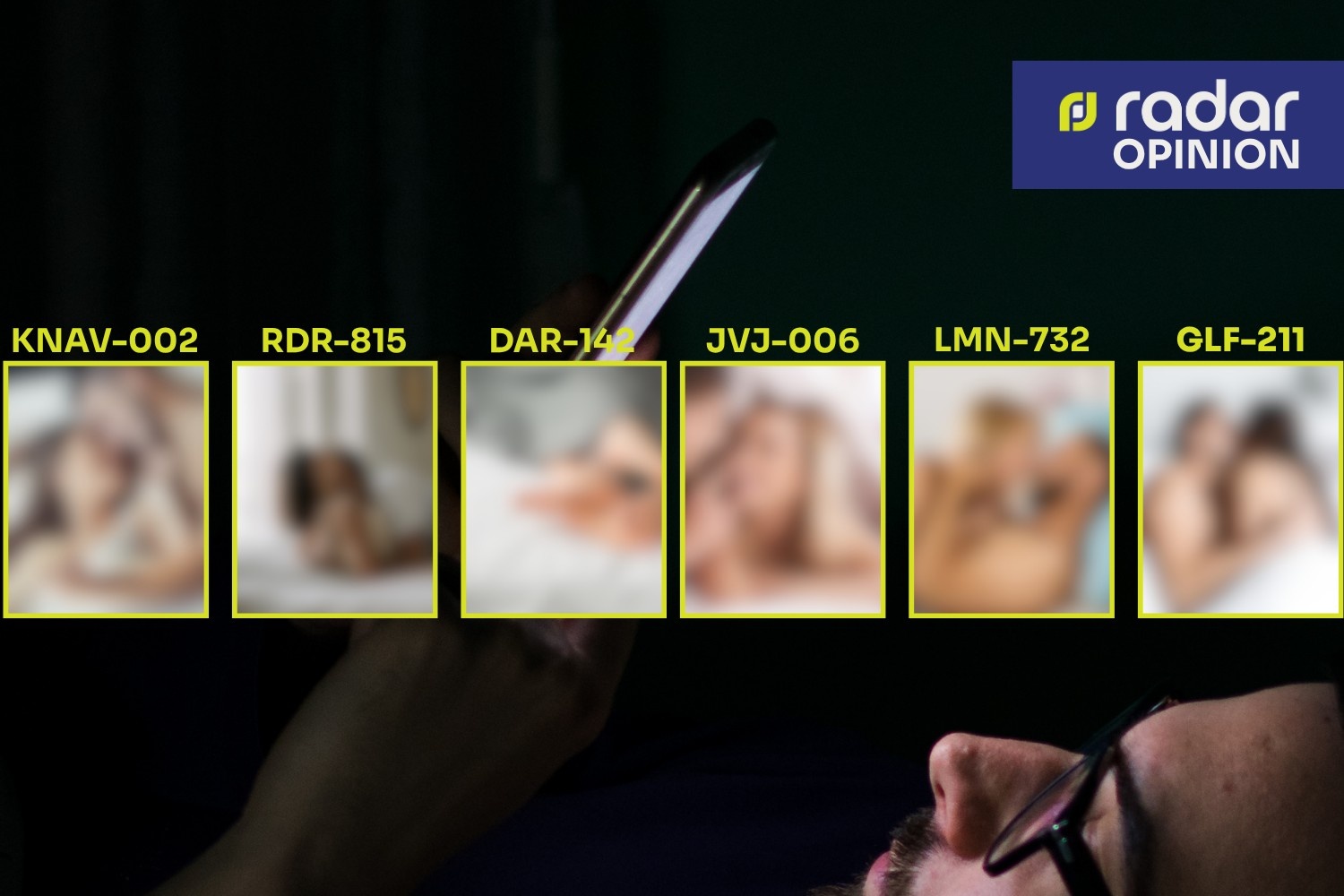
JAV uses an alphanumeric system for scale, searchability, and regulation.
Japan is often described as “living in the future,” thanks to its seamless, efficient systems. One unlikely example of this can be found in its adult video industry (JAV), where content is organized by code.
In the West, adult videos are typically indexed through performer names, studio brands, or hyper-explicit categories—labels built around visibility, immediacy, and often twisted fantasy (e.g., “Big Step Bro C*ms Inside Bookworm Step Sis.”)
Filipino productions follow a similar logic, leaning into wordplay, innuendo, and burlesque humor through loaded—and rhyming—titles (e.g., “Binarena ni Francis ang Source ng Langis”).
By contrast, JAV relies on an alphanumeric system: a three- to four-letter identifier for the studio or series, followed by a hyphen and a three-digit number (e.g., ABC-123, DEFG-456). It’s clean, consistent, and highly searchable—an effective solution in a saturated market.
This system has practical roots. During the VHS boom of the 1980s, studios had to manage thousands of tapes in physical storage. Inventory via titles was a logistical nightmare, so simple alphanumeric codes were used for stock-keeping.
As the industry transitioned to DVDs in the early 2000s, production increased—and the need for standardization became even more urgent. The coding format expanded but retained its core logic.
In just a few years, digital downloads and streaming took over. In an even more saturated market, a JAV code evolved from an internal stock-keeping mechanism to a primary product identifier.
This doesn’t mean that JAV abandoned titles altogether. In fact, it uses titles that are verbose, oddly specific, and often dramatic. They serve as narrative hooks, particularly for domestic audiences who are generally invested in the story. Distributor ZENRA has noted one such title: “I Hate My Boss So Much I Could Die, But When We Went On A Business Trip And To My Surprise, We Ended Up Sharing A Room At A Hot Spring Resort Inn… I Got F*cked By This Ugly H*rny Old Man, And He Made Me C*m, Over And Over Again.”
But these titles are unwieldy, especially across languages where (mis)translation can distort meaning. The code remains the most stable, practical, and universal reference point.
Ultimately, the system is shaped by a long-standing law. Though legal, the JAV industry is heavily regulated. Article 175 of Japan’s Penal Code of 1907 bans the distribution and public display of “obscene” material (hence the pixelated “mosaic” censorship). More recent laws reinforce performer protections and age verification.
Studios must submit content to regulatory bodies like the Japan Contents Review Center, where each approved version is assigned a unique code. Any alteration voids that approval and requires resubmission—and a new identifier.
It may seem trivial or even funny to some, but it’s exactly the kind of system that makes Japan feel ahead of everyone else.