The one-peso cinema: Why 1980s makeshift theaters were the ultimate movie experience.
I remember sitting on a hard wooden bench, sweating in the summer heat, waving a pamaypay while waiting for the movie to start.
I was probably six or seven years old then, small enough that my feet could not properly reach the floor. The room was dark except for the glow of a television set in front of us. Cigarette smoke floated everywhere. Somebody behind me was laughing loudly while another person opened a bottle of Royal Tru-Orange. Outside, I could hear the loud growl of the generator because our town in Laoang, Northern Samar, still had no electricity then.
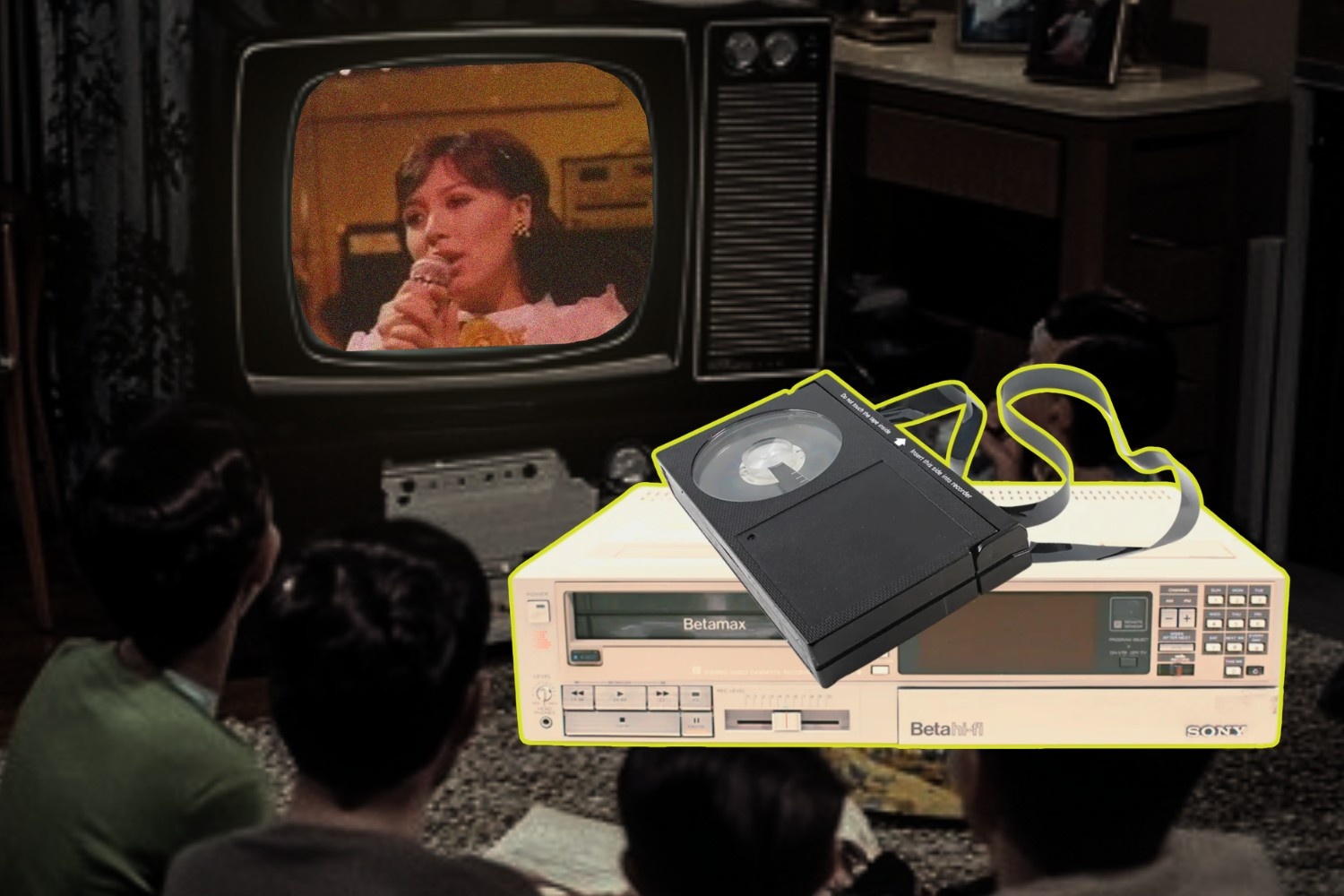
Every few minutes, the screen would shake with lines and static.
“Paayos naman ng Betamax!” somebody would shout.
And then suddenly, Jackie Chan would appear onscreen again, punching and flying across the room like magic.
Rural screens
For many people who grew up in remote provinces during the 1980s, this was cinema.
Not inside malls. Not inside air-conditioned theaters. But inside cramped living rooms, improvised halls, and crowded bedrooms, enterprising families charged one peso for a “double picture” Betamax screening.
Our town once had a real movie theater before it burned down. I still remember going there as a very young boy. I remember how huge the screen looked to me then, how cold and dark it felt inside, and how exciting it was hearing the audience react together. Even the smell stayed with me—old wood, dust, and something smoky trapped inside the walls.
Then one day, the theater was gone.
After the fire, there were no more movies in town for a while.
Until some Chinese families started showing Betamax films.
The double feature: kung fu and melodrama
The screenings usually began around one in the afternoon during summer vacation. For one peso, you could watch two movies back-to-back.
The first movie was almost always a Hong Kong kung fu film. I grew up watching Bruce Lee and Jackie Chan through blurry Betamax copies of “Drunken Master,” “Snake in the Eagle’s Shadow,” and “Enter the Dragon.” At that age, I honestly thought kung fu masters were the coolest people on Earth.
The adults inside the room would cheer during fight scenes. Sometimes people copied the moves outside afterward, pretending to kick invisible enemies on the dusty streets.
Then came the second feature — the main movie.
This was where I discovered Filipino cinema.
I watched Sharon Cuneta in “Bituing Walang Ningning” with entire crowds laughing, cheering, and crying together. I also grew up watching Filipino fantasy, family, and comedy films like “Darna,” “Blusang Itim,” “Family Tree,” “Bagets,” and “Captain “Barbel”—all those strange, funny, dramatic, and magical stories that felt larger than life to a small provincial boy like me.
The funny thing was that everything felt chaotic.
People kept entering and leaving during the movie. Vendors sold peanuts and soft drinks inside. Adults smoked beside children. Babies cried somewhere in the back. The sound from the television warped constantly. Sometimes the colors disappeared completely, and the actors turned green or blue.
Most of the tapes looked heavily copied. Even as a child, I could tell the movies were not exactly high quality. But none of us cared.
We were simply happy to watch movies.
Unregulated pleasures
Some screenings happened inside bigger makeshift halls with rows of benches. Others happened inside ordinary bedrooms where furniture had been pushed aside to fit viewers.
And because these screenings were completely unregulated, nobody really knew what kind of film was about to play.
Several times, I accidentally watched bomba films without realizing it.
The titles were vague, handwritten on cardboard outside the house. At first, the stories seemed normal enough because bomba movies back then actually had plotlines before the scandalous scenes appeared.
As a child, I mostly remember the confusion.
The awkward silence.
The adults pretending nothing unusual was happening.
And I slowly realized this was probably not the kind of movie I was supposed to be watching.
But nobody stopped the tape.
That was simply how things were back then in remote towns.
Low-res legacy
Looking back now, I realize those makeshift Betamax theaters became our replacement cinemas after the old movie house burned down. They were noisy, smoky, uncomfortable, and imperfect.
But to a six-year-old boy in a small island town twenty-four hours away from Manila by Pantranco bus, they felt magical.
Years later, I somehow ended up becoming part of the film industry myself as a director and producer. And sometimes I think maybe it all began there—inside those crowded rooms powered by generators, sweating in the dark while waving a pamaypay, staring at flickering images from damaged Betamax tapes.
Long before I understood cinema as art, I already understood wonder.
Long before air-conditioned malls, cinema in the provinces was a one-peso Betamax screening in a smoky room. Dive into a nostalgic journey of kung fu, ‘bomba’ films, and the wonder of 80s movie culture.
READ:

ISP Bonanza and the years of slow pre-paid internet access
radar Lifestyle
April 12, 2026

I got drunk on sweet, freshly harvested tuba as a kid
Matahari
May 2, 2026

Alembong was once every Pinoy kid’s favorite merienda despite its suggestive name
radar Lifestyle
May 11, 2026
Tags: 80s Filipino movies Sharon CunetaBetamax double feature memoriesBetamax theaters Philippines 1980schildhood movie memories BetamaxDrunken Master Jackie Chan PhilippinesFilipino movie culture historyhistory of cinema in Northern SamarLaoang Northern Samar historymakeshift cinemas provincesMatahari film director background