A divisive heirloom dessert from Taguig challenges modern palates with its unique, brain-like consistency and rich coconut flavor.
There are two kinds of people when faced with a tray of freshly baked inutak.
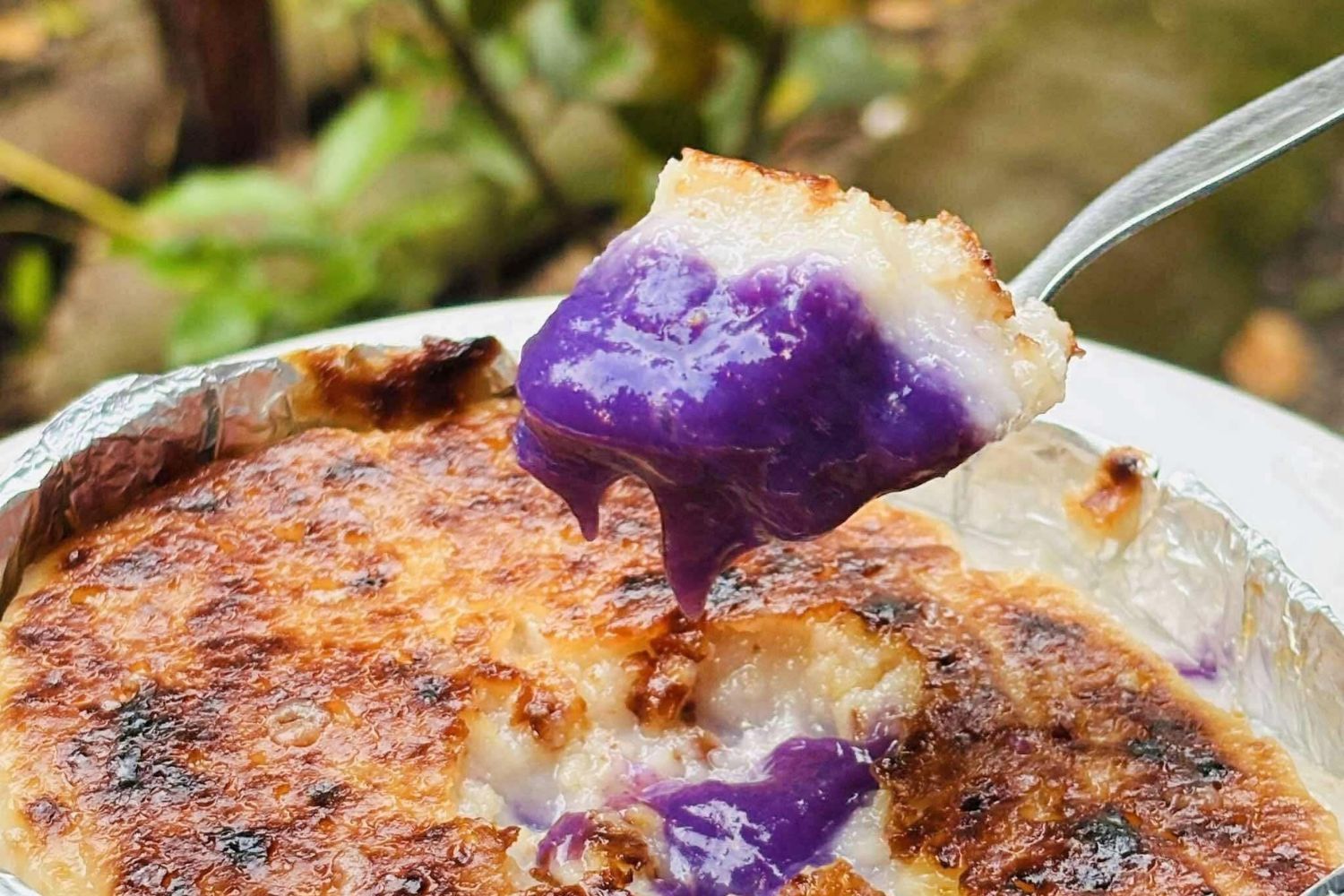
The first group takes one look at its blistered coconut top, trembling texture, and oddly brain-like appearance and immediately says, “Pass.” The second group? They grab a spoon before it even cools down.
Few Filipino kakanin are as divisive as inutak — the rich, ultra-creamy delicacy from Taguig and Pateros whose name literally comes from the Tagalog word “utak” or brain.
And honestly, the comparison is hard to ignore.
When properly made, inutak jiggles slightly when scooped. The thick coconut cream on top wrinkles, bubbles, and chars under high heat, creating folds and dark spots that resemble a cooked brain. Its inside is soft, sticky, almost semi-runny — far from the firm chewiness people expect from traditional bibingka or sapin-sapin.
For some Filipinos, that texture is exactly why they can’t get enough of it.
The moment a spoon sinks into warm inutak, it almost melts instantly on the tongue. The glutinous rice base, coconut milk, evaporated milk, and ube create something closer to a dessert custard than a rice cake. Then comes the smoky layer of burnt kakang gata on top — rich, fatty, caramelized, and slightly bitter in the best way possible.
It’s indulgent. Messy. Comforting.
Others, however, simply cannot get past the texture.
To critics, eating inutak feels less like chewing and more like swallowing something halfway between pudding and glue. The gooey consistency, paired with its unsettling resemblance to actual brains, can be too much for first-timers expecting the bite of ordinary kakanin.
But perhaps that’s exactly why inutak has survived for generations: it refuses to be boring.
Unlike neatly packaged modern desserts designed to look perfect on social media, inutak embraces excess. It’s shiny. Uneven. Gooey. Sometimes even slightly burnt. It demands to be eaten warm, often with a scoop of sorbetes melting on top, creating an even creamier combination that old-school Taguig and Pateros locals swear by.
And maybe that’s the beauty of Filipino food culture. Some dishes aren’t meant to please everyone. Some are meant to challenge your senses first before winning your heart later.
Inutak belongs firmly in that category — the kind of dessert you either fall deeply in love with after one spoonful… or spend the rest of your life avoiding.
The glutinous rice base, coconut milk, evaporated milk, and ube create something closer to a dessert custard than a rice cake. Then comes the smoky layer of burnt kakang gata on top — rich, fatty, caramelized, and slightly bitter in the best way possible.
READ: