Carlitos Siguion-Reyna and son Rafa bring real-life emotions to Dustin Celestino’s powerful stage elegy on fathers, silence, and masculinity.
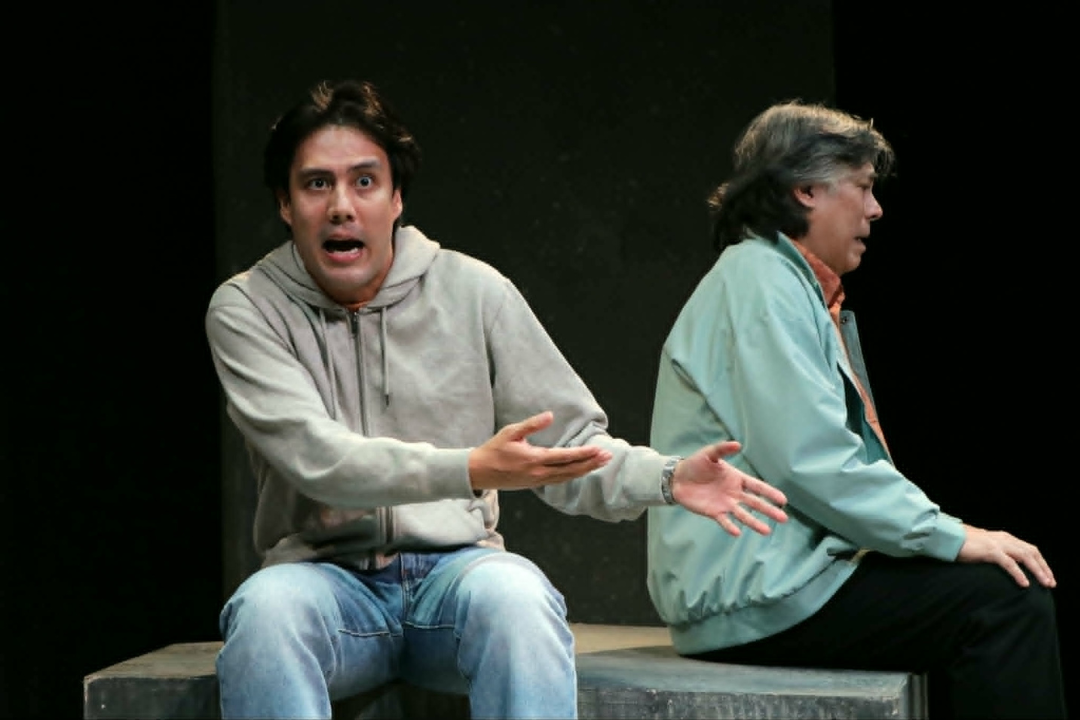
Dustin Celestino’s “ELEHIYA” brings together a compelling real-life father-and-son pairing: veteran filmmaker Carlos “Carlitos” Siguion-Reyna and his son, Rafa.
For Rafa, acting alongside his real father adds a layer of emotional texture to the experience. “That naturally allows me to draw parallels between our characters’ relationship and our real-life relationship. It lets me imagine what it would be like if there were things left unsaid between us, or if our relationship wasn’t as healthy as it is in real life. Thankfully, my relationship with my dad is actually very good,” he says.
For Carlitos, playing Nick—a hardened father burdened by the quiet guilt of absence—meant grounding the role in lived experience rather than theatrical tropes.
“After a study of the text and discussions with the director, I drew inspiration more from several figures in real life who have complex ways of sometimes expressing, sometimes holding back their thoughts and feelings,” Carlitos shares. “I also recalled my own experiences as both a father and a son. My performance draws heavily from people I’ve observed in the real world.”
Real-world complexities and familial mirrors
Nick’s emotional conflict stems from internal contradictions.
“I think Nick’s demands for his son’s success, to prove his own as a father, reveal insecurities he still suffers over his own accomplishments,” he adds.
“He means well, but signals between him and his son often get mixed and misinterpreted. Since I became a father, I have experienced challenging transitions from thinking or doing things for myself to thinking and doing things for my children… I can relate to Nick through the inevitable expectations, frustrations, relief, fulfillment, and joys that comprise growing up for us all.”
Rafa, meanwhile, builds Kulas from a more instinctive, physical place.
“Angsty, misunderstood, and guarded,” Rafa says. “Kulas is someone who deeply wants his father to be proud of him, and I think that desire is universal. That’s something I personally connect to as well.”
His entry point into the character is simple but revealing.
“It was really my love for basketball. Kulas shares that same deep love for the game, seeing it as something that completely defines his life. His hopes, fears, expectations, and even his volatile relationship with his father are inextricably tied to the sport.”
Too personal for the playwright
At its core, Celestino’s work strips away idealized notions of family, exposing the emotional residue left by distance, expectation, and silence between fathers and sons.
The production is part of the 21st Virgin Labfest, staged under the theme “Hubo’t Hubad,” which embraces raw, unfiltered storytelling. The festival continues its tradition of bringing together emerging and established playwrights, directors, actors, and designers in a collaborative space driven by bold, uncompromising narratives.
To bring the piece to life, the production features an ensemble that includes Dennis Marasigan, John Sanchez, and Yan Yuzon.
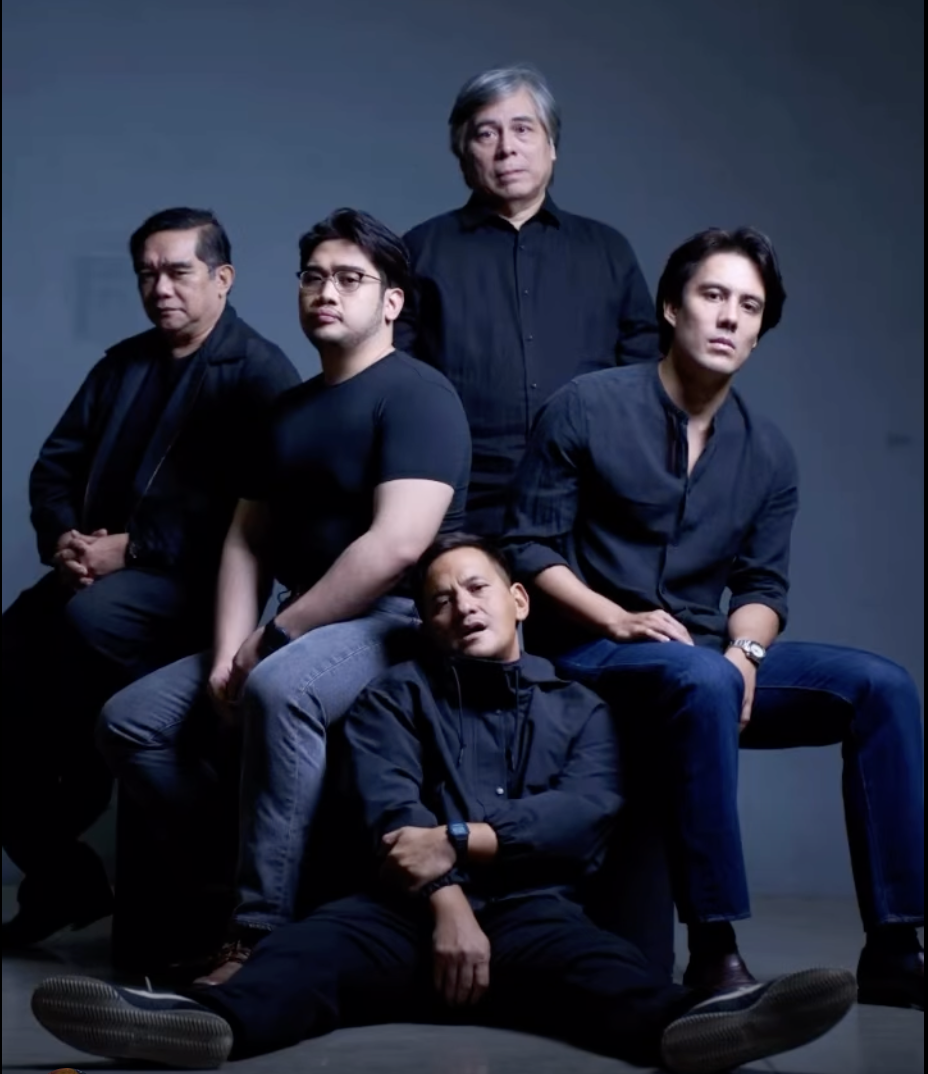
“ELEHIYA,” at its core, is an elegy—not only for the dead, but for what remains unresolved among the living.
“It is a collection of monologues,” Celestino explains. “An impressionistic montage of the important conversations that should have taken place between sons and their fathers, but never did.”
The play extends mourning beyond loss. “The play is an elegy for the bittersweet death of traditional masculinity,” the playwright stresses. “Something once revered by men of my generation until it was revealed to have toxic and harmful qualities. Nevertheless, these traditions that some men have grown fond of, inherited from fathers to sons, are hard to let go of—thus requiring a formal farewell; an elegy.”
Impressionistic montage of conversations
Celestino also acknowledges how personal the work is. “It’s probably my most personal work,” he admits. “It alludes to my own relationship with an estranged father whose faults and shortcomings as a parent—and my own shortcomings as a son—were probably caused by our differing values due to a widening generation gap, and the fast-evolving gender paradigms that influence our culture.”
The play reflects broader tensions around masculinity and generational divide. “The younger generation has an ambivalent relationship with the culture of machismo still adored by older men, causing generational conflict and misunderstanding,” he points out.
In an era where theater constantly negotiates its relevance, “ELEHIYA” becomes a quiet but piercing reminder of the stage’s power: to confront the unspoken and give voice to conversations that never happened.
Directed by Ron Capinding, “ELEHIYA” is part of a larger festival lineup featuring works by eight “virgin” playwrights and four returning masters of the craft.
Performance schedule: June 5 (2 PM & 8 PM), June 10 (8 PM), June 11 (2 PM), June 17 (2 PM), June 21 (8 PM), June 27 (8 PM), and June 28 (2 PM). Tickets and updates are available via the official channels of the Cultural Center of the Philippines, Tanghalang Pilipino Foundation Inc., Writers’ Bloc, and Virgin Labfest on Facebook, X, Instagram, and TikTok.