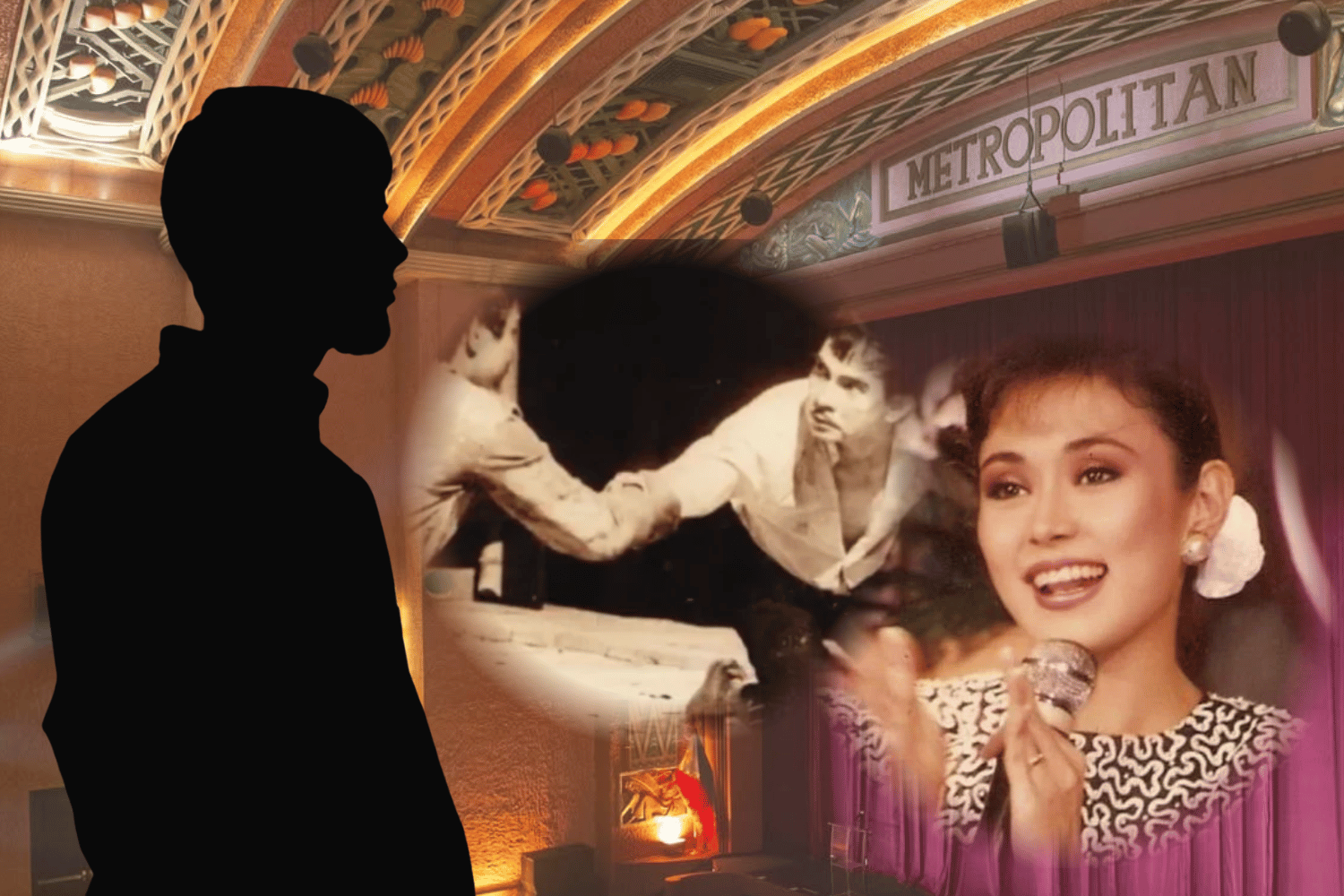
The Manila Metropolitan Theater (also known as the MET) initially stood its ground on June 10, 1931.
When I stepped inside the Manila Metropolitan Theater this week, I expected to be overwhelmed by nostalgia.
In many ways, I was.
The stunning Art Deco details were still there. The sweeping curves, intricate designs, and unmistakable grandeur that earned it the title “The Grand Dame of Manila” remained every bit as breathtaking as I remembered.
Yet something felt different.
More than 30 years ago, I sat in the same theater as a high school student watching the play “Kanser.” I also remember seeing Vilma Santos’ weekly variety show there. Back then, the Metropolitan Theater felt enormous—a palace so vast it seemed capable of swallowing an entire city.
Yesterday, standing in the same space, I was surprised by a strange realization: it felt much smaller.
As it turns out, that feeling is almost universal.
You grew, the building didn’t
The simplest explanation is also the most obvious.
When we first encountered certain places as children or teenagers, we viewed them from a smaller body and a lower eye level. High ceilings appeared taller. Hallways felt longer. Stages looked farther away.
The Metropolitan Theater did not shrink over the past three decades. But compared to the teenager who once sat in its audience, everything is now measured by a much larger frame of reference.
The building stayed the same.
You changed.
Memory magnifies emotion
Memory is not a camera.
Our brains do not store exact dimensions and measurements. Instead, they preserve feelings.
When we remember a place tied to important moments in our lives, our minds often enlarge it to match the emotional weight it carried.
For a young theatergoer watching “Kanser” or seeing a television star perform live, the Metropolitan Theater was more than just a venue. It was a gateway to a larger world.
Over time, the emotions remain vivid, but the physical details become distorted.
What we remember is not necessarily the building itself, but how big it felt to us.
Familiarity makes space feel smaller
The first time we visit a place, our brains work overtime.
Every detail is new. Every corner is being mapped. Every sight, sound, and smell demands attention.
Years later, that effort disappears.
The brain already recognizes the environment and switches into a kind of mental autopilot. Spaces become easier to navigate and understand.
As a result, they often feel more compact than they did during that first memorable visit.
The world got bigger
There is another reason many childhood places seem smaller: our definition of “big” has changed.
Since those high school days, many of us have visited giant malls, sprawling airports, massive arenas, and towering skyscrapers.
Compared to the places we have seen throughout adulthood, the landmarks of our youth are no longer being measured against a child’s limited world.
They are now competing with decades of experiences.
The more places we see, the larger our mental map becomes.
The beauty of seeing things again
Perhaps that is why revisiting old places can feel bittersweet.
The Metropolitan Theater seemed smaller than I remembered. Yet somehow, it felt even more beautiful.
Its grandeur was no longer amplified by childhood wonder or youthful imagination. What remained was something more enduring: an appreciation of the craftsmanship, history, and resilience of a cultural treasure that has survived war, neglect, and time itself.
Sometimes, the places of our past don’t actually become smaller.
We simply become big enough to see them for what they truly are.
READ: