Soup No. 5 is a bowl of expectation.
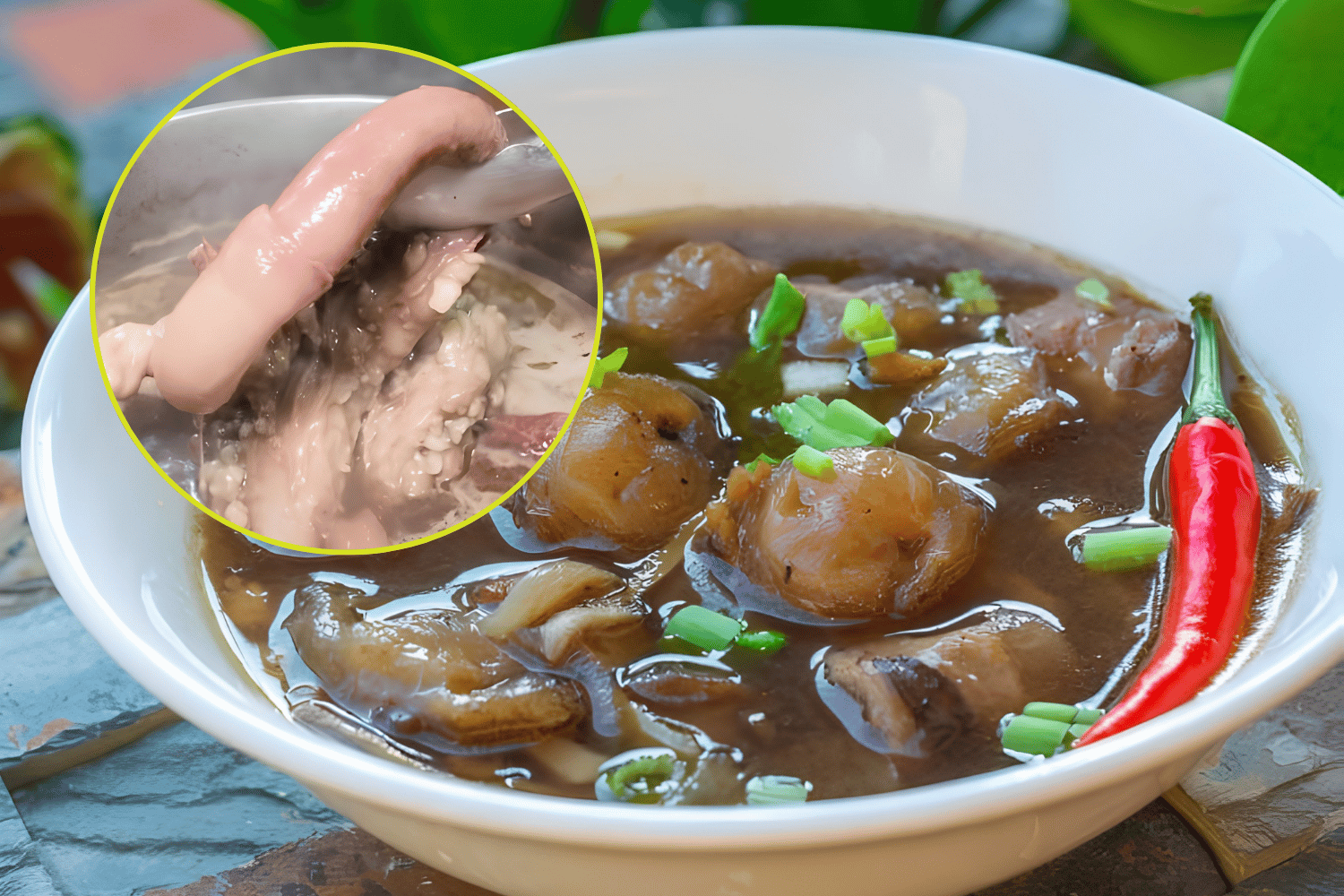
Soup No. 5, made of bull’s penis and testicles, has long been tied to Filipino ideas of masculinity and virility.
Revered as an aphrodisiac, a stamina booster, or even a cure for hangovers, it is typically served as a rich, savory broth. Because the penis and testicles can be gamey, they are simmered for hours with strong aromatics like ginger, onions, garlic, leeks, sibot, and lemongrass. The meat comes out tender with a slight chew.
Seasonings include salt, pepper, patis, and sugar. Some versions use slurry, a mixture of cornstarch and water, to thicken the broth. Others rely on the natural gelatin and collagen released by the meat.
It is usually paired with simple dipping sauces such as toyo, suka, kalamansi, patis, and sili, depending on preference.
But the dish has built a reputation that goes beyond being an exotic offering.
For many Filipino men, pagkalalaki is linked to physical strength, resilience, stamina, and sexual prowess. Otherwise, those who fall short of these standards are not man enough.
That is why many turn to male enhancement pills, supplements, and wellness products to boost performance. But long before these, consuming Soup No. 5 was already proof enough of pagkalalaki.
Origins
The dish’s name can be traced to old Filipino-Chinese eateries that commonly grouped soups into numbered categories: chicken (1), pork (2), beef (3), and seafood (4). The fifth option was left unnamed or vaguely labeled, either to attract curiosity or to avoid explicitly stating its unconventional ingredients.
It eventually became Soup No. 5.
Across regions, the dish took on different names but retained its reputation. In Cebu, it is known as lansiao, derived from “lanciao,” the Hokkien term referring to male genitalia. In Cagayan de Oro, it is called Remember Me (RM), a name popularized by local restaurants specializing in the dish and later adopted by diners in Mindanao.
But why bull’s penis and testicles? According to Hokkien Chinese beliefs introduced by early immigrants, food was seen as both nourishment and healing. A common principle of “like strengthens like” suggested that animal parts could enhance corresponding parts of the human body.
Since a bull represents power and strength, it is believed that eating its reproductive organs may pass on those traits.
Where to eat
Soup No. 5 remains available in select Filipino-Chinese carinderias and specialty eateries serving traditional dishes.
In Caloocan, Tony’s Restaurant serves its version known as Gokong, a staple since 1960.
In Binondo, Chuan Kee continues to serve Soup No. 5 as part of its Chinese-Filipino menu.
In Laguna, DINAVIVA Gotohan in Calamba offers its own take alongside its famous goto.
In Batangas, Jorjhane’s House of Special Bulalo and Bat N Balls serve their version alongside their signature bulalo.
To this day, Soup No. 5 is known less as a dish and more as a symbol tied to masculinity. In turn, it has become a bowl of expectation.
READ: