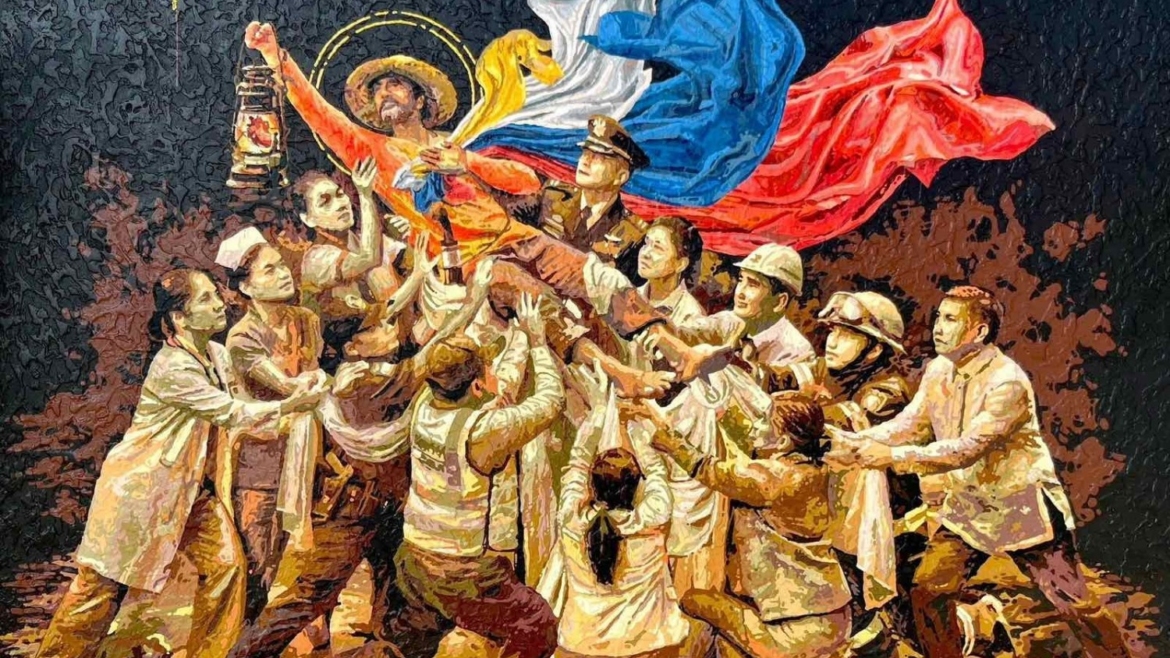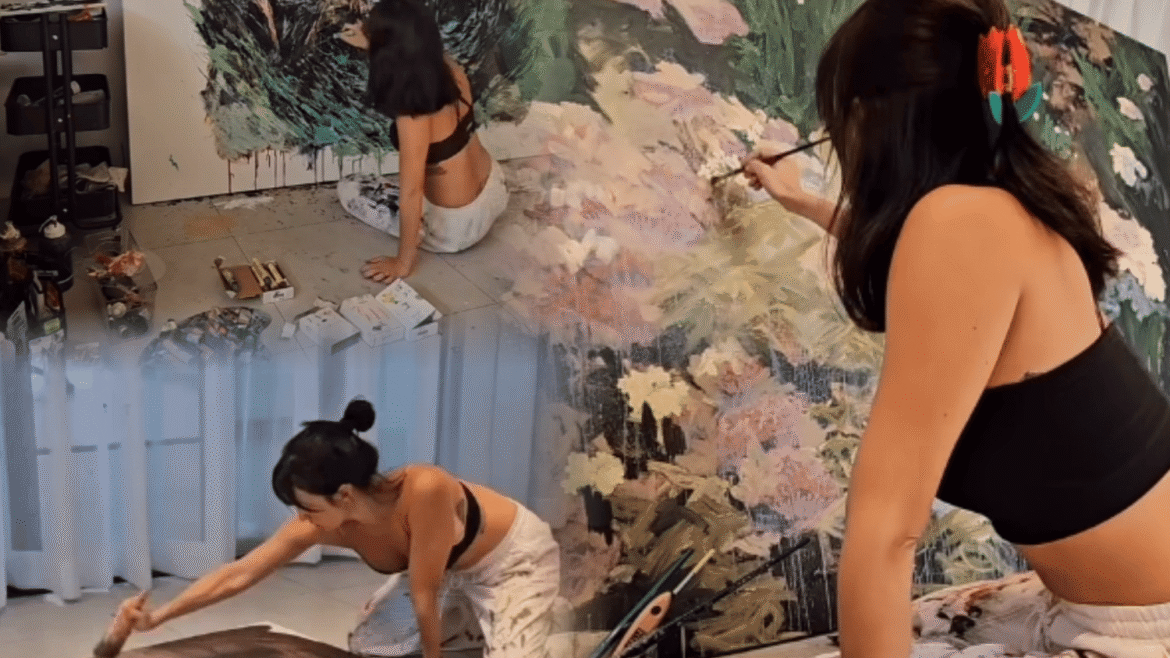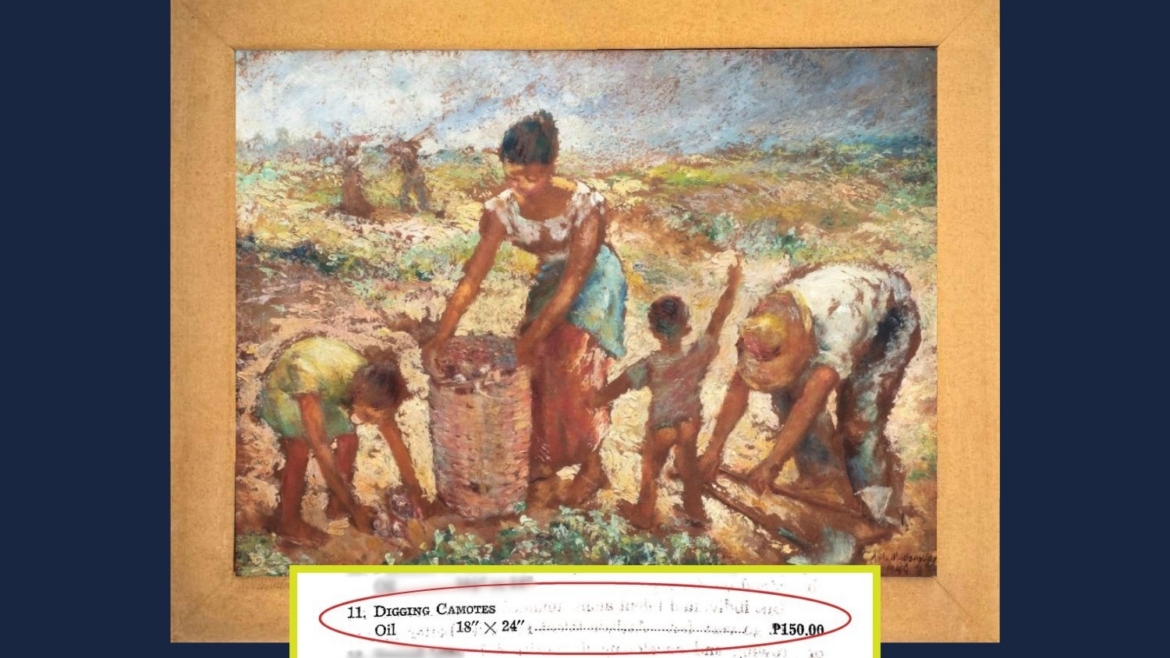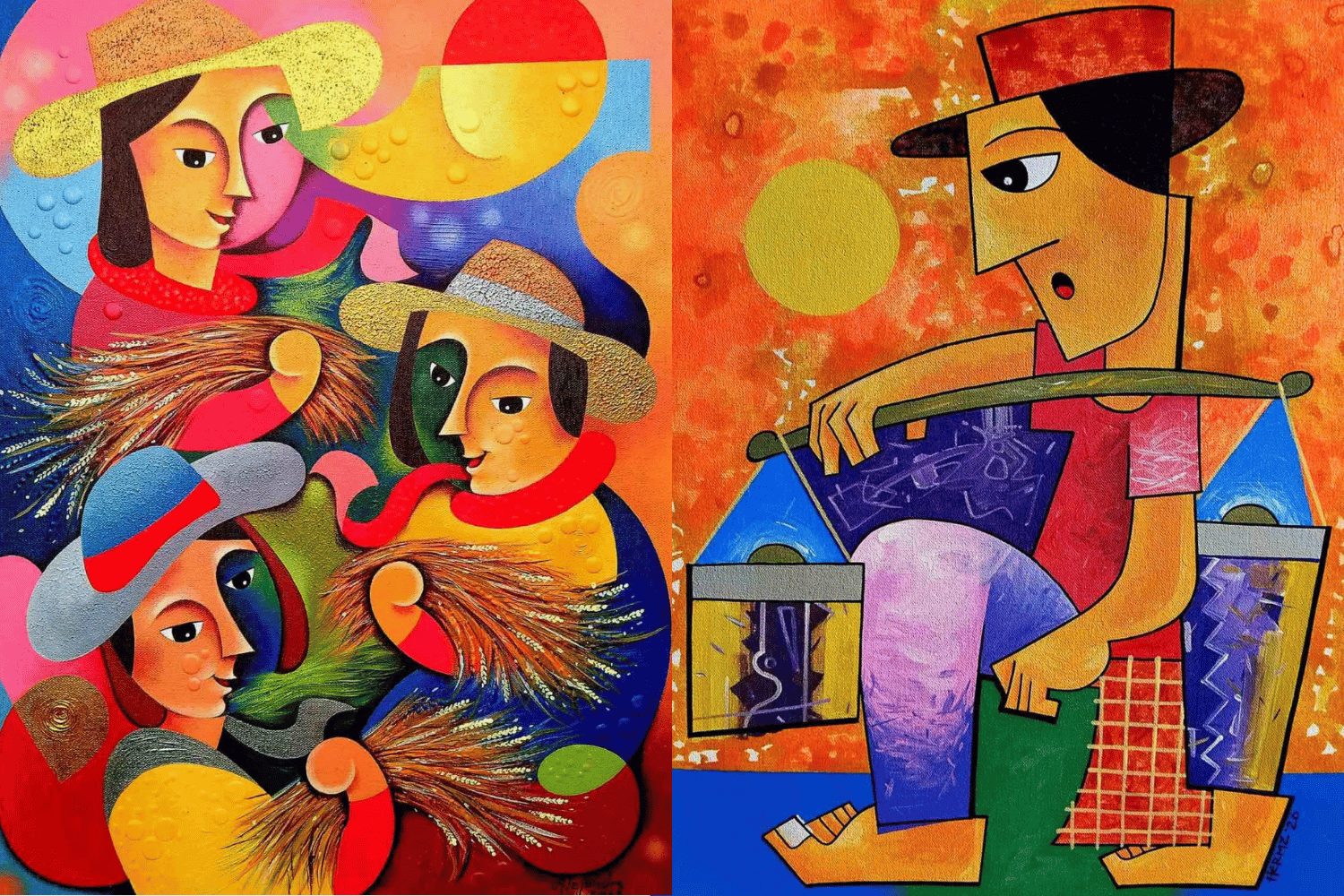
Culture and traditions of the Filipino people told in Cubist style.
The first thing you notice is the color.
Brilliant reds, electric blues, warm yellows, and impossible oranges spill across the canvas like a celebration. Then your eyes begin to wander. Faces split into geometric planes. Familiar nipa houses seem to float in dreamlike landscapes. Farmers cradle golden harvests. Children peek through wooden windows. A fisherman returns with his catch. The image feels fragmented, yet strangely complete—as if you are looking not at a painting, but at a memory assembled from pieces of home.
That is the quiet magic of Hermel Alejandre.
The self-taught artist from Naga City has spent years translating the Filipino experience into a visual language inspired by Cubism, proving that an art movement born in Europe can become deeply rooted in Philippine soil.
For Alejandre, technique has never been the destination. It is merely the vessel.
“I may not have formal training in art, but I can confidently say I am an artist because I give color and form to our culture, which is the primary subject of my paintings,” Alejandre told radar.ph.
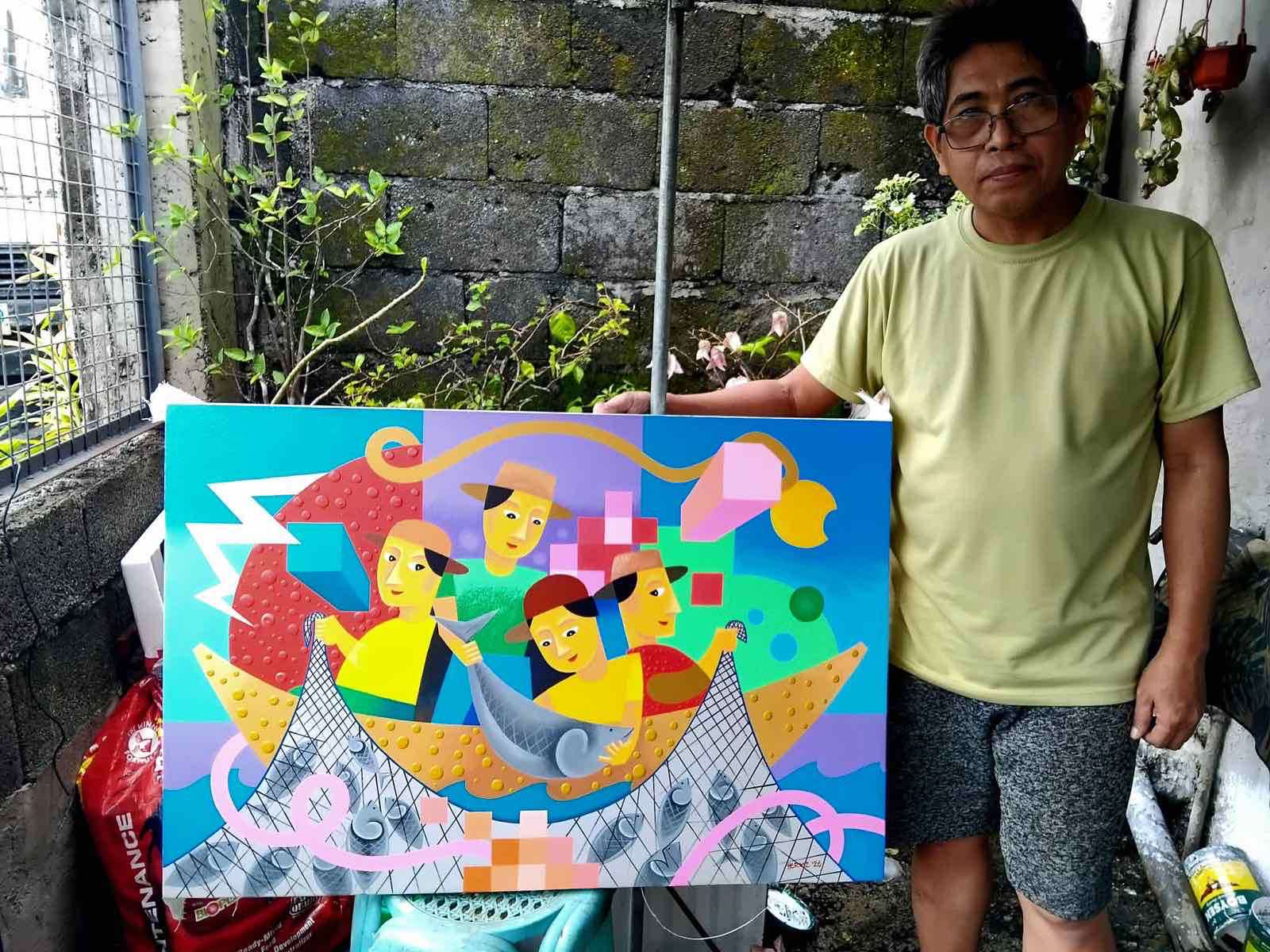
His fascination with Cubism began through Pablo Picasso. The overlapping forms, distorted perspectives, and geometric figures fascinated him, revealing that reality could be expressed in more than one way.
Yet instead of borrowing Picasso’s world, Alejandre filled Cubism with his own.
“I want people who look at my paintings to see the culture and traditions of the Filipino people through my Cubist style,” he said.
His canvases are unmistakably Filipiniana.
The bahay kubo rises like a monument to resilience. Farmers harvest palay beneath radiant skies. Fishermen, children, mothers, and workers become symbols of everyday heroism. Even professionals such as doctors are portrayed not merely as individuals but as reflections of service and compassion.
Above all, two subjects remain closest to his heart.
As a proud Bicolano, Alejandre repeatedly returns to the perfect silhouette of Mayon Volcano, whose symmetry has long inspired generations of artists. Equally important is Our Lady of Peñafrancia. A devoted follower of Ina, he paints the revered image as both an act of faith and a way of sharing one of Bicol’s richest traditions with audiences beyond the region.
The result is art that feels instantly familiar.
Viewers may not understand every principle of Cubism, but they recognize the stories. They see the neighborhoods they grew up in, the harvests that fed their families, the faith that shaped communities, and the simple joys that often escape notice. His paintings invite people to rediscover the Philippines through shapes and colors that are modern, yet emotionally timeless.
That perspective did not come easily.
Without formal art education, Alejandre admits that one of his greatest challenges was deciphering the deeper meanings hidden within the works of veteran painters. He compensated by studying tirelessly—observing paintings, analyzing compositions, and reading every explanation he could find until the language of art slowly became his own.
Today, that language flows naturally.
“When I begin a new painting, the style simply comes out on its own,” he shared. “Only the subject changes.”