AI and virtual influencers are now changing the ways of digital marketing.
She never wakes up late, misses a deadline, demands a business-class ticket, or posts something embarrassing after a night out.
She can model a dress in Manila in the morning, promote a phone in Tokyo by lunch, and speak fluent Spanish to viewers in Madrid before dinner. Her face can be perfected, her personality rewritten, and her entire life rearranged according to a brand’s marketing calendar.
There is only one catch: she does not exist.
AI-generated and virtual influencers are becoming increasingly visible across social media, raising an uncomfortable question for the humans who make a living from brand deals, product reviews, modeling, livestreams, and sponsored posts: Could an artificial personality eventually take their job?
The most realistic answer is not a complete takeover—at least not soon. But virtual creators are no longer merely a technological novelty. According to Grand View Research, the global virtual-influencer industry was valued at around $6.1 billion in 2024 and could approach $45.9 billion by 2030.
The influencer who never sleeps
For companies, the attraction is easy to understand.
A digital influencer does not need airfare, hotel rooms, makeup artists, reshoots, rest days, or complicated contracts. Once the character and production system have been developed, brands can create localized content around the clock and modify the avatar’s clothes, voice, language, setting, and personality for different markets.
The company also controls the character’s public behavior. There is less risk of a virtual endorser suddenly leaving a campaign, fighting with management, or becoming involved in a real-world controversy.
That makes AI influencers particularly attractive for industries built on carefully controlled images, including fashion, beauty, gaming, technology, entertainment, and online retail.
Some virtual personalities already attract audiences comparable to those of human celebrities.
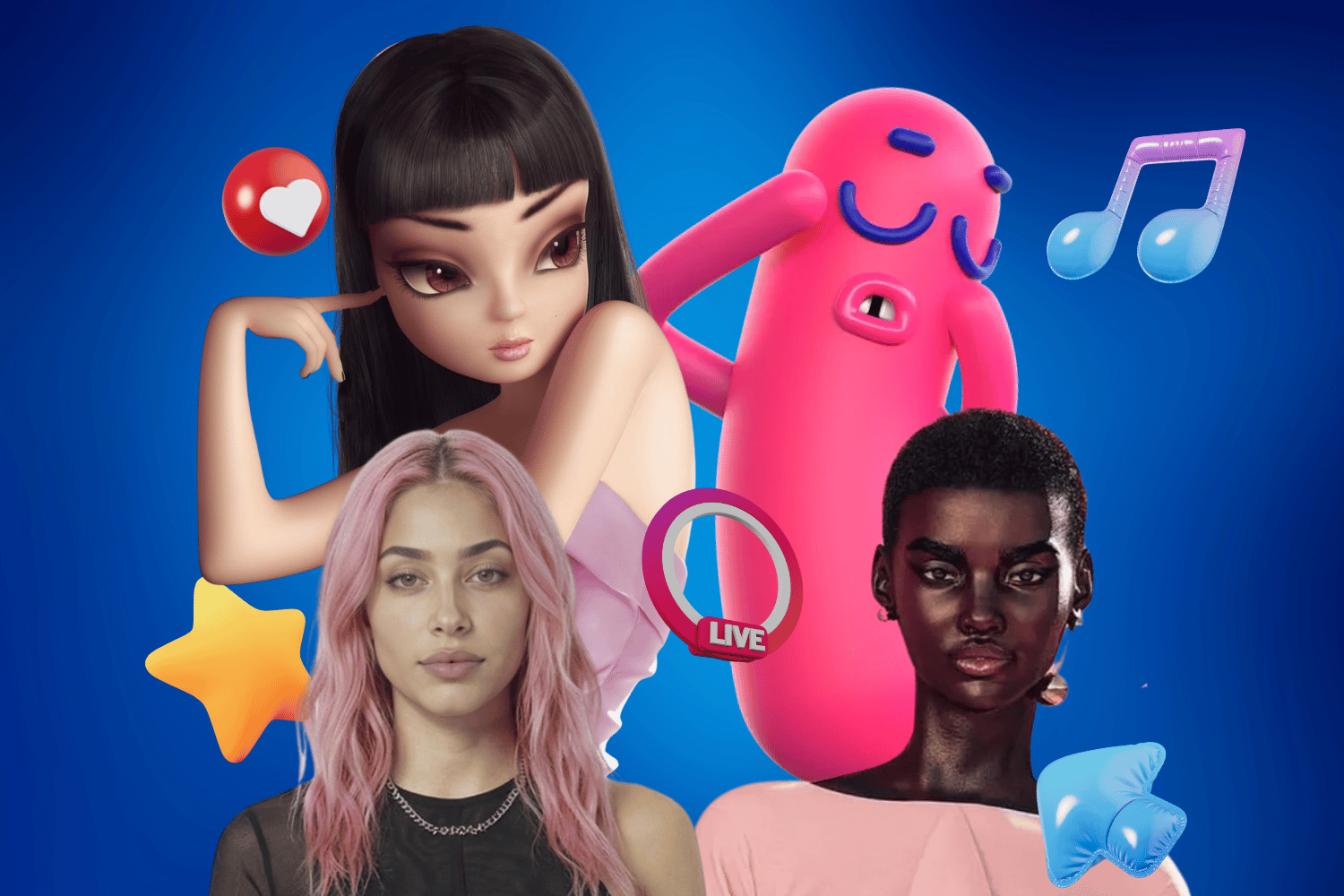
Brazil’s Lu do Magalu, a digital personality created by retailer Magazine Luiza, has over 9.2 million followers on Instagram and 7.5 million on TikTok. She reviews products, appears in branded campaigns, and hosts e-commerce content.
Nobody Sausage, an animated character known for dancing, comedy, and surreal videos, has over 22.1 million followers on TikTok.
Lil Miquela, meanwhile, has over 2.2 million followers on Instagram. Styled as a young Brazilian-American woman, she has released music, shared diary-like posts, and appeared in campaigns for brands such as Prada, Calvin Klein, Samsung, and BMW.
Spain’s Aitana López has built an Instagram following of 400,000 through fitness, fashion, and gaming content. Japan’s Imma, recognized by her pink bob and highly realistic photographs, has over 379,000 followers.
Other virtual influencers occupy more specialized niches. Shudu, boasting 236,000 Instagram followers, holds the title of the world’s first Black “digital supermodel,” collaborating with elite fashion houses, modeling 3D apparel, and headlining major advertising campaigns. In contrast, Noonoouri sets herself apart with a stylized, manga-and-doll-like aesthetic, focusing her digital footprint on high fashion, global brand ambassadorship, and eco-activism.
But can they actually influence?
A flawless face and millions of followers do not automatically create trust.
An AI personality can describe a moisturizer, but it cannot genuinely know whether the product irritated its skin. It can pose inside a restaurant, but it cannot taste the food. It can promote running shoes without ever feeling whether they are comfortable after five kilometers.
That limitation matters because influencer marketing is built partly on testimony. Followers do not merely want to see a product. They want someone to say, “I tried this,” “This happened to me,” or “Here is what I honestly think.”
A 2025 study in Acta Psychologica synthesized 51 research articles on virtual and AI influencers. It found that brand storytelling and AI innovation signify a transformative paradigm shift in digital marketing—offering brands consistency, control, and adaptability. However, these AI entities’ capacity to engage consumers and cultivate brand trust remains a subject of debate.
Researchers also noted that the study “emphasizes the significance of transparency and ethical responsibility in the utilization of virtual influencers, encouraging brands to adopt open disclosure practices and responsible AI implementation to maintain consumer trust.”
The human advantage
Human creators remain unpredictable, expensive, and occasionally difficult—and that may be exactly why audiences still care about them.
They get tired. They make mistakes. Their bodies change. Their plans fail. They can speak about losing a job, raising a child, surviving an illness, commuting through traffic, or saving money for something they genuinely want.
Those experiences cannot simply be generated through better graphics.
In a Vogue Business consumer survey published in April, shoppers remained more likely to trust recommendations from human influencers than advice from AI chatbots when buying fashion and beauty products. More than seven in 10 respondents said they would not trust an AI influencer—with one respondent saying “AI can’t physically try the products,” unlike influencers, where you can “see the clothes on their body.”
The label will matter
AI personalities may also find it increasingly difficult to pass themselves off as real people without disclosure.
Meta has introduced labels for AI-generated or significantly altered images, audio, videos, and advertisements across its platforms. YouTube likewise requires creators to disclose realistic content that has been meaningfully altered or synthetically generated.
These rules do not prevent virtual influencers from succeeding. They do, however, make transparency part of the relationship. Audiences may still follow an imaginary person, but they should be allowed to know that the person is imaginary.
Disclosure is especially important when digital characters promote beauty standards, financial products, political messages, health claims, or lifestyles that appear real but were entirely manufactured.
Not replacement, but competition
The future will probably not be a simple contest between humans and machines.
Human influencers may create digital twins that answer fan questions, translate videos, appear in advertisements, or produce content while their real-life counterparts are unavailable. Brands may employ virtual characters for highly controlled campaigns, then work with human creators when credibility, personal experience, humor, or emotional connection matters more.
The people most at risk may not be every influencer, but those whose work is easily replicated: generic product poses, templated captions, interchangeable reaction videos, and endorsements with little personal insight.
AI can manufacture attractiveness, consistency, and volume. It can imitate charisma and generate an endless lifestyle.
What it still cannot honestly say is: This happened to me.
That may become the human influencer’s most valuable asset. Not perfection, but proof of life.
READ:
Five AI-powered rakets Filipinos are cashing in on
Top Dagohoy
July 19, 2026

PH exporters face new US import rules as 64% of APAC businesses remain unprepared
radar Business
July 20, 2026

Iloilo diner’s polished miniseries brings kilig amid AI boom on social media
Aldy Celestial
July 7, 2026