Villarcabral is best known for preserving and reviving forgotten and endangered Philippine culinary traditions through “The Histolinarya Collective,” an independent media platform that produces cinematic documentaries and features on Filipino food heritage. He previously co-created the viral “The Lost Filipino Cookbook” project and has received industry recognition, including an award at the Doreen Gamboa Fernandez Short Food Video Awards.
“POLITICIANS STOLE MY WORK,” Villarcabral wrote in the headline of his open letter.
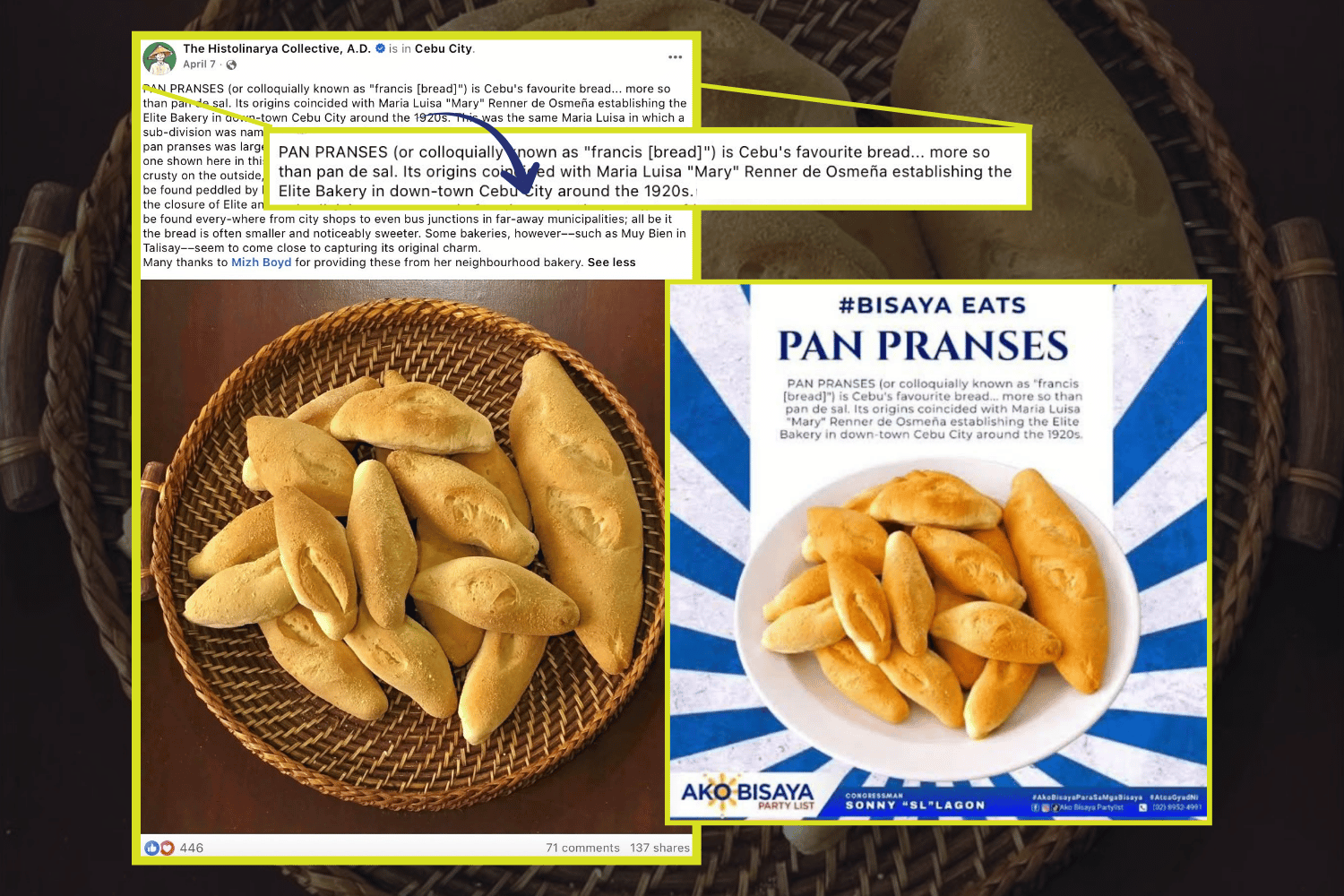
According to Villarcabral, the group’s post allegedly took his original photograph, altered its background using artificial intelligence by replacing the woven basket backdrop with a white plate, and reproduced information he had gathered about the bread’s history during his research in Cebu.
“I would appreciate it if you had told me you were going to snatch my photo, apply AI on the background… and then quote me without attribution as though you came up with that information,” he wrote.
Villarcabral argued that the historical background featured in the campaign stemmed from research he personally conducted, including tracing the origins of pan pranses to the establishment of Elite Bakery in Cebu City during the 1920s by Maria Luisa “Mary” Renner de Osmeña.
His April post, “Pan Pranses,” described the bread’s history, evolution, and cultural significance in Cebu, accompanied by a photograph of the bread arranged in a woven basket.
Days later, the Ako Bisaya Party-list published a “Bisaya Eats” graphic featuring what appears to be the same bread photographed from a nearly identical angle. The accompanying write-up described pan pranses as a staple of Cebuano food culture, although it was rewritten in different wording and expanded with additional descriptions about its taste and popularity.
Villarcabral said the issue goes beyond a single photograph, arguing that public officials promoting local culture should create their own materials or properly credit researchers whose work they use.
“If you’re going to promote Bisaya culture, make an effort to assemble and photograph the set pieces yourselves,” he wrote.
As of writing, neither Congressman Sonny Lagon nor the Ako Bisaya Party-list has publicly responded to Villarcabral’s allegations.
The incident has sparked discussion online about the importance of properly crediting historians, researchers, and content creators, particularly when their work is used in public information campaigns or political communications.
READ: